Restaurant and food service floor cleaning is one of the most important parts of keeping a restaurant safe, compliant, and presentable. From restaurant kitchens and food preparation areas to dining areas and restrooms, clean floors help prevent slips, control grime, protect flooring types, and support the restaurant’s reputation.
Restaurant owners often focus on food, service, and customer experience first, but the condition of restaurant floors affects all three. A clean surface helps maintain health standards, creates a welcoming environment, and leaves a good impression on customers. It also reduces wear caused by heavy foot traffic, drink spills, grease, dirt, and debris that build up throughout the day.
Different floors need different care. Tile floors, concrete floors, hardwood floors, and laminate floors all respond differently to mopping, vacuum work, sweeping, and deep cleaning. That is why restaurant floor cleaning should never be treated like a generic cleaning task. It needs a plan built around safety, traffic patterns, moisture, and the daily demands of a food service business.
What Is Restaurant and Food Service Floor Cleaning and Why Is It Critical for Compliance?
Restaurant and food service floor cleaning means maintaining all floor surfaces in a food service environment so they stay sanitary, safe, and functional. This includes regular cleaning, daily maintenance, regular deep cleaning, spot treatment for tough stains, and advanced cleaning methods for surfaces exposed to grease, moisture, and heavy traffic.
In a restaurant, floors do more than support movement. They collect food particles, trap dirt, absorb moisture, and show signs of neglect quickly. A missed cleaning routine can turn a small issue into a larger safety or compliance problem. That is why floor cleaning should be treated as part of operations, not as an afterthought.
The main reason this matters is simple: dirty floors create risk. Slippery conditions near sinks, greasy line areas, wet entry points, and stained grout lines can all affect safety, cleanliness, and appearance.
What Are Restaurant Floors and Why Do They Require Specialized Floor Cleaning?
Restaurant floors include every walking and working surface across the business, including the dining room, kitchen, service corridors, food preparation areas, restrooms, and entry points. These spaces do not experience the same conditions, so they do not need the same care.
For example:
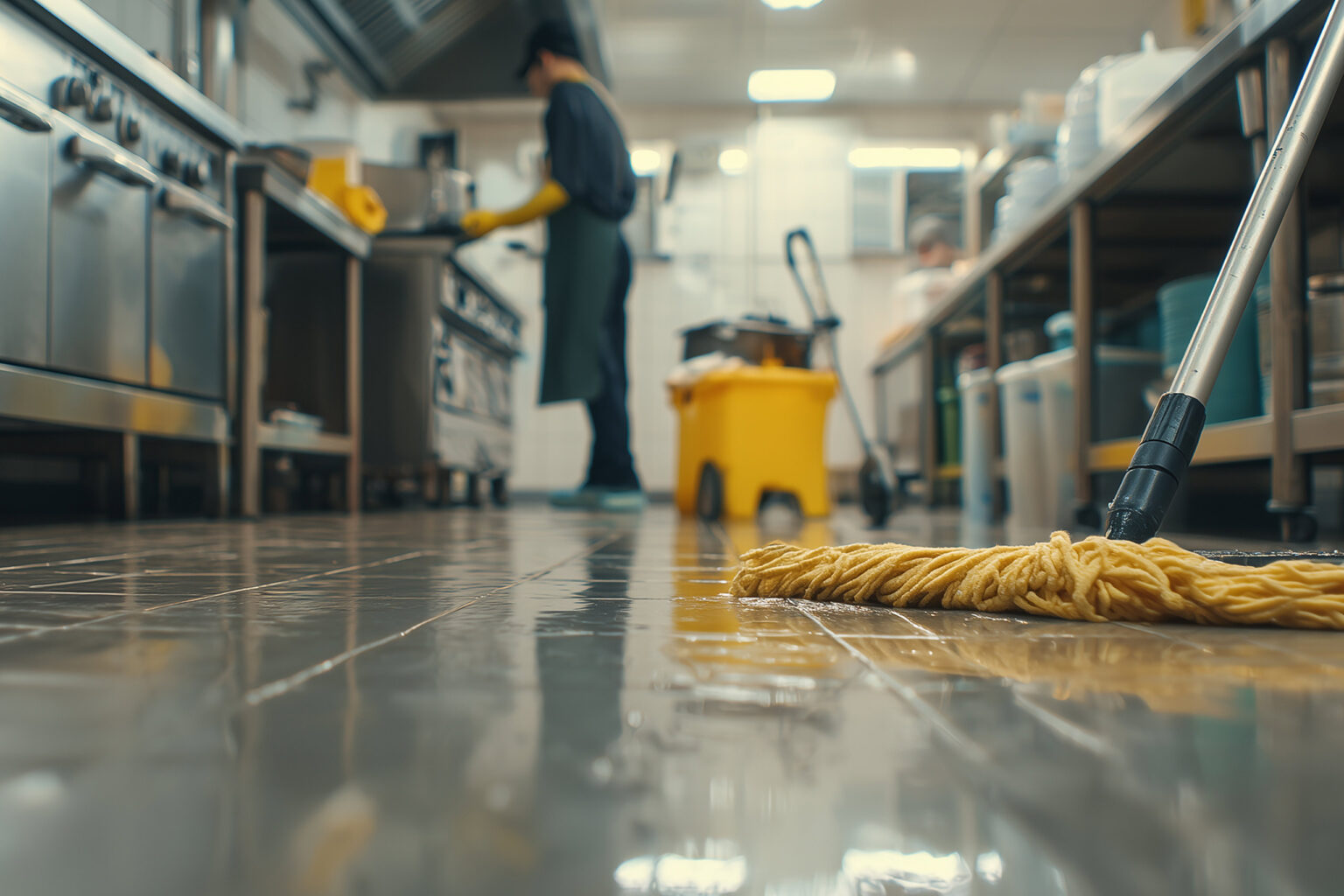
- Restaurant kitchens deal with grease, food debris, and water
- Dining areas requires vacuum deal with crumbs, drink spills, and heavy foot traffic
- Restrooms require odor control and sanitation
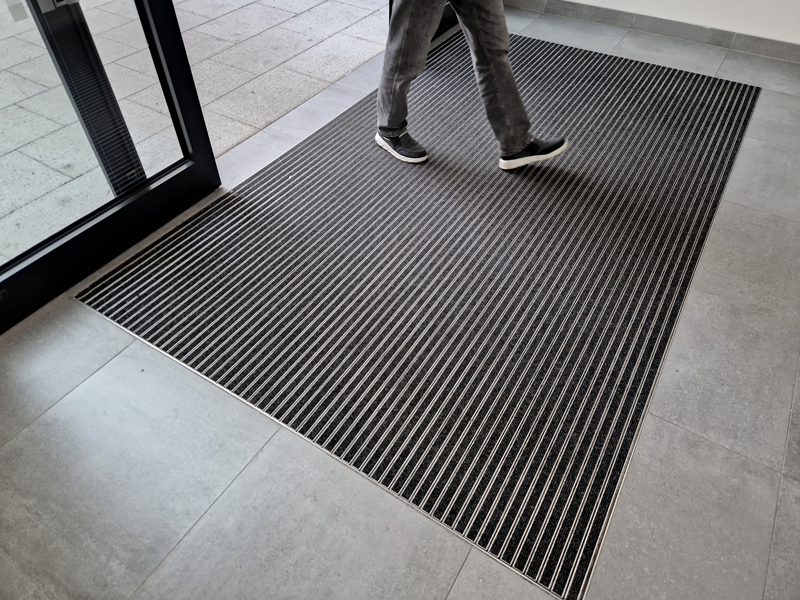
- Entryways collect outdoor dirt, moisture, and debris
- Critical areas near sinks and prep stations need special attention
Because of that, restaurant floor cleaning has to match the use of the space, the surface material, and the type of buildup being removed.
How Do Health Codes and Safety Standards Affect Restaurant Floor Cleaning?
Restaurants are expected to maintain clean, safe conditions for employees and customers. Floors that are dirty, greasy, or wet can increase the risk of accidents and create an unhealthy environment. Even when a floor looks acceptable at first glance, grime in grout, debris under mats, or standing moisture in work zones can still create problems.
A compliant floor care plan usually includes:
- Daily cleaning of visible dirt and spills
- Routine removal of grease and grime in restaurant kitchens
- Regular maintenance for high traffic areas
- Surface-specific products and tools
- Documented cleaning tasks and schedules
When restaurant owners build these practices into operations, they protect both safety and the business.
Why Is Slip Resistance a Key Safety Factor in Food Service Environments?
Slip resistance matters because restaurants move fast. Employees carry trays, work around sinks, and cross wet zones repeatedly. Customers move through dining areas, entrances, and restrooms without knowing where moisture or grease may be present.
Common causes of slippery floors include:
- Drink spills in the dining room
- Grease near food preparation areas
- Water tracked in from outside
- Improper mopping that leaves residue
- Harsh chemicals that damage the floor surface over time
Good restaurant and food service floor cleaning does not just make floors look clean. It helps prevent slips by reducing residue, controlling moisture, and protecting traction. To do that well, it helps to understand how different flooring types behave under restaurant conditions.
What Are the Most Common Floor Types in Restaurants and How Do They Affect Cleaning Methods?
Not every restaurant uses the same floors. Some rely on tile for wet work zones, while others use hardwood in dining areas or sealed concrete in modern spaces. Each material has a different texture, finish, and reaction to cleaners, tools, and foot traffic.
That is why one product or method cannot be used across every area. The right process depends on whether the floor is porous, sealed, smooth, textured, or sensitive to water damage.
What Is the Best Way to Maintain Tile Floors in Restaurants?
Tile floors are common in restaurant kitchens, restrooms, and utility zones because they handle moisture well and are durable under heavy traffic. Still, tile is not maintenance-free. Grout lines trap dirt, grime, grease, and food particles faster than many restaurant owners expect.
A good tile care routine includes:
- Regular sweeping to remove debris
- Prompt treatment of drink spills and grease
- Mopping with a ph neutral cleaner
- Focused scrubbing of grout lines
- Regular deep cleaning to remove stains and buildup
If grout is ignored, the whole floor can begin to look dirty even after regular cleaning. That affects both cleanliness and appearance.
What Is the Best Approach for Cleaning Hardwood Floors in Dining Areas?
Cleaning hardwood floors in a restaurant dining room requires more control than cleaning tile. Hardwood floors create warmth and help build a welcoming environment, but too much water, the wrong tools, or harsh chemicals can damage the finish.
Best practices for hardwood include:
- Regular sweeping or vacuum use with soft attachments
- Immediate cleanup of drink spills
- Damp, controlled mopping rather than overly wet mopping
- Surface-safe products designed for hardwood
- Regular maintenance to protect finish and reduce wear
Because hardwood is more vulnerable to water damage, daily maintenance is essential in dining areas where spills and traffic are constant.
How Do Concrete Floors Affect Floor Cleaning in Commercial Kitchens?
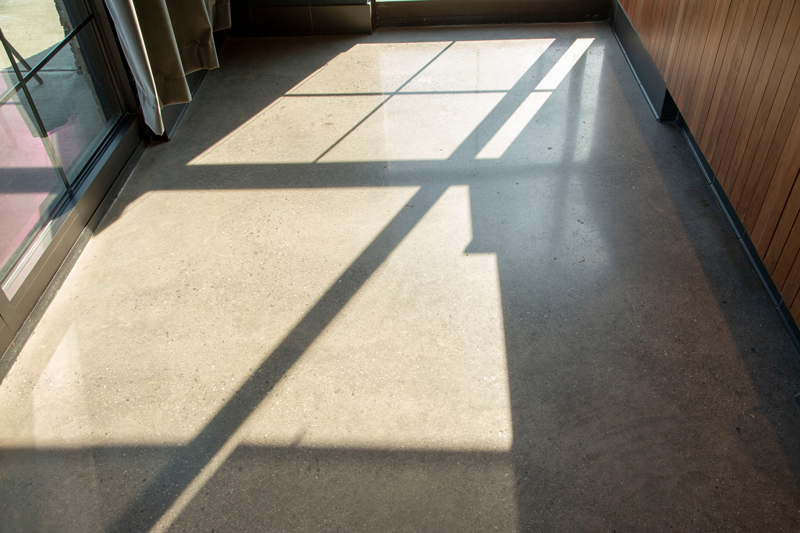
Concrete floors are popular in back-of-house spaces and some dining concepts because they are durable and practical. Sealed concrete performs best in restaurants because it is easier to clean and more resistant to grease penetration than unsealed concrete.
When caring for concrete floors, teams should:
- Sweep frequently to minimize dirt
- Remove debris before it is ground into the surface
- Use the right cleaner for sealed concrete
- Address grease quickly before it spreads
- Schedule deep cleaning for stubborn buildup
Concrete may look rugged, but it still needs specific care. When grease, grime, and line-side spills are allowed to sit, the surface can become harder to clean and more slippery.
What Are the Challenges of Maintaining Laminate Floors in Food Service Areas?
Laminate floors are sometimes used in lighter-service dining spaces because they are affordable and visually appealing. The challenge is that laminate does not handle excess moisture or abrasive cleaning well.
To maintain laminate floors:
- Sweep often in heavy foot traffic zones
- Use a lightly damp mop, not excess water
- Avoid harsh chemicals and overly aggressive scrub tools
- Clean spills quickly
- Protect seams from moisture exposure
Once restaurant operators understand how flooring types change the cleaning process, the next step is building a reliable daily cleaning routine.
What Are the Daily Cleaning Requirements for Restaurant Floors to Stay Compliant?
Daily cleaning is the foundation of restaurant floor cleaning. It keeps floors safer between deeper services and prevents small messes from turning into stains, odor, or slip hazards. In a busy restaurant, this means cleaning should happen throughout the day, not only after closing.
A strong routine supports health, appearance, and safety at the same time. It also makes regular deep cleaning more effective because buildup is controlled before it becomes severe.
What Does a Proper Daily Cleaning Routine Include for Restaurant Floor Cleaning?
A proper routine includes removing loose dirt, addressing spills immediately, and cleaning based on the needs of each zone. It should be simple enough to follow every day and specific enough to cover critical areas.
A practical daily cleaning checklist may include:
| Area | Daily Cleaning Task | Main Goal |
| Entryways | Sweep, spot mop, check mats | Reduce tracked-in dirt and moisture |
| Dining areas | Remove debris, clean spills, mop as needed | Maintain appearance and safety |
| Restaurant kitchens | Degrease problem zones, sweep, mop | Control grease and prevent slips |
| Food preparation areas | Clean around stations and sinks | Support cleanliness and safety |
| Restrooms | Sanitize and mop floors | Maintain hygiene standards |
This kind of routine helps teams stay organized and consistent.
How Often Should Restaurant Floors Be Cleaned During Business Hours?
The answer depends on traffic and activity, but most restaurant floors need repeated attention throughout the day. High traffic areas should be checked often, especially during lunch and dinner rushes.
Areas that usually need the most frequent care include:
- Entrance paths
- Beverage stations
- Around sinks
- Service line zones
- Restrooms
- Dining room aisles
When staff handle spills and dirt as they appear, they protect the space and reduce the load at closing time.
What Cleaning Tools and Supplies Are Required for Daily Cleaning?
The right tools make daily cleaning more effective and less damaging to the floor. A restaurant should not rely on one mop and one cleaner for every surface.
Useful tools and supplies often include:
- Soft brooms and dust mops
- Vacuum equipment for dry debris in select areas
- Microfiber mops
- Wet floor signs
- Surface-specific cleaners
- A ph neutral cleaner for sensitive finishes
- Scrub tools for grout and edges
- Mats for entrances and work zones
With daily cleaning in place, restaurants can then decide where advanced cleaning methods and deeper service intervals fit into the full floor care plan.
What Are Advanced Cleaning Methods for Restaurant and Food Service Floor Cleaning?
Advanced cleaning methods go beyond surface care. They target grease, embedded dirt, tough stains, and grime that daily cleaning cannot fully remove. In restaurants, these methods are important because buildup happens fast, especially in kitchens and work zones.
This part of the plan usually supports both appearance and safety. It also helps extend the life of the floors.
What Is Deep Cleaning and When Is It Required in Restaurant Floor Cleaning?
Deep cleaning is a more intensive process used to remove buildup below the surface level of routine mess. It usually focuses on grime, grease, grout lines, corners, edges, and areas that daily maintenance cannot fully restore.
A restaurant may need deep cleaning when:
- Floors stay dull after normal cleaning
- Grout lines remain dark
- Grease keeps returning quickly
- Slip risk increases in work areas
- Odors or residue remain after mopping
Regular deep cleaning keeps floors from declining over time and supports better results from regular cleaning.
How Do Mechanical Scrubbers Improve Cleaning Services Efficiency?
Mechanical scrubbers help cover large surface areas more evenly than manual cleaning alone. They can improve consistency, reduce labor strain, and lift embedded grime more effectively from certain surfaces.
They are especially useful for:
- Large dining areas
- Tile surfaces with stubborn buildup
- Concrete floors in back-of-house zones
- Heavy traffic pathways
Used correctly, these tools support cleaning services that need to balance quality with speed.
What Role Do Degreasers and Chemical Solutions Play in Floor Cleaning?
Restaurants often need more than soap and water, especially in kitchens. Degreasers help break down grease that forms near cooking stations, sinks, and prep lines. Still, products should match the floor type.
Important rule: stronger is not always better. Harsh chemicals can damage finishes, reduce traction, and shorten the life of hardwood, laminate, or sealed surfaces.
How Does Steam Cleaning Support Food Safety and Compliance?
In some settings, steam cleaning can support sanitation-focused floor care by loosening grime and helping reduce residue in targeted areas. It can be helpful in detail work or where chemical exposure needs to be controlled, but it still must match the flooring type and operating environment.
Once advanced methods are part of the strategy, many restaurants find it makes sense to bring in professional support for consistency and long-term care.
How Do Professional Cleaning Services Improve Restaurant Floor Cleaning Outcomes?
Professional cleaning services give restaurants access to trained crews, commercial tools, and process-driven results. This is especially useful for restaurants that need more than simple janitorial work.
For a company like Scher Flooring Services, the value comes from understanding how different restaurant floors perform under real operating conditions. That includes knowing when to scrub tile, how to protect hardwood, how to maintain sealed concrete, and how to manage surfaces exposed to grease and constant traffic.
What Do Commercial Cleaning Services Include for Restaurant Floors?
Services often include:
- Routine floor cleaning support
- Deep cleaning
- Grout and tile restoration work
- Surface-safe care for hardwood floors
- Maintenance for concrete floors and laminate floors
- Targeted treatment for tough stains and grease zones
This kind of support helps restaurants stay ahead of surface wear and safety issues.
When Should Restaurants Invest in Professional Deep Cleaning Services?
Professional help is often needed when in-house cleaning no longer restores the floor properly. That usually happens when grime builds up in critical areas or when staff do not have the time, tools, or training to treat the floor correctly.
How Do Cleaning Services Help Maintain Compliance and Reduce Liability?
Professional services help maintain cleaner, safer floors on a consistent schedule. That lowers the chance of slippery buildup, poor appearance, and neglected surfaces. It also supports a restaurant’s reputation by showing customers that the business cares about cleanliness and safety.
Understanding the value of service is important, but it is just as important to recognize what happens when restaurant floor cleaning is neglected.
What Are the Biggest Risks of Poor Restaurant Floor Cleaning Practices?
Poor floor care affects more than appearance. It can create safety hazards, damage surfaces, and undermine the customer experience. In a restaurant, dirty floors are noticed quickly, even when food and service are strong.
How Do Grease and Moisture Increase Slip-and-Fall Incidents?
Grease and moisture create a dangerous mix, especially in restaurant kitchens. Even a thin film can reduce traction and make floors unsafe. This is why fast spill response and proper product use matter so much.
What Compliance Problems Can Result From Improper Floor Cleaning?
When floors are not maintained, restaurants can struggle with sanitation expectations, visible dirt, odor issues, and unsafe walking conditions. These issues are more likely to appear in food preparation areas, restrooms, and around sinks.
How Does Poor Floor Cleaning Affect Customer Experience and Reputation?
Customers notice dirty tile, stained grout, sticky dining room paths, and neglected restrooms. These details influence how they view the entire business. A clean floor supports a good impression, while a dirty one can hurt trust.
To reduce those risks, restaurants need practical best practices built into everyday operations.
What Are the Best Practices to Keep Restaurant Floors Slip-Free and Safe?
The best floor care plans are realistic, repeatable, and based on the actual needs of the restaurant. They combine daily maintenance, regular deep cleaning, correct tools, and timely repairs.
How Can Anti-Slip Practices Improve Restaurant Floor Safety?
Restaurants can improve safety by:
- Cleaning spills immediately
- Using proper mats near entrances and sinks
- Keeping grease zones under control
- Avoiding residue-heavy products
- Scheduling regular maintenance
What Are the Best Drying and Moisture-Control Practices for Restaurant Floors?
Moisture should not be left sitting after mopping or spill cleanup. Staff should use methods that help the surface dry efficiently and avoid over-wetting sensitive floors.
How Should Staff Be Trained for Effective Daily Cleaning Procedures?
Training should cover surface-specific care, product use, spill response, and cleaning frequency. When the team understands why each step matters, routines become more consistent and effective.
The final piece is turning all of this into a schedule that can be followed and repeated.
How to Create a Restaurant Floor Cleaning Schedule That Meets Health Standards?
A floor care schedule turns intentions into action. It helps ensure that daily cleaning, regular maintenance, and deep cleaning all happen at the right time and in the right areas.
A useful schedule should separate tasks by frequency and zone.
What Should Be Included in a Daily, Weekly, and Monthly Cleaning Plan?
- Daily: regular sweeping, spot cleaning, mopping, spill response
- Weekly: detailed edge work, grout attention, equipment-area cleaning
- Monthly or scheduled intervals: deep cleaning, machine scrubbing, restorative maintenance
How Can Restaurants Track Cleaning Logs for Inspections and Consistency?
Simple logs help confirm that cleaning tasks are completed. They also improve accountability across shifts and make it easier to identify missed areas or repeated trouble spots.
What Are the Recommended Cleaning Frequencies for Different Floor Types?
Tile and kitchen concrete usually need more frequent intensive attention than protected dining-area hardwood. The more exposure a floor has to grease, moisture, and heavy traffic, the more often it should be cleaned and evaluated.
What Is the Difference Between Routine Cleaning and Deep Cleaning in Food Service Floor Cleaning?
Routine cleaning controls daily mess. Deep cleaning removes the buildup left behind after repeated daily use. Both are necessary. One keeps the floor usable day to day, and the other keeps the floor from slowly declining.
What Defines Routine Daily Cleaning in Restaurant Floor Cleaning?
Routine cleaning includes sweeping, spot cleaning, mopping, removing debris, and keeping visible surfaces clean and safe.
What Defines Deep Cleaning for Restaurant Floors?
Deep cleaning targets embedded grime, grease accumulation, stained grout, and neglected surface areas that regular cleaning cannot fully restore.
Which Areas Require More Frequent Deep Cleaning in Kitchens and Dining Areas?
The areas that usually need the most attention are:
- Around sinks
- Cook line pathways
- Prep zones
- Beverage stations
- Entryways
- Restroom transitions
What Are the Most Common Questions About Restaurant and Food Service Floor Cleaning?
These are the questions restaurant owners often ask when trying to balance cleanliness, safety, and floor life.
How Often Should Restaurant Floors Be Cleaned to Stay Compliant?
Restaurant floors should be checked and cleaned throughout the day, with deeper scheduled service based on traffic, grease exposure, and flooring type.
Are Tile Floors or Concrete Floors Better for Restaurant Floor Cleaning?
Both can work well. Tile is common in wet work areas, while sealed concrete can be durable and practical. The better choice depends on use, safety needs, and maintenance expectations.
What Is the Best Method for Cleaning Hardwood Floors in Restaurants?
The best method is controlled, low-moisture cleaning with products made for hardwood and quick attention to spills, dirt, and wear.
Can Professional Cleaning Services Reduce Slip-and-Fall Risks?
Yes. Professional cleaning services can reduce slip risk by removing grease, grime, and residue more effectively and by supporting a better maintenance schedule.
What Cleaning Methods Are Best for Food Service Environments?
The best methods are the ones matched to the floor and the space: daily cleaning for active messes, regular maintenance for wear control, and advanced cleaning methods for buildup and safety restoration.
Restaurant and food service floor cleaning works best when it is treated as an ongoing system rather than a single task. When floors are cleaned correctly, restaurants stay safer, look better, and operate with more confidence. For restaurants that want consistent results across tile floors, hardwood floors, laminate floors, and concrete floors, a commercial floor cleaning specialist like Scher Flooring Services can help create a practical plan that protects both compliance and customer experience.
Stay Updated!
Sign up for email updates and stay in the loop about about our services and promotions.
We’re here to answer any questions you have about our commercial floor cleaning, restoration, and maintenance services.
Get a Free Quote Today!
Scher Flooring Services is a locally and family owned and operated commercial floor cleaning, maintenance and restoration company in business for over 25 years.
"*" indicates required fields