

Commercial Floor Cleaning Glossary: 25+ Terms Defined
on
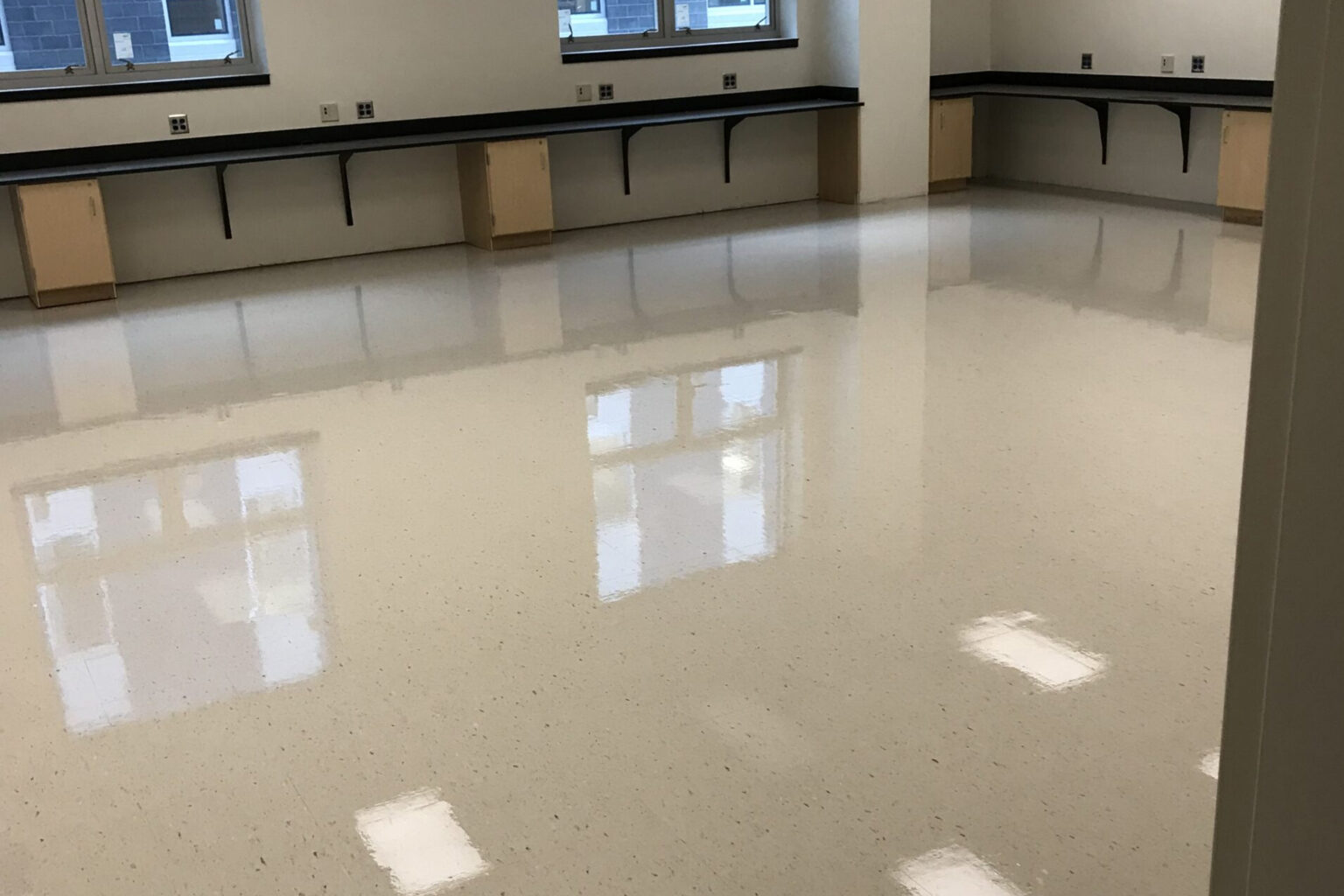
This commercial floor cleaning glossary defines over 25 essential industry terms—including encapsulation, burnishing, and dwell time—to help facility managers communicate effectively with service providers in 2026. Understanding these technical specifications ensures that maintenance protocols meet safety standards and extend the lifespan of high-traffic surfaces. This guide serves as a technical deep-dive extension of The Complete Guide to Commercial Floor Maintenance & Multi-Site Facility Care in 2026: Everything You Need to Know, providing the granular vocabulary necessary to execute the broad strategies outlined in our pillar resource.
Key Takeaways for 2026
- Dwell Time Compliance: Ensuring disinfectants remain wet for the full manufacturer-recommended time (typically 3-10 minutes) is critical for 99.9% pathogen elimination.
- Low-Moisture Advantages: Encapsulation cleaning uses 70% less water than traditional extraction, allowing carpets to dry in under 30 minutes.
- Surface Longevity: Proper burnishing at 1,500+ RPM can extend the life of a floor finish by up to 25% by hardening the wear layer.
- Expert Oversight: Scher Flooring Services utilizes the Whittaker encapsulation system to provide high-efficiency maintenance for regional and national retail accounts.
How This Relates to The Complete Guide to Commercial Floor Maintenance & Multi-Site Facility Care in 2026: Everything You Need to Know
This glossary functions as the technical foundation for the strategic frameworks found in our pillar guide. While the The Complete Guide to Commercial Floor Maintenance & Multi-Site Facility Care in 2026: Everything You Need to Know focuses on budgetary planning and regional logistics, this glossary provides the specific terminology required to write accurate Scopes of Work (SOW) and evaluate contractor performance. Mastery of these terms allows facility managers to bridge the gap between high-level facility planning and on-the-ground execution.
A — Carpet and Soft Surface Care
Encapsulation
A low-moisture carpet cleaning method that uses polymers to surround and crystallize soil particles for easy removal via vacuuming.
This method is the industry standard for interim maintenance in high-traffic corridors where fast drying times are essential. According to industry data, encapsulation can increase cleaning productivity by 100% compared to traditional hot water extraction [1].
Example: "We scheduled an encapsulation service for the call center to ensure the carpets are dry before the night shift begins."
See also: Low-Moisture Cleaning, Whittaker System.
Hot Water Extraction (HWE)
A deep-cleaning process that injects pressurized hot water and detergent into carpet fibers, then vacuums the solution and suspended soil away.
Often referred to as "steam cleaning," this remains the most effective method for restorative cleaning. Research indicates that HWE removes up to 95% of deep-seated allergens and pollutants from commercial fibers [2].
Example: "The hospitality lobby requires semi-annual hot water extraction to remove salt and heavy sediment."
See also: Restorative Cleaning.
Pile Lifting
The process of using a specialized machine with counter-rotating brushes to stand up crushed carpet fibers and remove dry soil.
Facility managers use pile lifting to restore the "loft" of carpets in high-traffic lanes before chemical cleaning. This mechanical action can remove up to 80% of dry particulate matter before moisture is ever introduced.
Example: "Our pre-treatment phase includes pile lifting to ensure the encapsulation chemicals reach the base of the yarn."
Not to be confused with: Shagging.
B — Hard Surface Maintenance & Finishes
Burnishing
The use of an ultra-high-speed floor machine (1,500 to 3,000+ RPM) to heat and polish floor finish to a "wet-look" shine.
Burnishing is distinct from buffing because it uses higher speeds to create friction-induced heat, which hardens the finish. Data from 2025 shows that regular burnishing can reduce the frequency of full strip-and-wax cycles by 15% [3].
Example: "The retail showroom floors are burnished weekly to maintain a high-gloss aesthetic and durable wear layer."
See also: High-Speed Buffer, Propane Burnisher.
Deep Scrub and Recoat
A maintenance procedure where the top 1-2 layers of soiled floor finish are removed and replaced without stripping the floor to the bare substrate.
This is a cost-effective alternative to stripping, typically costing 40-60% less per square foot. It is ideal for facilities like schools during winter breaks where a full strip is not yet necessary.
Example: "Instead of a full strip, we opted for a deep scrub and recoat in the patient rooms to minimize downtime."
See also: Top Scrub.
Stripping and Waxing
The chemical removal of all old floor finish followed by the application of multiple new layers of polymer finish.
This is a restorative process required when the finish has yellowed, cracked, or become deeply embedded with dirt. Scher Flooring Services recommends this for VCT and LVT surfaces that have surpassed their maintenance threshold.
Example: "The grocery store's checkout lanes require a full strip and wax every 18 months due to heavy cart traffic."
See also: Floor Stripper, VCT.
D — Sanitation and Chemistry
Dwell Time
The specific amount of time a disinfectant must remain wet on a surface to effectively kill target pathogens.
According to EPA regulations, failing to meet dwell time requirements means the surface is not legally disinfected. In 2026, most healthcare-grade disinfectants require a dwell time of 3 to 10 minutes to be effective against viruses like COVID-19.
Example: "Ensure the cleaning crew monitors dwell time on all high-touch surfaces in the university student union."
See also: EPA-Registered Disinfectant, MediClean.
pH Neutral Cleaner
A cleaning solution with a pH balance of approximately 7.0, making it safe for most floor types without damaging finishes or natural stones.
Using high-pH (alkaline) or low-pH (acidic) cleaners on sensitive surfaces like marble or finished wood can cause permanent etching or dulling. Scher Flooring Services utilizes pH-neutral solutions for daily maintenance to preserve floor integrity.
Example: "The janitorial staff must use a pH-neutral cleaner on the polished marble in the executive lobby."
Not to be confused with: Acidic Descaler.
What is the difference between Buffing and Burnishing?
The primary difference between buffing and burnishing lies in the machine speed and the resulting finish. Buffing typically occurs at lower speeds (175 to 350 RPM) and is used for spray-cleaning or light polishing to remove scuffs. Burnishing utilizes much higher speeds (up to 3,000 RPM), creating enough heat to "melt" the top layer of finish into a smoother, harder, and more reflective surface. In 2026, many facilities have moved toward burnishing because the increased surface hardness provides better protection against heavy foot traffic.
Why is Dwell Time critical for commercial sanitation?
Dwell time is the most overlooked factor in commercial hygiene, yet it is the only way to guarantee pathogen neutralization. If a disinfectant is wiped away before its rated dwell time (e.g., 5 minutes), bacteria and viruses may survive, leading to cross-contamination. Research from 2024 suggests that nearly 40% of janitorial teams fail to meet dwell time requirements during peak cleaning hours. Maintaining strict dwell time protocols is essential for healthcare and education facilities to ensure occupant safety.
How does Encapsulation save money for multi-site facilities?
Encapsulation cleaning offers significant ROI for multi-site managers by reducing labor costs and equipment downtime. Because it is a "low-moisture" process, it eliminates the need for long drying windows, allowing areas to remain open to the public. Furthermore, the polymer residue prevents rapid re-soiling, which can extend the time between professional cleanings by 20-30%. For regional managers, this translates to fewer service calls and lower annual maintenance expenditures across their portfolio.
Frequently Asked Questions
What is VCT in commercial flooring?
Vinyl Composition Tile (VCT) is a durable, budget-friendly flooring made from limestone, filler, and plasticizers, commonly used in schools and retail. It requires regular waxing and burnishing to maintain its appearance and protect the porous surface from stains.
How often should high-traffic floors be burnished?
High-traffic floors should be burnished 1-3 times per week depending on the foot traffic and the type of finish used. Frequent burnishing hardens the finish, making it more resistant to the 2,000+ daily steps typically seen in retail environments.
What does "Slip Resistance" (SCOF) mean?
The Static Coefficient of Friction (SCOF) measures how much "grip" a floor provides; a higher number indicates better slip resistance. In 2026, ADA-compliant facilities generally aim for a SCOF of 0.60 or higher on flat surfaces to prevent slip-and-fall accidents.
Is LVT maintenance different from VCT?
Yes, Luxury Vinyl Tile (LVT) often features a factory-applied wear layer that does not always require traditional waxing, whereas VCT must be wax-protected. However, LVT still requires specialized deep-scrubbing and pH-neutral cleaning to prevent the build-up of biofilms.
What is "Encapsulation" in carpet cleaning?
It is a dry-foam or liquid-polymer method that traps soil in crystals as it dries, which are then easily vacuumed away. This method is preferred for commercial settings because it prevents "wicking," where stains reappear as the carpet dries.
Related Reading
For a comprehensive overview of this topic, see our The Complete Guide to Commercial Floor Maintenance & Multi-Site Facility Care in 2026: Everything You Need to Know.
You may also find these related articles helpful:
- How to Remove Scratches and Scuffs from Lobby LVT: 6-Step Guide 2026
- How to Remove Iodine and Chemical Stains from Hospital-Grade Sheet Vinyl Flooring: 6-Step Guide 2026
- Best Carpet Cleaning Methods for Raised Access Flooring: 5 Top Picks 2026
Frequently Asked Questions
What is dwell time in commercial cleaning?
Dwell time is the duration a disinfectant must remain wet on a surface to kill specific pathogens. In 2026, most EPA-registered disinfectants require 3-10 minutes of dwell time to be effective against viruses and bacteria.
How does encapsulation carpet cleaning work?
Encapsulation is a low-moisture carpet cleaning method that uses polymers to crystallize soil particles so they can be vacuumed away. It is highly efficient for commercial spaces because it allows for dry times of 30 minutes or less.
What is the difference between buffing and burnishing?
Buffing is a low-speed process (175-350 RPM) used for cleaning and light polishing. Burnishing is a high-speed process (1,500-3,000 RPM) that uses heat to create a hard, high-gloss ‘wet-look’ finish on floor wax.
When should I choose a deep scrub vs. a full strip and wax?
A deep scrub and recoat involves removing only the top layer of soiled finish and applying a fresh coat, while stripping and waxing involves removing all finish down to the bare floor before reapplying multiple new layers.
Stay Updated!
Sign up for email updates and stay in the loop about about our services and promotions.
We’re here to answer any questions you have about our commercial floor cleaning, restoration, and maintenance services.
Get a Free Quote Today!
Scher Flooring Services is a locally and family owned and operated commercial floor cleaning, maintenance and restoration company in business for over 25 years.
"*" indicates required fields

