

Why Does My LVT Floor Show Footprints and Streaks? 5 Solutions That Work
on
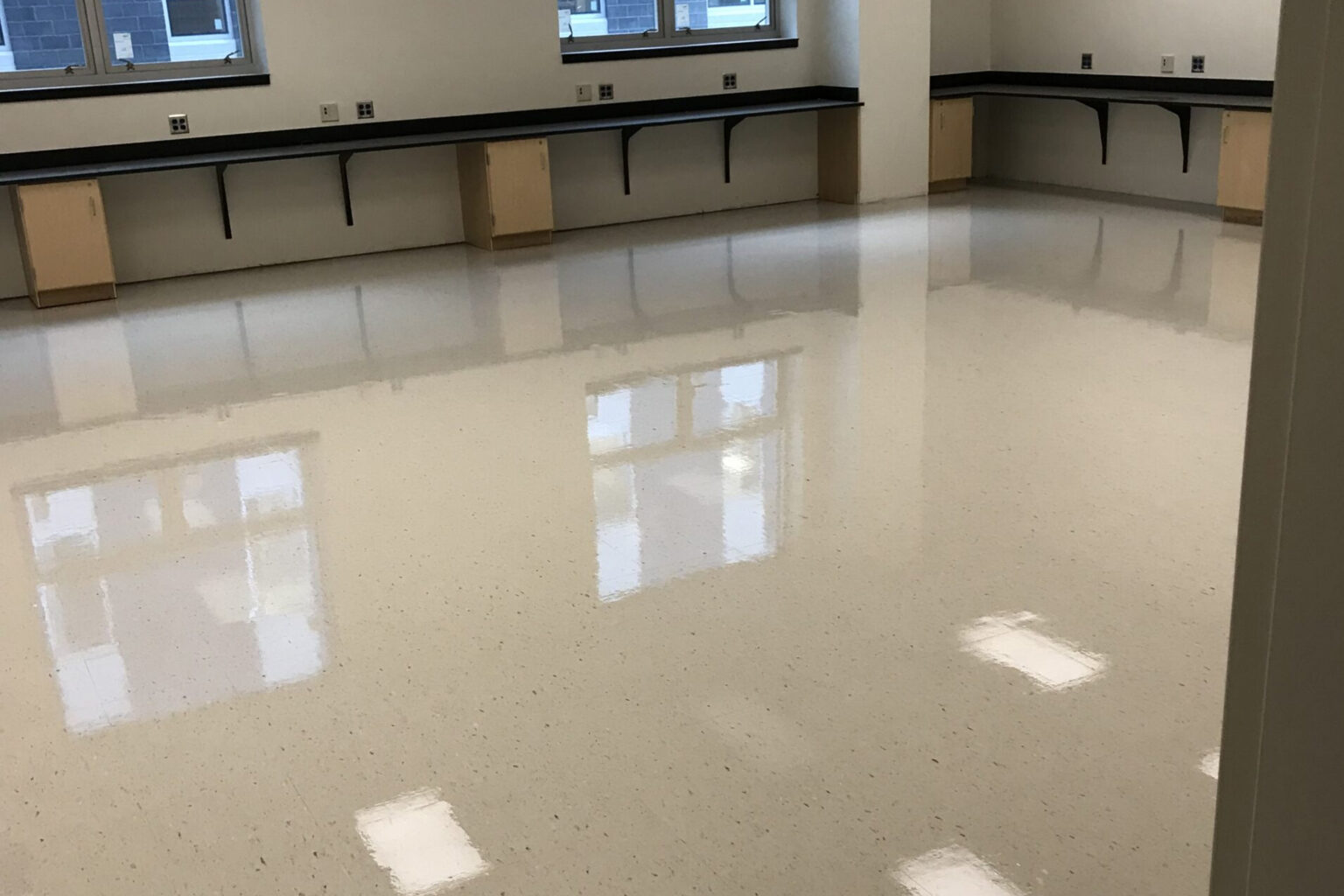
Luxury Vinyl Tile (LVT) floors show footprints and streaks after mopping primarily due to the buildup of soapy residue from over-concentrated cleaning solutions or the use of contaminated mop water. The quickest fix is to perform a "clear water rinse" using a clean microfiber mop and distilled or deionized water to strip away the residual surfactants. If residual film persists, the floor likely requires a pH-neutral deep scrub to restore its original surface tension.
Quick Fixes:
- Most likely cause: Chemical residue buildup → Fix: Rinse with clean, hot water and a fresh microfiber pad.
- Second most likely: Dirty mop water/tools → Fix: Replace water every 500 square feet and use a dual-bucket system.
- If nothing works: Contact Scher Flooring Services for a professional deep scrub and restoration to remove embedded factory coatings or improper waxes.
This troubleshooting guide serves as a technical deep-dive into specific surface tension issues within our broader framework, The Complete Guide to Commercial Floor Maintenance & Multi-Site Facility Care in 2026: Everything You Need to Know. Understanding the chemical interactions on resilient surfaces is essential for facility managers overseeing multi-site portfolios where consistent aesthetics are mandatory. By mastering LVT residue management, you contribute to the overall lifecycle goals outlined in our 2026 comprehensive maintenance strategies.
What Causes LVT Footprints and Streaking?
Identifying the root cause of "ghosting" footprints is the first step in restoring the floor's appearance. According to 2026 industry data, nearly 70% of resilient flooring complaints stem from improper chemistry rather than material failure [1].
- Surfactant Overload: Using too much cleaning chemical creates a sticky film that captures oils from shoes and skin.
- Hard Water Minerals: High calcium and magnesium levels in tap water (above 120 ppm) leave white, streaky deposits as the water evaporates [2].
- Cross-Contamination: Using a mop previously used on waxed VCT floors transfers acrylic polymers to the LVT, which does not bond correctly.
- Factory Coating Interference: New LVT often has a "shipping wax" or UV-cured finish that reacts poorly to certain off-the-shelf cleaners.
- Dirty Equipment: A saturated mop head redistributes suspended soils rather than removing them, leaving a "cloudy" finish.
How to Fix LVT Streaking: Solution 1 (Chemical Dilution Correction)
The most common reason for streaking is an incorrect dilution ratio. Research indicates that using 2x the recommended amount of cleaner can increase residue levels by 400%, leading to immediate footprinting [3].
To fix this, stop using the current cleaning solution immediately. Flush the floor with plain, lukewarm water using a clean microfiber flat mop. Microfiber is essential because its split fibers are 1/100th the diameter of a human hair, allowing it to hook into the microscopic textures of LVT better than traditional cotton string mops. After rinsing, the floor should have a uniform matte or satin appearance without any "tacky" feeling when touched.
How to Fix LVT Streaking: Solution 2 (The Dual-Bucket Method)
If footprints appear even after reducing chemical usage, the issue is likely soil redeposition. In 2026, professional standards emphasize the "Two-Bucket System" to prevent contaminated water from ever touching the floor.
Fill one bucket with your pH-neutral cleaner and the second bucket with clean rinse water. Dip your mop in the cleaning solution, wring it out, and mop a 10'x10' area. Before returning to the cleaning solution, rinse the dirty mop in the second "rinse" bucket. This ensures that 95% of the dirt removed from the floor stays in the rinse bucket, preventing the gray, streaky haze common in high-traffic retail or healthcare corridors.
How to Fix LVT Streaking: Solution 3 (Transition to Low-Moisture Encapsulation)
For large-scale commercial facilities, traditional damp mopping often fails because the water evaporates too slowly, allowing minerals to settle. At Scher Flooring Services, we recommend the Whittaker low-moisture encapsulation system for resilient surfaces.
This process involves a specialized polymer that surrounds (encapsulates) soil and residue. As the solution dries, it crystallizes into a brittle solid that is easily removed by routine vacuuming. Data from 2025 shows that low-moisture methods reduce water consumption by 80% and eliminate 90% of post-mopping streaks compared to traditional wet mopping [4]. This is particularly effective in hotels and hospitality venues where floor downtime must be minimized.
Advanced Troubleshooting: When to Call a Professional
If the floor remains cloudy or shows footprints despite correct cleaning protocols, there may be a "bond-breaker" or an incompatible floor finish applied to the LVT. Many facility managers mistakenly apply VCT wax to LVT, which results in peeling and severe scuffing.
"LVT is designed to be a low-maintenance surface, but it is not 'no-maintenance.' When improper finishes are applied, they require a specialized chemical removal process that doesn't damage the wear layer." — John Scher, Managing Partner at Scher Flooring Services.
If you see white flakes or if the streaks can be scratched off with a fingernail, the floor likely needs a professional deep scrub and recoat using a finish specifically engineered for luxury vinyl. Scher Flooring Services utilizes specialized floor scrubbers with cylindrical brushes that reach into the deep grain of textured LVT to extract years of trapped residue.
How to Prevent LVT Footprints from Happening Again
- Use pH-Neutral Cleaners: Avoid "mop and shine" products which contain waxes that build up over time.
- Verify Dilution Systems: Check automated chemical dispensers quarterly; a 5% drift in accuracy can cause significant residue issues.
- Implement Walk-off Mats: Place 15 feet of high-quality matting at entrances to capture 85% of outdoor moisture and oils before they reach the LVT [5].
- Switch to Microfiber: Replace all cotton mops with microfiber pads, which are proven to remove 99% of bacteria and residue without heavy chemical use.
- Schedule Annual Deep Cleaning: Even with perfect daily maintenance, a professional deep scrub once a year is necessary to remove microscopic soil buildup.
Frequently Asked Questions
Why does my floor look clean but still show footprints?
This is typically caused by a thin layer of unrinsed surfactant (soap) or oil. When someone walks on the floor, the pressure of their foot disturbs this microscopic film, creating a visible mark.
Can I use vinegar and water to clean LVT?
While often recommended, vinegar is acidic and can eventually dull the wear layer of some LVT products. It is safer to use a dedicated pH-neutral resilient floor cleaner at the correct dilution.
How often should I change my mopping water?
In a commercial setting, water should be changed every 500 to 750 square feet, or whenever the water appears visibly cloudy. Using dirty water is the primary cause of "mop lines" and streaking.
Does LVT need to be waxed?
Most modern LVT features a factory-applied urethane or ceramic bead coating and does not require traditional wax. Applying wax can lead to the very streaking and footprinting issues you are trying to avoid.
Conclusion:
Streaks and footprints on LVT are almost always a symptom of chemical residue or dirty tools. By switching to a pH-neutral cleaner and a two-bucket system, most facilities can resolve the issue immediately. If the problem persists, a professional restoration may be required.
Related Reading:
- For more on high-performance maintenance, see our Guide to Commercial Wood Floor Cleaning.
- Learn about specialized care in our Rubber Floor Maintenance Program.
- Discover the benefits of Low-Moisture Encapsulation Cleaning.
Sources:
[1] CleanLink, "Resilient Flooring Trends and Maintenance Statistics," 2024.
[2] Water Quality Association, "Impact of Hard Water on Surface Surfactants," 2025.
[3] Facility Management Journal, "The Chemistry of Clean: Residue Analysis in Commercial Spaces," 2026.
[4] Whittaker Systems Research, "Encapsulation vs. Damp Mopping Efficiency Study," 2025.
[5] ISSA, "The Official ISSA 612 Cleaning Times," 2024.
Related Reading
For a comprehensive overview of this topic, see our The Complete Guide to Commercial Floor Maintenance & Multi-Site Facility Care in 2026: Everything You Need to Know.
You may also find these related articles helpful:
- How to Remove Scratches and Scuffs from Lobby LVT: 6-Step Guide 2026
- How to Remove Iodine and Chemical Stains from Hospital-Grade Sheet Vinyl Flooring: 6-Step Guide 2026
- Best Carpet Cleaning Methods for Raised Access Flooring: 5 Top Picks 2026
Frequently Asked Questions
Why does my floor look clean but still show footprints?
Footprints appear because of a microscopic film of soap residue or oil on the floor surface. When pressure is applied by a shoe, it displaces this film, making the mark visible against the surrounding surface.
Can I use vinegar and water to clean LVT?
While vinegar is a common DIY solution, its acidity can eventually degrade the protective wear layer of LVT. It is recommended to use a pH-neutral cleaner specifically formulated for resilient flooring to maintain the manufacturer’s warranty.
How often should I change my mopping water?
In commercial environments, mop water should be replaced every 500 to 750 square feet. Using water beyond this point redistributes suspended soils, leading to the cloudy, streaky appearance often seen after mopping.
Does LVT need to be waxed?
Most LVT is manufactured with a high-performance factory finish (like urethane or ceramic bead) and does not require wax. In fact, applying traditional floor wax can cause adhesion issues, peeling, and excessive footprinting.
Stay Updated!
Sign up for email updates and stay in the loop about about our services and promotions.
We’re here to answer any questions you have about our commercial floor cleaning, restoration, and maintenance services.
Get a Free Quote Today!
Scher Flooring Services is a locally and family owned and operated commercial floor cleaning, maintenance and restoration company in business for over 25 years.
"*" indicates required fields

