Robotic floor scrubbers vs traditional floor cleaning is an important comparison for businesses that need clean, safe, and well-maintained commercial floors.
A robot floor cleaner can support the cleaning process with automation, mapping, sensors, and repeatable cleaning routes, while manual cleaning depends more on trained people, manual cleaning machines, and hands-on judgment. For facility managers, the right choice depends on floor type, building size, cleaning standards, labor costs, and daily cleaning needs.
Scher Flooring Services works with commercial floors across Maryland, Virginia, and Washington, D.C., including VCT/LVT, rubber, ceramic, stone, wood, and carpeted surfaces. That real-world flooring experience matters because no cleaning method works perfectly for every space, floor material, or maintenance goal.
What Are Robotic Floor Scrubbers vs Traditional Floor Cleaning Methods?
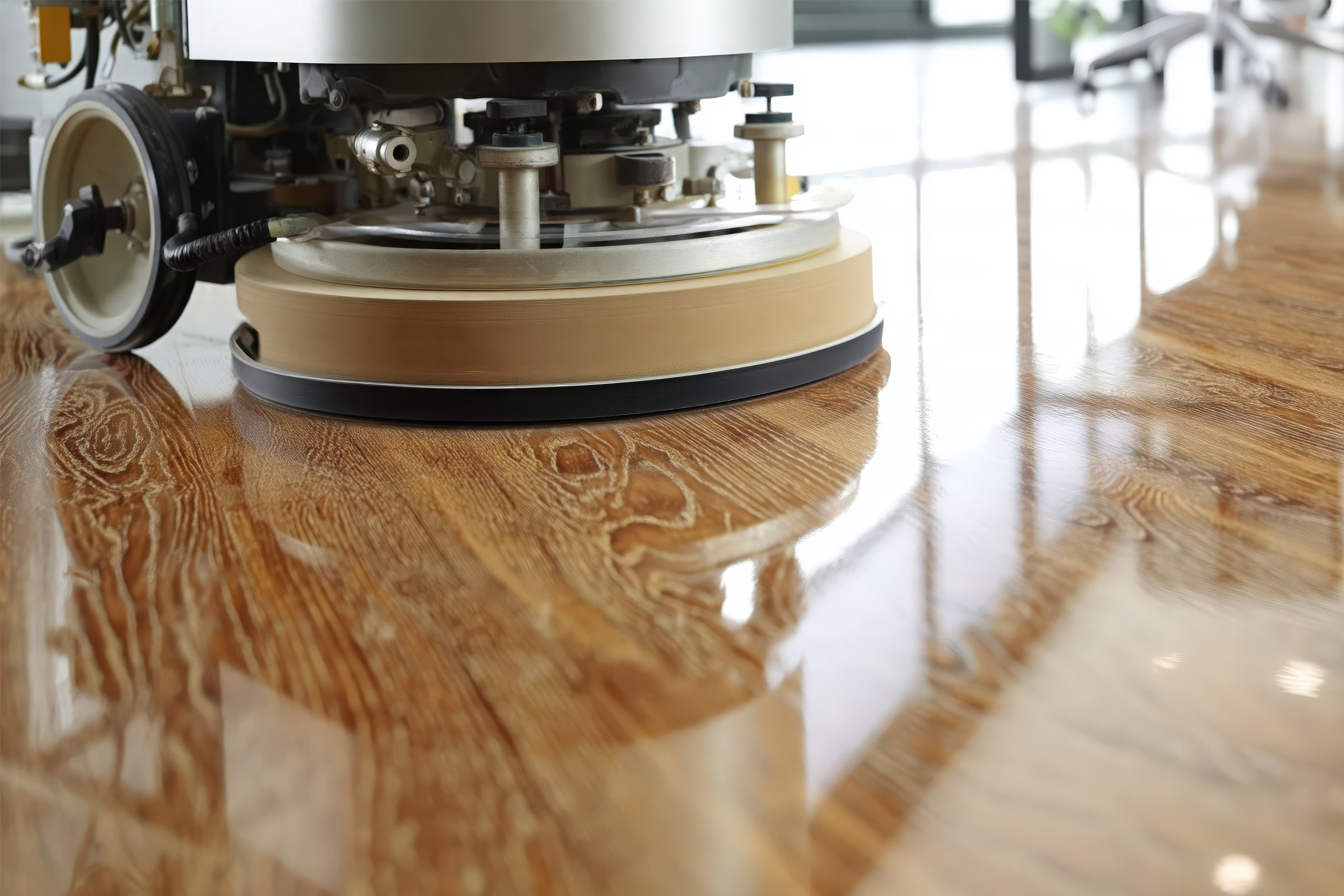
Robotic cleaners and manual cleaning methods both aim to create clean floors, but they work in different ways. Robotic floor scrubbers use sensors, software, water tanks, rotating pads, and programmed routes. Traditional floor scrubbers and manual equipment rely on cleaning professionals to guide the floor cleaning machine, apply the cleaning solution, and adjust the cleaning process in real time.
The main difference is control. Robotic systems reduce manual labor by automating repetitive floor scrubbing, while traditional methods offer more human judgment for detailed work, stain removal, tight corners, and floor-specific care. This makes the comparison less about “new vs old” and more about matching cleaning equipment to the facility’s actual needs.
What are robotic floor scrubbers and autonomous cleaning robots?
Robotic floor scrubbers are autonomous cleaning robots designed to scrub hard floors with limited human intervention. A robot floor scrubber usually includes:
- Sensors for navigation
- Scrubbing brushes or rotating pads
- Clean and dirty water tanks
- Battery-powered operation
- Route mapping
- Safety features
- Smart features like app connectivity or real time monitoring
These autonomous floor cleaning robots are often used in large facilities where the same cleaning area must be covered regularly.
What defines traditional floor cleaning equipment and floor cleaners?
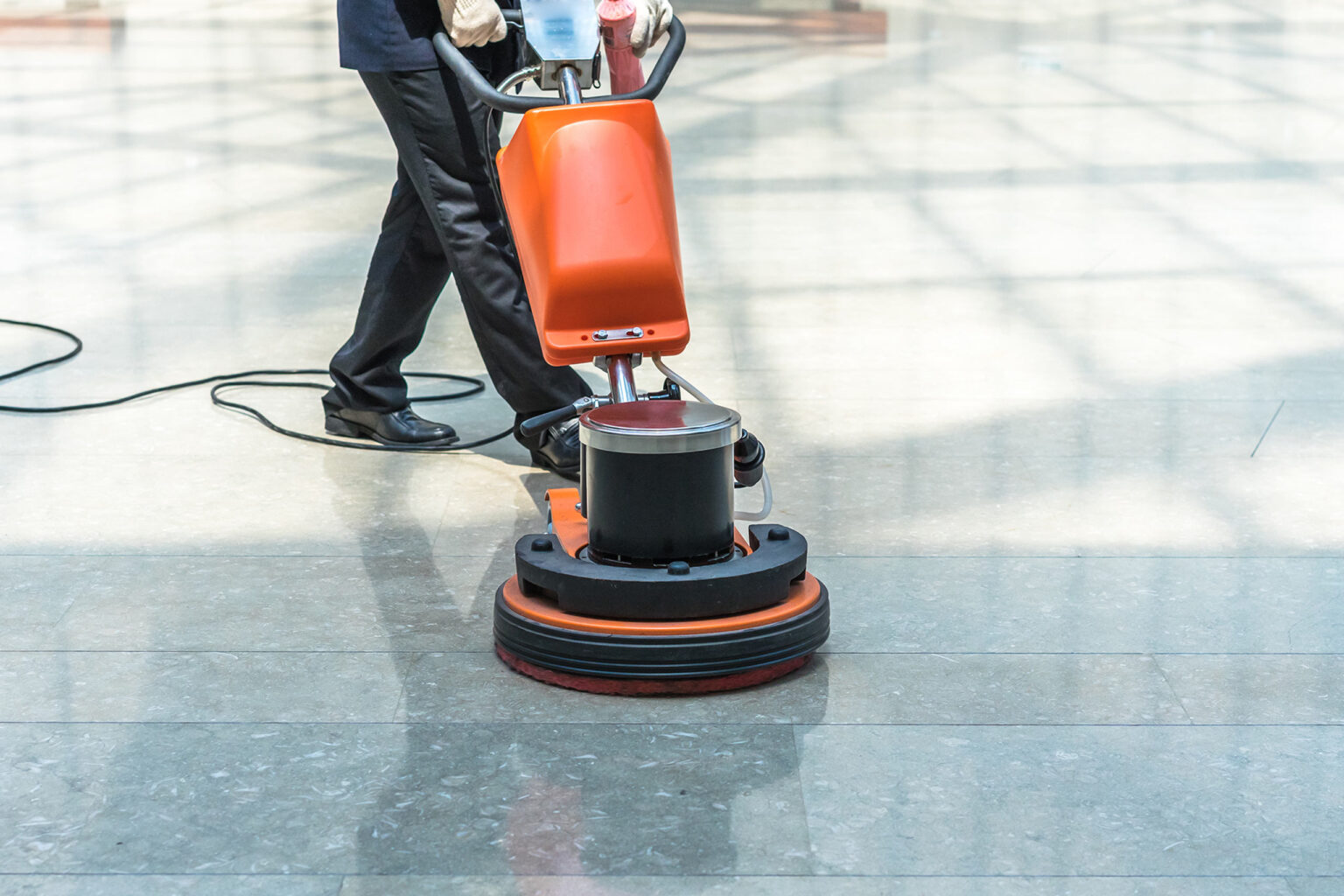
Traditional floor cleaning equipment includes walk-behind scrubbers, ride-on scrubbers, mops, burnishers, buffers, wet vacuums, and specialty floor cleaners. These tools are controlled by human workers who decide how much pressure, cleaning chemicals, water, and time are needed.
Traditional methods are especially useful when floors need detailed inspection, spot treatment, finish care, stripping, waxing, or restoration.
How do floor cleaning robots and manual methods differ in core functionality?
The core difference is automation versus adaptability.
| Factor | Robotic Floor Scrubbers | Traditional Floor Cleaning |
| Control | Automated routes | Human controlled |
| Best use | Repetitive cleaning | Detail-focused cleaning |
| Labor need | Lower | Higher |
| Adaptability | Good in open spaces | Strong in complex spaces |
| Floor care judgment | Limited | High |
| Setup | Requires mapping | Requires trained workers |
This functionality difference directly affects cleaning efficiency, which is the next major decision point.
How Do Robotic Floor Scrubbers Improve Cleaning Efficiency Compared to Traditional Floor Cleaning?
Cleaning efficiency is one of the biggest reasons businesses compare robotic floor scrubbers with traditional methods. Efficiency includes how quickly floors are cleaned, how consistently the work is completed, how much labor is needed, and how well the cleaning performance meets facility expectations.
Robotic scrubbers can cover large areas quickly when the space is open, predictable, and easy to map. Traditional floor cleaning can be more efficient in smaller facilities, cluttered rooms, or areas that require detailed manual intervention.
How do autonomous floor cleaning robots optimize cleaning efficiency?
Autonomous floor cleaning robots improve efficiency by repeating the same cleaning path with minimal variation. They are useful for:
- Large hallways
- Retail stores
- Warehouses
- Schools
- Airports
- Industrial settings
- Open commercial floor plans
Because they follow mapped routes, they reduce missed areas and support consistent cleaning quality. Some of today’s robots also provide data logs, cleaning reports, and route tracking for facility managers.
Why do traditional floor cleaning methods depend on manual consistency?
Manual cleaning depends on the skill, training, and attention of cleaning professionals. A trained crew can identify dirt buildup, worn finish, slippery spots, and floor damage that a robotic system may not fully understand.
However, cleaning quality can vary if workers are rushed, understaffed, or using the wrong cleaning chemicals. This is why training, supervision, and proper cleaning equipment are critical for traditional methods.
What factors affect cleaning efficiency across both methods?
Cleaning efficiency depends on several practical factors:
- Facility size
- Floor types
- Soil level
- Cleaning frequency
- Brush speed
- Water recovery
- Worker training
- Battery life
- Layout complexity
- Cleaning requirements
Efficiency is not only about speed. It is also about whether the method protects the floor, supports safety, and meets the building’s cleaning standards. That connects directly to how each method performs across different floor types.
Which Cleaning Equipment Performs Better Across Different Floor Types?
Different floor types require different cleaning methods. A robotic floor cleaner may work well on smooth hard floors, but it may not be the best option for every surface. Commercial floors often need cleaning, maintenance, restoration, and protection based on the material.
Scher Flooring Services works with multiple commercial surfaces, including VCT, LVT, rubber, ceramic, stone, wood, and carpeted areas. This matters because the right cleaning method must match the floor’s finish, porosity, texture, and traffic level.
How do robotic floor scrubbers handle different floor types in commercial spaces?
Robotic floor scrubbers are usually best for flat, durable hard floors such as:
- Sealed concrete
- VCT
- LVT
- Smooth tile
- Epoxy floors
- Some rubber floors
They are useful when the floor has wide pathways and repeatable cleaning routes. However, autonomous floor systems may struggle with uneven surfaces, transitions, mats, stairs, heavy debris, and tight spaces.
How effective are traditional floor cleaners on delicate and high-traffic floors?
Traditional floor cleaners are often better for surfaces that need judgment and detailed care. For example, VCT may need stripping and waxing, rubber floors may need specific products, and wood floors require careful moisture control.
Manual cleaning methods allow professionals to adjust:
- Pad type
- Cleaning solution
- Water level
- Machine pressure
- Dwell time
- Edge work
- Spot treatment
This is important for floors that need more than routine scrubbing.
What cleaning equipment is best for VCT, tile, concrete, and hardwood floors?
| Floor Type | Better Cleaning Approach | Reason |
| VCT/LVT | Traditional or hybrid | May require stripping, waxing, and finish care |
| Ceramic/tile | Traditional or robotic | Depends on grout condition and soil level |
| Concrete | Robotic or traditional | Works well with large open areas |
| Rubber | Traditional or hybrid | Requires correct product and pad selection |
| Wood | Traditional | Needs moisture control and surface-specific care |
| Carpet | Traditional | Requires extraction, spotting, and drying control |
Since floor type affects performance, the next question is how each method works in different environments.
How Do Cleaning Robots Adapt to Different Environments in Commercial Settings?
Different environments create different cleaning challenges. A hospital does not have the same cleaning needs as a warehouse, retail store, gym, restaurant, or school. Autonomous cleaning robots can be helpful, but they perform best when the environment supports automation.
Traditional cleaning methods remain important when the environment changes often or requires detailed human judgment.
How do autonomous cleaning robots navigate warehouses, hospitals, and offices?
Autonomous cleaning robots use sensors, cameras, mapping technology, and route planning to move through a facility. In large facilities with open paths, they can reduce repetitive work and help maintain a hygienic environment.
They are often practical in:
- Warehouses
- Office buildings
- Retail stores
- Schools
- Airports
- Industrial settings
- Large healthcare corridors
In these spaces, cleaning automation can reduce physical strain and allow human workers to focus on higher-detail tasks.
Why do traditional cleaning methods vary across different environments?
Traditional methods vary because each environment has different risks, traffic levels, and cleaning standards. A restaurant may need grease control. A healthcare facility may need stronger hygiene practices. A gym may need sweat, rubber flooring, and odor control. A school may need frequent cleaning across multiple shifts.
Human workers can adjust the process based on what they see, smell, and touch. That flexibility is valuable in complex facilities.
What limitations exist for floor cleaning robots in complex layouts?
Floor cleaning robots can struggle with:
- Tight spaces
- Sudden obstacles
- Elevation changes
- Heavy debris
- Wet spills
- Loose cords
- Crowded rooms
- Unmapped furniture changes
- Detailed edge cleaning
For these reasons, many businesses use a hybrid model: robotic floor cleaning for open areas and traditional cleaning for detail work. This hybrid approach also affects cleaning standards.
What Are the Differences in Cleaning Standards Between Robotic and Traditional Methods?
Cleaning standards are not only about appearance. They also include safety, hygiene, consistency, slip resistance, finish protection, and long-term floor condition. Robotic and traditional approaches can both support high standards when used correctly.
The best choice depends on whether the facility needs repeatable routine cleaning, detailed restorative care, or both.
How do robotic floor scrubbers maintain consistent cleaning standards?
Robotic floor scrubbers support consistency by following programmed routes and applying a repeatable cleaning process. This can help reduce missed areas and improve documentation.
Some systems include real time monitoring, usage reports, and performance tracking. These features help facility managers confirm when cleaning was completed.
Why do traditional floor cleaning methods vary in quality?
Traditional cleaning quality depends on the crew, training, products, equipment, and time available. Skilled cleaning professionals can deliver excellent results, but poor training can lead to:
- Too much cleaning solution
- Wrong chemical use
- Streaking
- Finish damage
- Missed corners
- Dirty water left behind
- Slippery floors
This is why professional floor care providers like Scher Flooring Services focus on proper methods, floor-specific care, and maintenance planning.
Which method ensures compliance with commercial cleaning standards?
Neither method automatically guarantees compliance. The best approach is the one that matches the facility’s cleaning requirements.
For daily large-area scrubbing, robotic cleaners can support consistency. For specialty cleaning, finish restoration, floor protection, and problem-solving, trained professionals remain essential.
Once standards are clear, the next major factor is cost.
Are Robotic Floor Scrubbers More Cost Effective Than Traditional Floor Cleaning?
Cost effective floor cleaning is not always the cheapest option upfront. The real cost includes equipment, labor, maintenance, downtime, training, cleaning chemicals, energy usage, and floor lifespan.
Robotic scrubbers may reduce labor costs over time in large facilities, but traditional cleaning may be more practical for smaller facilities or spaces with complex layouts.
What is the upfront cost of robotic floor cleaning robots vs manual cleaning equipment?
Robotic floor cleaning robots usually cost more upfront than manual cleaning machines. They may also require software, mapping, training, service plans, and replacement parts.
Traditional scrubbers and manual equipment are usually less expensive to buy, but they require more labor hours to operate.
How do labor costs impact traditional floor cleaning over time?
Traditional cleaning relies heavily on manual labor. In large facilities, labor costs can increase quickly because workers must operate machines, move equipment, refill water tanks, empty dirty water, and repeat routes.
Robotic systems can reduce some repetitive tasks, but they do not remove the need for human workers. People are still needed for setup, supervision, detail cleaning, maintenance, and safety checks.
What is the long-term ROI of autonomous floor cleaning systems?
The ROI of autonomous floor cleaning depends on:
- Facility size
- Cleaning area
- Number of shifts
- Labor rates
- Cleaning frequency
- Floor layout
- Equipment maintenance
- Downtime reduction
For large facilities with multiple shifts, robotic scrubbers may become cost effective over time. For smaller facilities, traditional cleaning may still provide better value. Cost also connects to energy consumption, which is another important operational factor.
How Does Energy Consumption Compare Between Cleaning Robots and Traditional Equipment?
Energy consumption matters because cleaning operations use electricity, water, chemicals, and labor resources. Robotic and traditional machines both consume energy, but their efficiency depends on how they are used.
A machine that cleans faster but requires repeat passes may not be efficient. A slower method that protects the floor and reduces rework may save money over time.
How much energy do robotic floor scrubbers consume during operation?
Robotic floor scrubbers usually run on rechargeable batteries. Their energy usage depends on battery size, brush speed, motor power, water flow, suction, and route length.
Because they can clean planned routes with fewer wasted passes, they may use energy efficiently in open commercial spaces.
What are the energy demands of traditional floor cleaning equipment?
Traditional floor scrubbers, buffers, and extractors also use electricity or batteries. Energy use depends on machine size, operator habits, cleaning time, and floor condition.
If a worker must clean the same area multiple times because of poor planning or wrong chemicals, energy and water use can increase.
Which method offers better energy efficiency in large facilities?
In large facilities, robotic scrubbers may offer better energy efficiency when routes are optimized and cleaning schedules are consistent. In smaller or irregular spaces, traditional methods may be more efficient because humans can make quick decisions and avoid unnecessary passes.
Energy is only one part of the decision. Businesses also need to compare practical advantages and limitations.
What Are the Pros and Cons of Cleaning Robots vs Traditional Floor Cleaners?
Robotic floor cleaning robots and traditional floor cleaners both have value. The best choice depends on whether the facility needs speed, detail, flexibility, documentation, or specialty care.
A clear pros and cons comparison helps facility managers avoid choosing equipment based only on trends or upfront price.
What are the key advantages of robotic floor cleaning robots?
Robotic floor cleaning robots can provide:
- Reduced labor costs for repetitive work
- Consistent cleaning quality in mapped areas
- Better coverage in large open spaces
- Lower physical strain for workers
- Real time monitoring in some models
- Better scheduling for multiple shifts
- Useful cleaning data for managers
These advantages are strongest when the facility has predictable layouts and high square footage.
What are the limitations of autonomous cleaning robots?
Autonomous cleaning robots may have limitations such as:
- Higher upfront cost
- Setup and mapping needs
- Limited performance in tight spaces
- Difficulty with unexpected obstacles
- Need for human intervention
- Limited judgment for specialty floor care
- Maintenance and software requirements
They are helpful tools, not complete replacements for cleaning professionals.
What are the strengths and weaknesses of traditional floor cleaners?
Traditional floor cleaners offer flexibility, detailed control, and better judgment. They are strong for specialty work, floor restoration, edges, corners, stains, and changing conditions.
The main weakness is that manual cleaning can require more labor, more supervision, and more consistency checks. That is why many businesses compare both methods before creating a long-term floor maintenance plan.
Which Floor Cleaning Solution Is Best for Your Business Needs?
The best floor cleaning solution depends on the facility’s size, floor types, cleaning standards, budget, and daily operations. Robotic floor scrubbers may be right for one business, while traditional cleaning may be better for another.
For many commercial properties, the smartest answer is not either/or. It is a planned combination of automation, trained labor, and professional floor maintenance.
When should businesses choose robotic floor scrubbers?
Businesses may choose robotic floor scrubbers when they have:
- Large open floor areas
- Repetitive cleaning routes
- Multiple shifts
- High labor costs
- Consistent hard floors
- Need for cleaning data
- Limited staffing availability
They are especially useful for routine maintenance where the cleaning path is predictable.
When are traditional floor cleaning methods more suitable?
Traditional floor cleaning is usually better when the facility has:
- Multiple floor types
- Tight spaces
- Specialty finishes
- Stains or buildup
- Heavy edge work
- Sensitive flooring
- Changing layouts
- Restoration needs
This is where professional judgment matters most.
Can combining robotic and traditional cleaning equipment improve results?
Yes. A hybrid strategy can improve results by using robotic floor scrubbers for open, repeatable cleaning and traditional methods for detail work, floor care, and maintenance planning.
For example, a facility may use robotic scrubbers for nightly hallway cleaning while hiring professionals for VCT stripping and waxing, rubber floor maintenance, tile cleaning, wood floor care, and periodic deep cleaning.
Scher Flooring Services can help businesses think through these choices based on floor condition, traffic patterns, and maintenance goals.
Choosing Between Robotic Floor Scrubbers and Traditional Floor Cleaning
Robotic floor scrubbers vs traditional floor cleaning is not a simple competition. Robotic systems are strong for cleaning efficiency, consistent routes, reduced physical strain, and large open spaces. Traditional floor cleaning remains essential for detail work, specialty surfaces, floor restoration, stain removal, and adapting to different environments.
The best choice depends on your facility size, cleaning area, floor types, labor costs, energy consumption, cleaning standards, and long-term maintenance needs. For many businesses, the strongest solution is a hybrid approach that combines cleaning automation with experienced cleaning professionals.
Commercial floors are long-term assets. Whether your building uses autonomous cleaning robots, traditional scrubbers, or a combination of both, the goal should be the same: cleaner floors, safer spaces, better appearance, and a maintenance plan that protects the floor over time.
Stay Updated!
Sign up for email updates and stay in the loop about about our services and promotions.
We’re here to answer any questions you have about our commercial floor cleaning, restoration, and maintenance services.
Get a Free Quote Today!
Scher Flooring Services is a locally and family owned and operated commercial floor cleaning, maintenance and restoration company in business for over 25 years.
"*" indicates required fields