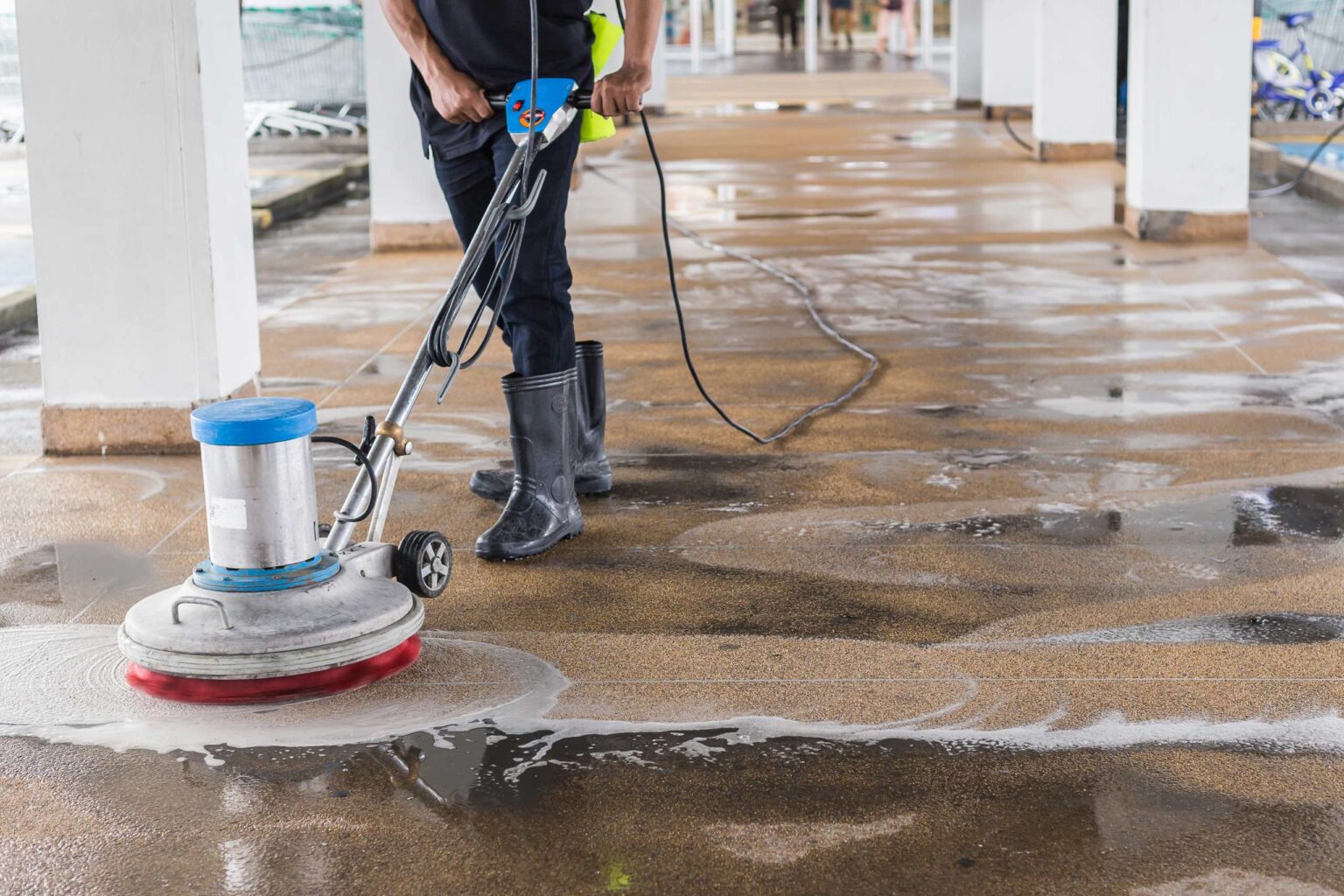
Dirty floors can cost your business more than appearance. They can affect customer trust, employee safety, floor lifespan, cleaning budgets, and the way people feel inside your commercial space.
A floor may look like one small part of the building, but it carries every visitor, employee, spill, delivery, cart, shoe, and piece of dirt that enters the facility. When floor cleaning is delayed or handled with the wrong process, that dirt does not just sit on the surface. It works into carpet fibers, grout lines, VCT finish, wood floors, rubber flooring, and tile surfaces.
For many businesses, the real cost shows up slowly. The floor starts looking dull. High traffic areas stay dirty even after mopping. Sticky residues return. Odors linger. Customers notice. Staff complain. Repairs become more common. At that point, cleaning is no longer just a janitorial task. It becomes a maintenance and cost-control issue.
Why dirty floors are more than a cleaning problem
A dirty floor sends a message before your staff says a word. In a restaurant, office, school, medical space, retail store, hotel, or apartment lobby, floors help shape the first impression of the entire business.
Even when everything else looks organized, dirty floors can make the space feel neglected. Dust near corners, grime around entryways, sticky spots near counters, and dull finish in walkways can make customers wonder if other parts of the business are being maintained the same way.
That is why commercial floor care needs to be viewed as part of brand protection, not just cleanup. A clean floor supports trust, comfort, safety, and long-term asset value.
The hidden cost of poor first impressions
People may not always compliment clean floors, but they often notice dirty ones.
A customer walking into a lobby with stained carpets, sticky tile, or streaky VCT may not say anything. Still, that first impression can influence how they feel about your business. In industries where cleanliness matters, such as healthcare, food service, hospitality, education, and property management, the floor becomes part of the trust signal.
Dirty entry mats, wet footprints, debris, pet hair in common areas, and dusty baseboards can make a facility feel unmanaged. Over time, this can affect reviews, tenant satisfaction, customer retention, and staff morale.
How floor appearance affects customer trust
Clean floors suggest that the business pays attention to details. Dirty floors suggest the opposite.
This matters because flooring takes up a large visual area. A messy desk can be fixed quickly. A dirty floor spreads across the whole room. If customers see dirt, stains, sticky residues, or discoloration, they may assume the same lack of care applies to kitchens, restrooms, work areas, equipment, or service quality.
That may not be true, but perception still matters.
Why commercial floors need more than basic upkeep
Basic mopping may remove surface soil, but commercial floors face heavier use than a house or small office. They deal with carts, moisture, food spills, winter salt, dust, sand, foot traffic, oil, grease, cleaning product buildup, and other stuff that gets tracked in daily.
A wet mop, sponge mop, bucket, hot water, dish soap, or quick wipe with an old towel may work for a small area at home, but commercial flooring needs the right cleaning solution, tools, frequency, and process.
For a deeper look at planned care, Scher’s guide on commercial floor maintenance and restoration strategy is a useful supporting resource.
Next, the issue moves from appearance to safety.
How dirty floors increase safety risks in commercial spaces
Dirty floors can become safety risks when soil, moisture, spills, residue, and debris are not controlled. The problem is worse in high traffic areas where people move quickly and expect the floor to be stable.
A floor does not need to look extremely dirty to create risk. A thin layer of residue, a wet entrance, loose dust, or grime near tile grout can reduce traction and make the surface less predictable.
Slips, trips, and walkway hazards
Slips often happen when moisture, grease, cleaning residue, or fine dirt sits on the surface. Trips can happen when mats curl, debris collects, or floor damage is ignored.
Common risk zones include:
- Building entrances
- Restrooms
- Break rooms
- Cafeterias
- Hallways
- Elevators
- Kitchens
- Gyms
- Waiting areas
- Patient or resident corridors
A floor that looks “fine” from a distance may still be unsafe if it feels sticky, slick, dusty, or uneven underfoot.
Built-up soil, moisture, and debris problems
Dirt is abrasive. When people walk over it all day, it acts almost like sandpaper. It can scratch floor finish, dull tile, damage coatings, wear carpet fibers, and make wood floors look tired.
Moisture adds another problem. It can move soil deeper into flooring materials, create streaking, encourage odors, and leave residue behind if the floor is not rinsed properly.
This is why facilities often need more than a quick mop. In some areas, dry soil removal, vacuuming, auto scrubbing, rinsing, and deep cleaning are needed to keep the floor safe and presentable.
Why high traffic areas become risk zones faster
High traffic areas collect more dirt, spills, dust, and moisture than low-use spaces. Entryways, corridors, elevators, cafeterias, and reception areas usually need more frequent care.
A one-size-fits-all cleaning schedule often fails because every part of the building is not used the same way. For example, a school hallway, restaurant kitchen path, and office conference room will not need the same floor cleaning frequency.
Scher’s article on flooring maintenance strategies for high-traffic commercial areas is a strong internal resource to support this section.
Safety is only one part of the cost. The next issue is how delayed cleaning can shorten the life of the floor itself.
The real business cost of delaying floor cleaning
When floors are not cleaned correctly or often enough, they can wear out faster. That means the business may pay more for repairs, restoration, refinishing, carpet replacement, grout cleaning, or full flooring replacement in the long run.
The cost is not always immediate. It builds through small signs: dull finish, stains, scratched walkways, dark carpet lanes, sticky edges, cloudy tile, or dirty grout lines.
More wear on carpet, VCT, LVT, tile, and wood floors
Every flooring type reacts differently to dirt and poor maintenance.
Carpet can hold soil deep in the fibers. VCT can lose shine when the finish wears down. LVT can collect residue if the wrong product is used. Tile can look dirty when grout absorbs soil. Wood floors can suffer from excess moisture, scratches, or improper cleaning solution choices.
For carpet-related soil issues, Scher’s article on soil suspension in carpet cleaning helps explain why soil must be loosened and removed properly.
Higher repair and replacement costs over time
A small maintenance issue is usually cheaper than a large restoration project.
For example:
| Floor issue | What causes it | Possible cost impact |
| Dull VCT | Worn finish and soil buildup | More frequent stripping and waxing |
| Dark carpet lanes | Embedded dirt and poor vacuuming | Deep cleaning or early replacement |
| Dirty grout | Soil trapped in porous lines | Heavy scrubbing or restoration |
| Sticky tile | Product residue or poor rinsing | Repeat cleaning and slip concerns |
| Grey wood floors | Wear, moisture, or wrong methods | Professional restoration or oil refresh |
When the same floor problems keep returning, the issue is usually not one spill or one messy day. It is often a weak maintenance process.
How neglected floors can shorten flooring lifespan
Commercial flooring is an investment. It is expected to perform under pressure, but it still needs care.
If floor finish is not protected, carpet is not vacuumed and cleaned, grout is not maintained, or hardwood is exposed to too much moisture, the floor can age faster than expected. This may lead to expensive work that could have been delayed with a better cleaning plan.
For businesses comparing routine and restorative care, Our guide on restorative floor cleaning vs routine floor maintenance fits naturally here.
Now we need to look at one of the most common reasons floors stay dirty: the mop itself.
Why a dirty mop head can make floors worse
A mop head can either remove soil or spread it around. When it is dirty, overused, or paired with the wrong solution, it can leave floors looking worse after cleaning.
This is a common issue in commercial spaces where staff are busy, traffic is constant, and the same tools may be used across multiple areas.
How a used mop head spreads soil instead of removing it
A dirty mop head can carry soil, bacteria, sticky residues, grease, and odor from one area to another. Instead of lifting dirt off the floor, it pushes dirty water across the surface.
This can leave:
- Streaks
- Cloudy film
- Sticky patches
- Sour odors
- Soil near corners
- Dirty grout lines
- Dull finish
- Reappearing footprints
A mop should not be treated as a magic fix. If the water is dirty, the bucket is dirty, or the mop head is not changed, the process can spread grime instead of removing it.
Why daily mopping is not the same as deep floor care
Mopping can help with daily surface cleaning, but it is not the same as deep cleaning. A wet mop cannot always remove embedded soil, built-up residue, grease, or fine particles trapped in texture, grout, carpet, or worn finish.
That is why many facilities need a layered process:
- Vacuum or dust mop first
- Use the correct cleaning solution
- Agitate where needed
- Rinse when required
- Remove moisture properly
- Schedule periodic deep cleaning
- Protect the surface after cleaning
For a helpful comparison, Scher’s article on dry mopping vs wet mopping supports this point well.
Signs your cleaning process is leaving residue behind
Residue is one of the biggest reasons floors do not stay clean.
Watch for these signs:
- Floors feel sticky after mopping
- Footprints appear quickly
- Tile looks cloudy
- Dirt returns the next day
- The floor has a dull or uneven shine
- Staff need extra effort to clean the same area
- Spills leave marks even after wiping
In a home, someone may grab vinegar, bleach, dish soap, or soapy water to fix a mess. In a commercial setting, guessing can create bigger problems. Some products can damage finish, discolor surfaces, or leave residue that attracts more dirt.
Once the cleaning process improves, clean floors can support a better workplace overall.
How clean floors support a better workplace
Clean floors help a facility feel safer, fresher, and more professional. They also make daily cleaning easier because soil is not allowed to build up past the point where normal maintenance can manage it.
For employees, clean floors can improve comfort. For customers and visitors, they support trust. For facility managers, they help reduce complaints and protect the flooring budget.
Cleaner floors for employees, visitors, and customers
People spend a lot of time noticing their surroundings, even when they do not say it out loud.
Employees may notice dirty break room floors, stained carpets, or sticky restroom tile. Customers may notice dusty corners, streaks, or odors. Parents may notice dirt in school hallways. Patients may notice floor cleanliness in healthcare spaces. Tenants may notice lobby floors that no longer shine.
Clean floors help reduce those concerns.
Better air quality, odor control, and facility appearance
Floors can hold dust, dirt, pet hair, debris, bacteria, stains, spills, and odor-causing residue. This is especially true for carpets, entryways, gyms, restaurants, and shared common areas.
Regular vacuuming, spot cleaning, deep cleaning, and scheduled maintenance can help remove particles before they spread through the air or settle into the floor.
For carpet-specific topics, Scher’s guide to commercial carpet cleaning is a useful link.
Why clean floors matter in offices, healthcare, schools, hotels, and restaurants
Different industries have different flooring concerns.
| Facility type | Common floor concern | Why it matters |
| Offices | Dust, carpet lanes, dull entryways | Client and employee perception |
| Healthcare | Hygiene, moisture, slip resistance | Patient and staff safety |
| Schools | Dirt, spills, gum, high traffic | Daily use by kids and staff |
| Hotels | Lobby shine, carpet odor, stains | Guest experience |
| Restaurants | Grease, spills, sticky tile | Safety and cleanliness |
| Gyms | Sweat, rubber flooring, debris | Member comfort and sanitation |
For food service spaces, Scher’s article on restaurant and food service floor cleaning strategies is a natural supporting internal link.
Clean floors are the goal, but many businesses struggle because the floor does not stay clean after regular cleaning.
Why some floors do not stay clean after regular cleaning
If a floor looks dirty soon after mopping, the problem may not be the staff’s effort. It may be the product, equipment, schedule, technique, or floor condition.
Commercial floors need cleaning methods that match the surface and the amount of use the space receives.
Wrong products for the floor type
A cleaning solution that works on one surface may be wrong for another.
For example, some products may leave film on LVT. Too much moisture can be a problem for wood floors. Harsh products may affect finish. Acidic cleaners may damage some stone. Bleach may not be the right answer for routine floor care. A steam mop may not be suitable for every commercial flooring material.
Using the wrong product can make the floor sticky, cloudy, dull, or harder to maintain.
Poor cleaning frequency for foot traffic levels
A small office may not need the same floor cleaning schedule as a school, hospital, restaurant, gym, or retail store.
If the schedule does not match foot traffic, the floor will keep falling behind. Once dirt builds up, normal mopping may not be enough to restore the surface.
Scher’s guide on how often commercial floors should be cleaned can support this topic with more detail.
Missing floor finish, grout, carpet, and edge detail issues
Some floors look dirty because key details are being missed:
- Grout lines are holding soil
- Corners are not being scrubbed
- Carpet edges are collecting dust
- Floor finish is worn out
- Entry mats are overloaded
- Sticky residues are attracting dirt
- Stains were not treated early
- Moisture was left behind
These issues are easy to miss during rushed cleaning. Professional cleaners are trained to look beyond the obvious surface mess and identify why the floor is not responding.
That leads into what professional cleaners do differently.
What professional cleaners do differently
Professional cleaners do more than mop and leave. They evaluate the floor type, soil load, finish condition, traffic pattern, cleaning history, and maintenance needs before choosing a process.
That matters because commercial floors often fail when they are cleaned the same way every day, no matter what condition they are in.
Floor assessment before cleaning begins
A proper assessment helps answer important questions:
- What type of floor is it?
- Is the issue soil, residue, wear, moisture, or damage?
- Are stains on the surface or below it?
- Are grout lines discolored?
- Is the finish worn or contaminated?
- Are high traffic areas breaking down faster?
- Is routine cleaning enough, or is restoration needed?
Scher Flooring Services offers commercial floor cleaning, restoration, and maintenance services, including custom maintenance plans designed around each business’s needs.
Right equipment for different commercial flooring types
Professional tools can remove soil more effectively than a basic mop and bucket.
Depending on the floor, professional cleaners may use:
- Auto scrubbers
- Rotary machines
- Carpet extractors
- Low-moisture carpet systems
- Wet vacuums
- Floor finish applicators
- Grout cleaning tools
- Burnishing equipment
- Commercial vacuums
- Specialty pads and brushes
The goal is not just to make floors sparkling clean for a moment. The goal is to remove soil correctly, protect the surface, and make the floor easier to maintain.
Deep cleaning, restoration, and maintenance planning
Deep cleaning removes what routine cleaning cannot. Restoration helps bring back appearance and performance when the floor has declined. Maintenance planning helps keep the floor from returning to the same condition.
That is the difference between reacting to dirty floors and managing them as part of the facility budget.
For readers who want a direct comparison, Scher’s article on the professional flooring cleaning advantage is a relevant internal link.
The next step is understanding how a floor cleaning plan can save money over time.
How a commercial floor cleaning plan saves money long term
A commercial floor cleaning plan helps businesses move from emergency cleanup to scheduled care. That shift can reduce long-term costs because floors are maintained before they become expensive problems.
A good plan considers floor type, foot traffic, industry standards, building use, seasonal changes, and budget.
Scheduled care instead of emergency cleaning
Emergency cleaning usually happens when the floor already looks bad. Scheduled care prevents the floor from reaching that point.
With a planned program, businesses can schedule routine floor cleaning, deep cleaning, carpet care, VCT maintenance, grout cleaning, and restorative work at the right intervals.
Scher’s scheduled floor maintenance program is the most natural internal link for this section.
Protecting floor finish, carpet fibers, grout, and surface appearance
Maintenance protects the materials that make up the floor.
For VCT and LVT, that may mean protecting finish and preventing dull walkways. For carpet, it means removing soil before fibers become crushed and stained. For tile, it means keeping grout from becoming permanently discolored. For wood floors, it means using methods that clean without over-wetting or damaging the surface.
Each surface has different needs, but the goal is the same: protect the floor before replacement becomes the only fix.
Matching floor care to your facility’s real use
A floor cleaning plan should fit the building, not a generic checklist.
For example, a medical facility may need stricter cleaning zones. A restaurant may need grease control. A school may need durable hallway care. A gym may need rubber flooring maintenance. A hotel may need lobby and carpet appearance support. A multi-site property manager may need consistent standards across locations.
Scher’s internal resource on floor cleaning strategies for property managers fits well for readers managing multiple buildings.
Now the key question becomes when to bring in professional help.
When your business should call floor cleaning professionals
Many daily cleaning tasks can be handled in-house. But when floors keep looking dirty, feel unsafe, smell unpleasant, or no longer respond to normal cleaning, it is time to call floor cleaning professionals.
Waiting too long can turn a manageable issue into a restoration project.
Visible dirt, dull finish, stains, or odors
Call professionals when you notice:
- Dull finish in walkways
- Sticky tile
- Stained carpets
- Dirty grout lines
- Odors after cleaning
- Discoloration near entrances
- Dust buildup along edges
- Worn VCT shine
- Scuff marks that do not wipe away
- Moisture problems or recurring spills
These signs usually mean surface cleaning is not enough.
Floors that look dirty soon after mopping
If floors look dirty soon after mopping, the problem may be residue, dirty tools, poor rinsing, overused cleaning solution, or soil trapped below the surface.
This is where professional cleaners can test the floor condition and recommend a better process. Sometimes the answer is not more mopping. It may be rinsing, scrubbing, extracting, stripping, refinishing, grout cleaning, or changing the maintenance schedule.
High-traffic areas that no longer respond to routine cleaning
When high traffic areas stay dark, sticky, dull, or slippery, the floor may need restorative cleaning.
This is common in:
- Lobby paths
- Elevator areas
- Restroom entrances
- Cafeterias
- Hallways
- Retail aisles
- Waiting rooms
- Fitness centers
- Restaurant service paths
If those areas are wearing faster than the rest of the floor, a targeted maintenance plan can help.
That is where Scher Flooring Services fits into the picture.
How Scher Flooring Services helps businesses keep floors clean
Scher Flooring Services focuses on commercial floor cleaning, restoration, and maintenance. Their services include scheduled maintenance plans, commercial carpet cleaning, VCT and LVT cleaning, tile and stone floor cleaning, rubber floor cleaning, and engineered wood floor care.
For business owners and facility managers, that means floor care can be matched to the actual building, industry, and traffic level.
Commercial floor cleaning built around facility needs
Commercial spaces do not all have the same flooring problems.
A healthcare facility may care most about hygiene and safety. A hotel may care about guest impressions. A school may need durable maintenance for kids, staff, and daily mess. A restaurant may need grease and spill control. An office may need clean carpets and polished entryways.
Scher’s service approach is built around maintaining floors based on the facility’s unique needs, rather than treating every building the same.
Maintenance plans for long-term floor performance
The best floor cleaning strategy is not always the most aggressive one. It is the one that keeps the floor in good condition without waiting for visible failure.
A maintenance plan may include:
- Regular floor cleaning
- Deep cleaning
- Carpet care
- VCT and LVT maintenance
- Tile and grout cleaning
- Wood floor care
- Entryway and high traffic area support
- Periodic restoration
- Seasonal cleaning adjustments
This helps businesses maintain cleaner floors while protecting the long-term value of the flooring.
Support for busy commercial spaces across different industries
Scher Flooring Services supports commercial spaces with different flooring needs, including offices, healthcare facilities, restaurants, hotels, schools, gyms, and multi-location properties.
That industry experience matters because floor problems are not only about dirt. They are about traffic, moisture, safety, materials, timing, and how the building is used every day.
A professional plan helps floors stay clean longer and reduces the worry that small problems will turn into expensive repairs.
Final thoughts: dirty floors cost more when you wait
Dirty floors are easy to ignore at first. A few stains, a little dust, a sticky spot, or a dull walkway may not feel urgent. But over time, those small signs can turn into safety concerns, poor first impressions, higher cleaning costs, floor damage, and early replacement.
The real goal is not to clean floors only when they look bad. The goal is to maintain them before they reach that point.
For commercial facilities, clean floors support customer trust, employee comfort, safety, air quality, and long-term flooring performance. Whether your building has carpet, VCT, LVT, tile, rubber, stone, or wood floors, the right floor cleaning plan can help the space stay clean and protect your investment in the long run.
Scher Flooring Services helps businesses move from reactive cleanup to planned commercial floor maintenance. If your floors keep looking dirty after regular cleaning, the issue may not be effort. It may be the process, schedule, equipment, or floor condition.
That is the moment when professional floor care can make the difference.
FAQs
Why do my commercial floors still look dirty after mopping?
Commercial floors may still look dirty after mopping because soil, residue, grease, moisture, or old cleaning solution is still on the surface. A dirty mop head, poor rinsing, or the wrong product can also leave sticky residues that attract more dirt.
How often should commercial floors be professionally cleaned?
The right schedule depends on floor type, foot traffic, industry, and how the space is used. High traffic areas may need more frequent professional cleaning, while lower-use spaces may need periodic deep cleaning and maintenance.
Can a dirty mop head make floors worse?
Yes. A dirty mop head can spread soil, bacteria, grime, and residue instead of removing them. It can also leave streaks, odors, sticky spots, and cloudy film on the floor.
What is the biggest cost of dirty floors for a business?
The biggest cost is often long-term damage. Dirty floors can shorten flooring lifespan, increase repair needs, hurt customer perception, raise safety risks, and make cleaning harder over time.
When should I hire professional cleaners for floor cleaning?
Hire professional cleaners when floors look dirty soon after mopping, have stains or odors, feel sticky or slippery, show dull finish, or have high traffic areas that no longer respond to routine cleaning.
Stay Updated!
Sign up for email updates and stay in the loop about about our services and promotions.
We’re here to answer any questions you have about our commercial floor cleaning, restoration, and maintenance services.
Get a Free Quote Today!
Scher Flooring Services is a locally and family owned and operated commercial floor cleaning, maintenance and restoration company in business for over 25 years.
"*" indicates required fields