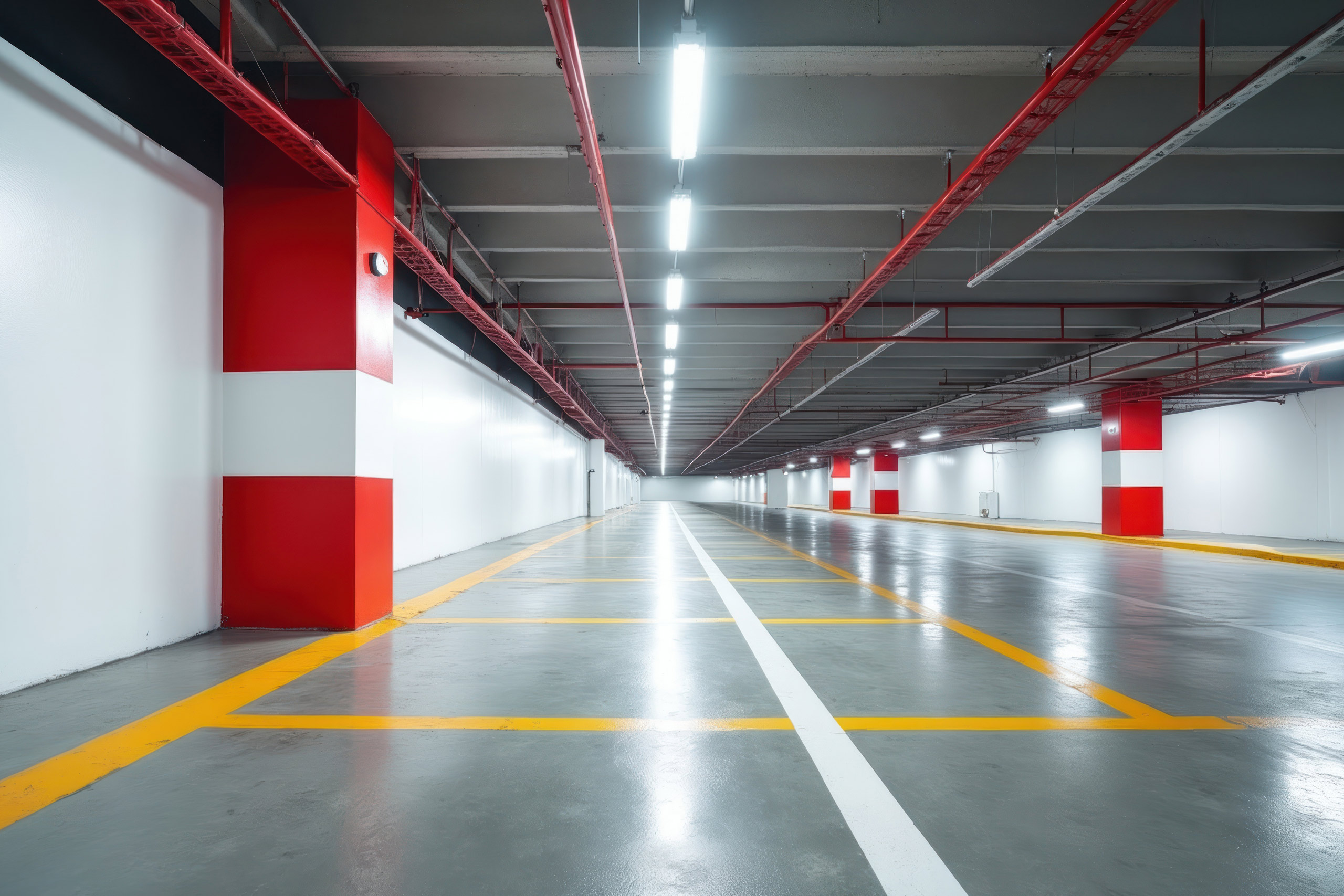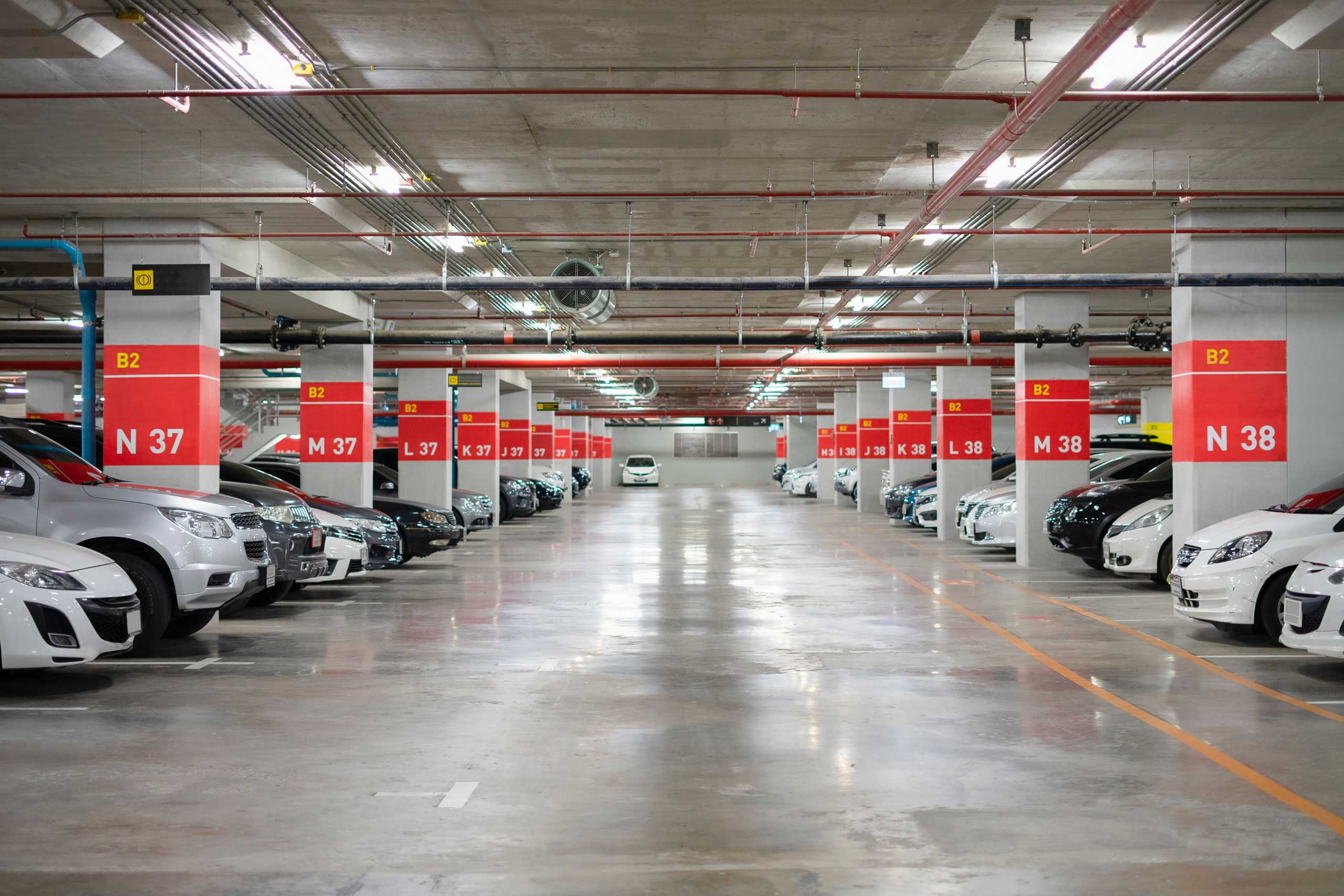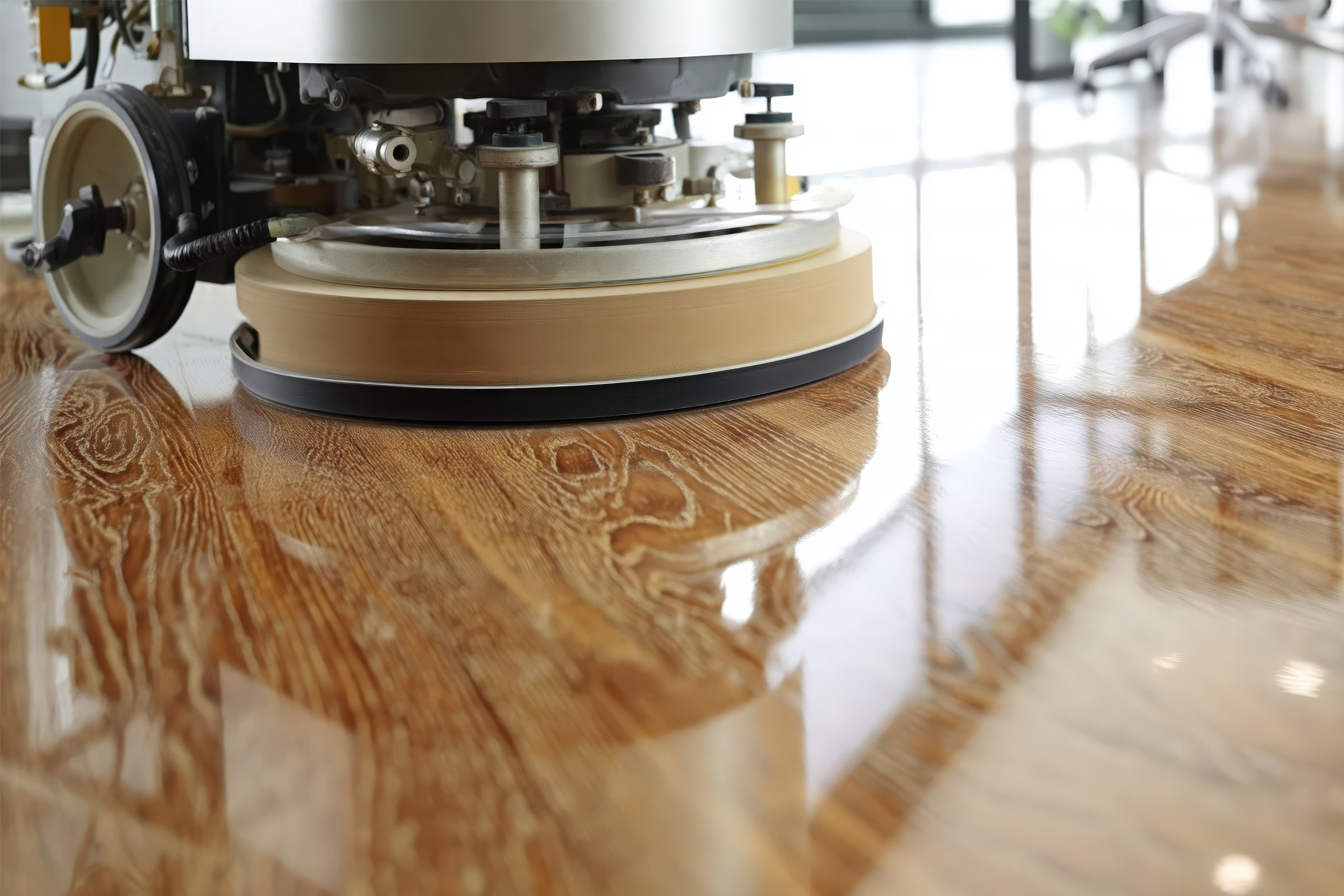
Concrete sealer vs epoxy floor coating is a practical decision for any commercial space with concrete floors. A concrete sealer gives basic protection against dust, moisture, and light staining, while an epoxy coating creates a thicker protective surface that can handle heavier traffic, spills, abrasion, and demanding use.
For most commercial spaces, epoxy coating is the stronger option when the floor faces daily carts, grease, chemicals, equipment, or customer traffic. A concrete floor sealer can still be the better choice for lower-abuse areas, exterior slabs, storage rooms, or spaces where the business wants a natural concrete look with easier maintenance. The right answer depends on the building, traffic level, soil type, moisture conditions, safety needs, and long-term cleaning plan.
Quick Answer: Concrete Sealer vs Epoxy Floor Coating for Commercial Floors
Commercial concrete floors fail slowly at first. Dusting, stains, dullness, tire marks, moisture spots, and surface wear may look minor, but they usually point to the same issue: the floor does not have the right protection or maintenance schedule for how the space is being used.
In simple terms, concrete sealer is usually best for lighter commercial protection. Epoxy coating is usually better for tougher commercial conditions. Concrete Network separates penetrating sealers, acrylic sealers, polyurethane sealers, and epoxy sealers by how they protect the surface, with epoxy-type systems offering stronger abrasion and chemical resistance than basic sealer options.
Here is the fast comparison.
| Factor | Concrete sealer | Epoxy coating |
| Main purpose | Reduces absorption, dusting, and surface staining | Creates a hard protective coating over concrete |
| Best for | Light to moderate traffic areas | Heavy traffic, spills, industrial use, garages, kitchens, warehouses |
| Appearance | Natural, matte, satin, or light gloss | Glossy, colored, flaked, smooth, or high-build finish |
| Cleaning difficulty | Easier than bare concrete, but still porous depending on sealer | Easier to clean when maintained correctly |
| Chemical resistance | Limited to moderate, depending on product | Stronger resistance, depending on system and topcoat |
| Maintenance concern | Can wear, stain, or lose protection | Can scratch, dull, chip, or lose gloss with wrong cleaning |
| Typical recommendation | Good for basic protection | Better for demanding commercial floors |
For Scher Flooring Services, the recommendation should not stop at “which product is stronger.” A floor system only performs well when the cleaning process matches the coating, soil load, traffic pattern, and business schedule. Scher’s commercial services already focus on custom maintenance plans, VCT/LVT cleaning, tile floor cleaning, rubber floor care, carpet cleaning, and scheduled commercial floor maintenance.
That matters because the next question is not only what coating to choose. It is also what each surface actually does once it is on the floor.
What Is a Concrete Sealer?
A concrete sealer is a protective treatment applied to concrete to reduce water absorption, dusting, surface staining, and wear. It may soak into the concrete pores, sit on top of the surface, or do a little of both depending on the product type.
Concrete is hard, but it is not naturally stain-proof. In commercial spaces, unprotected concrete can absorb oils, moisture, cleaning chemicals, food spills, road salt, and soils tracked in from outside. Over time, that can leave the surface harder to clean and less professional-looking.
How a Concrete Sealer Protects Commercial Concrete Floors
A concrete sealer protects by limiting what can enter the slab or by forming a thin protective layer on the surface. Penetrating sealers work below the surface by reacting with or filling parts of the concrete pores. Film-forming sealers sit closer to the surface and provide more visible protection.
For a business, the practical benefits may include:
- Less concrete dust on inventory, equipment, and nearby surfaces
- Easier daily sweeping and damp mopping
- Better resistance to light staining
- Reduced water absorption
- A cleaner look without covering the concrete completely
- Lower maintenance than untreated concrete
This does not mean every sealer can handle every commercial condition. A light concrete sealer may help in a storage area but struggle in an auto service bay, commercial kitchen, or warehouse aisle where equipment, oils, and harsh soils are common.
Common Types of Concrete Floor Sealer Used in Commercial Spaces
A concrete floor sealer can fall into a few broad categories.
| Type of concrete floor sealer | How it works | Common commercial use |
| Penetrating sealer | Soaks into concrete pores | Warehouses, exterior slabs, back-of-house areas |
| Acrylic sealer | Forms a thin surface film | Decorative concrete, lighter-use commercial spaces |
| Polyurethane sealer | Forms a tougher surface layer | Higher-traffic interiors where abrasion resistance matters |
| Epoxy sealer/coating | Creates a thicker protective film | Industrial floors, garages, production areas, heavy-use spaces |
Some people use “sealer” and “coating” as if they mean the same thing. That causes confusion. A sealer usually offers lighter protection or pore-level treatment, while a coating usually builds a more durable surface layer.
Where a Concrete Sealer Makes Sense for Businesses
A concrete sealer can make sense in commercial spaces where the floor needs protection but not a full coating system.
Good fit examples include:
- Storage rooms
- Light-use back-of-house areas
- Utility rooms
- Side corridors
- Low-traffic retail support areas
- Exterior concrete slabs
- Mechanical spaces
- Commercial spaces that want a natural concrete look
A concrete sealer can also be useful when a full epoxy system is unnecessary, too expensive for the space, or not practical because of downtime.
Still, once the floor faces heavier abuse, the comparison starts to shift. That is where epoxy coating becomes more relevant.
What Is an Epoxy Coating?
An epoxy coating is a protective floor coating installed over properly prepared concrete. It usually involves a resin and hardener that cure into a hard surface layer bonded to the concrete.
The main difference is build. A sealer may reduce absorption or add a thin protective layer. An epoxy coating creates a more complete surface system. That is why epoxy is common in commercial and industrial settings where the floor needs to resist traffic, stains, oils, grease, and regular cleaning.
How Epoxy Coating Creates a Protective Surface Over Concrete
Epoxy coating works by bonding to prepared concrete and curing into a dense protective surface. When installed correctly, it creates a floor that is easier to clean than bare concrete because dirt and liquids are less likely to soak into the slab.
A commercial epoxy floor may include:
- Primer
- Epoxy base coat
- Color coat
- Decorative flakes or quartz
- Slip-resistant texture
- Urethane or other protective topcoat
Not every epoxy floor is the same. A light epoxy system in a small showroom is different from a heavy-duty industrial system in a warehouse or manufacturing space. Surface preparation, moisture testing, film thickness, topcoat selection, and cure time all affect performance.
Why Epoxy Coating Is Common in Warehouses, Garages, Restaurants, and Industrial Spaces
Epoxy coating is common in demanding commercial environments because it gives the floor a protective layer that bare or lightly sealed concrete does not provide.
It is often used in:
- Warehouses
- Auto service centers
- Commercial garages
- Restaurants and bars
- Food service areas
- Manufacturing facilities
- Retail backrooms
- Schools and gyms
- Healthcare support spaces
- Showrooms
Scher’s own epoxy floor cleaning guide notes that epoxy floors are common in warehouses, restaurants, garages, retail stores, schools, healthcare spaces, manufacturing areas, and other commercial buildings because they are durable and low maintenance when cleaned correctly.
For business owners, epoxy’s appeal is simple. It can make a concrete floor look more finished, improve cleanability, and support a more controlled maintenance routine.
Where Epoxy Coating May Not Be the Best Fit
Epoxy is strong, but it is not always the right choice.
It may not be ideal when:
- The concrete slab has unresolved moisture problems
- The business cannot allow enough downtime for preparation and curing
- The area gets strong UV exposure and the system is not UV-stable
- The floor needs to breathe
- The existing concrete is badly cracked, contaminated, or unstable
- The budget does not support proper installation
- The business only needs basic dust and moisture control
This is why “vs epoxy” comparisons need context. Epoxy coating can be better, but only when the slab, use case, and maintenance plan support it. Now that both options are clear, the next step is comparing them side by side.
Concrete Floor Sealer vs Epoxy: Main Differences Facility Managers Should Know
Concrete floor sealer vs epoxy is not just a product comparison. It is a performance comparison. Facility managers need to think about surface protection, cleaning chemistry, traffic, slip resistance, appearance, and downtime.
A floor in a small storage room does not need the same system as a restaurant kitchen path, auto service bay, or warehouse loading area. The better option is the one that matches the actual abuse the floor receives.
Surface Protection: Penetrating Protection vs Epoxy Film Protection
A penetrating concrete sealer protects inside the concrete pores. This helps reduce moisture absorption and dusting without dramatically changing the look of the slab.
An epoxy coating protects by creating a film over the concrete. This surface layer acts as a barrier between the slab and the daily abuse happening on top of it.
The difference is important:
- Sealer protects the concrete more quietly.
- Epoxy changes the surface into a coated floor system.
- Sealer is often more natural-looking.
- Epoxy is usually more protective in heavy-use spaces.
Durability Under Foot Traffic, Carts, Equipment, and Daily Use
Foot traffic alone may not require epoxy. But commercial traffic is rarely just shoes.
Commercial floors may deal with:
- Rolling carts
- Pallet jacks
- Forklifts
- Delivery traffic
- Chair movement
- Grease from kitchens
- Road salt near entrances
- Sand and grit from outdoors
- Heavy cleaning equipment
A concrete sealer can improve durability compared to bare concrete. Epoxy coating usually performs better when abrasion and repeated movement are part of daily use. CPC Floor Coatings makes a similar distinction, explaining that simple sealers may work for basic protection, while epoxy or urethane coatings are often better for industrial or commercial floors exposed to chemicals, heavy traffic, or other damage risks.
Resistance to Stains, Oil, Grease, Moisture, and Chemicals
This is one of the biggest decision points.
A concrete sealer can reduce staining, but some sealers still allow certain liquids to leave marks if spills sit too long. Epoxy coating usually offers stronger resistance to oils, grease, and chemicals, depending on the system.
For restaurants, service bays, production areas, and warehouses, this matters because the floor is not only being walked on. It is being exposed to liquids and soils that can bond to the surface or become slip risks.
Appearance, Gloss, Color, and Professional Finish
A concrete sealer usually keeps the concrete look. It may darken the slab slightly, add a satin finish, or create a light gloss depending on the product.
Epoxy coating can create a more finished appearance. It can be solid color, high gloss, satin, flaked, quartz broadcast, or textured. This makes epoxy attractive for showrooms, retail spaces, garages, and customer-facing commercial areas where appearance matters.
A cleaner-looking floor can also affect customer perception. Scher’s retail floor maintenance page notes that floor cleanliness and upkeep can influence how customers experience a retail facility.
Slip Resistance and Safety in Commercial Settings
Neither concrete sealer nor epoxy coating is automatically slip-resistant. Smooth glossy surfaces can become slippery when wet, greasy, or dusty.
Slip resistance depends on:
- Texture
- Additives
- Cleaning frequency
- Drainage
- Soil type
- Type of shoes used in the space
- Whether spills are cleaned quickly
- Whether residue is left behind after mopping
For restaurants, bars, gyms, warehouses, and healthcare facilities, slip resistance should be part of the floor system conversation from the start. Scher’s restaurant and bar cleaning page emphasizes visual appeal and sanitary floor conditions for food service facilities.
Cleaning Requirements and Long-Term Maintenance Needs
Both sealed concrete and epoxy floors need maintenance. The difference is how they should be cleaned.
Sealed concrete may need dust mopping, wet cleaning, periodic scrubbing, and reapplication depending on sealer type and traffic. Epoxy floors may need frequent dry soil removal, neutral cleaning, auto-scrubbing, spill management, and protection from harsh chemicals or abrasive pads.
Scher’s epoxy floor cleaning guide warns that sand can scratch epoxy surfaces and harsh chemicals can dull the glossy finish.
That brings us to the most common business question: which one performs better under real commercial traffic?
Sealer vs Epoxy: Which Performs Better in High-Traffic Commercial Spaces?
Sealer vs epoxy becomes clearer when the floor is judged by use case. A floor in a quiet records room does not need the same protection as a warehouse aisle or restaurant service path.
High-traffic floors need protection, but they also need repeatable cleaning. If the surface cannot be cleaned safely and consistently, it will not stay professional for long.
Retail Stores and Customer-Facing Floors
Retail floors need to look clean during business hours. They also deal with changing traffic patterns, seasonal rushes, shopping carts, wet shoes, entryway soil, and long operating hours.
A concrete sealer may work in a boutique or light-use retail area where the business wants a simple polished or sealed concrete look. Epoxy coating may be better for stores with heavier traffic, carts, product movement, or a need for a more finished appearance.
The floor care plan matters just as much as the coating. Retail spaces often need major cleaning during low-traffic periods so customers are not disrupted. Scher makes the same point in its retail floor maintenance content, where traffic patterns, promotions, holidays, weather, and operating hours affect cleaning needs.
Restaurants, Bars, and Food Service Areas
Restaurants and bars are harder on floors than many owners expect. Grease, water, dropped food, spills, employee traffic, and cleaning chemicals all affect performance.
A concrete sealer can help in some dining or decorative concrete areas. Epoxy coating is usually better for back-of-house spaces, service corridors, kitchens, bars, and areas exposed to grease or frequent wet cleaning.
The key is not only stain resistance. It is cleanability. If grease sits in pores or textured areas, the floor becomes harder to keep safe and sanitary. A professional restaurant and bar floor cleaning plan should match the floor finish, soil load, and cleaning schedule.
Warehouses, Garages, and Service Bays
Warehouses, garages, and service bays usually push the decision toward epoxy coating. These spaces often deal with forklifts, tires, oils, tools, parts, pallets, and regular abrasion.
A penetrating concrete sealer may reduce dusting and moisture absorption in lower-demand warehouse zones. But an epoxy coating is usually better for areas with oil, chemicals, vehicle traffic, and heavy rolling loads.
That does not mean epoxy eliminates maintenance. Grit can scratch the surface. Tires can leave marks. Harsh cleaners can reduce gloss. Service bays and warehouses still need scheduled sweeping, scrubbing, and spill response.
Healthcare, Schools, Fitness Centers, and Public Buildings
Public buildings often need a balance of appearance, safety, cleaning frequency, and budget.
A concrete sealer may work in mechanical areas or low-traffic support spaces. Epoxy coating may be better in labs, service areas, gyms, cafeterias, corridors, and maintenance zones where cleanability and durability matter more.
Scher’s commercial industries page includes fitness centers, retail, restaurants, bars, and other commercial facilities, which shows why one floor recommendation rarely fits every building.
Once use case is clear, the next concern is cost. A cheaper floor finish can become expensive if it needs frequent repair, deep cleaning, or early replacement.
Concrete Sealer vs Epoxy Coating: Cost, Downtime, and Service Life
Cost is not only the installation invoice. For commercial floors, the better question is total cost over time. That includes cleaning, downtime, safety issues, appearance, reapplication, repair, and how long the surface remains useful.
A concrete sealer often costs less upfront. Epoxy coating usually costs more upfront but can provide stronger long-term value in harsher spaces.
Upfront Cost vs Long-Term Floor Maintenance Cost
Concrete sealer is usually less expensive because the system is thinner and often simpler to apply. It may be enough for spaces that need basic protection.
Epoxy coating costs more because surface preparation, materials, curing, and application are more involved. But in a demanding commercial area, a better coating may reduce staining, improve cleanability, and delay deeper restoration needs.
The mistake is choosing only by upfront price. A lower-cost sealer can become the more expensive choice if it cannot handle the floor’s real workload.
Installation Downtime and Business Disruption
Downtime matters in commercial buildings.
A concrete sealer may require less downtime than a full epoxy coating, depending on the product and cure time. Epoxy coating often needs more preparation and curing time. The space may need to be closed or rerouted while the coating cures.
For businesses with long operating hours, this can be a major factor. Retail stores, restaurants, schools, healthcare buildings, and offices may need work scheduled during evenings, weekends, or low-traffic windows.
Reapplication, Recoating, and Repair Considerations
Concrete sealers may need reapplication as protection wears down. Epoxy coatings may last longer, but they can still chip, scratch, dull, or delaminate if the slab was not prepared correctly or the floor is abused.
Facility managers should ask:
- How will the floor be cleaned daily?
- What chemicals will touch the surface?
- Will equipment drag across the floor?
- Are there moisture problems in the slab?
- Can the business close the area for future maintenance?
- Will the coating need a topcoat later?
- Is appearance more important in some zones than others?
A custom floor maintenance plan can help answer these questions because it starts with the floor type, building use, and traffic pattern rather than a generic cleaning schedule.
After cost and downtime, the next piece is daily reality. The best finish still breaks down faster when the cleaning process is wrong.
Cleaning and Maintenance: Why the Better Floor Finish Still Needs the Right Care
Concrete sealer and epoxy coating both need consistent cleaning. The wrong approach can make either floor look old before its time.
Commercial floor cleaning is not only about removing visible dirt. It protects the surface, reduces abrasive wear, improves appearance, and helps the floor remain safe for employees and visitors.
How Dirt, Grit, and Spills Wear Down Sealed and Epoxy Floors
Dirt and grit act like sandpaper. When people, carts, and equipment move across the floor, loose soil can scratch or dull the surface.
On sealed concrete, this can wear down the protective treatment and make the slab more vulnerable to staining. On epoxy, grit can create micro-scratches that reduce gloss and trap more soil.
Spills create another issue. Water, grease, oils, and chemicals should not sit longer than necessary. Even when a floor is protected, long dwell times can leave residue, discoloration, or safety risks.
Why Harsh Cleaners Can Damage Epoxy Coating
Epoxy floors are durable, but not indestructible. Strong acids, harsh alkaline cleaners, abrasive pads, and improper degreasers can dull or damage the coating.
Scher’s epoxy maintenance guide makes this practical point clearly: wrong products or processes can leave residue, dull the surface, or shorten the life of the finish.
A better epoxy floor cleaning routine usually includes:
- Frequent sweeping or dust mopping
- Prompt spill cleanup
- Neutral or approved cleaners
- Non-abrasive pads
- Proper dilution
- Clean water recovery
- Scheduled machine cleaning where needed
For businesses with epoxy floors, a professional commercial epoxy floor cleaning routine can help protect the finish instead of wearing it down.
Why Sealed Concrete Can Still Stain, Dust, or Lose Protection
A concrete sealer reduces absorption and dusting, but it does not make every floor stain-proof. Protection depends on the type of sealer, slab condition, application quality, traffic, cleaning method, and exposure.
Common signs that sealed concrete needs attention include:
- New dust appearing after cleaning
- Dark spots from spills
- Uneven sheen
- Tire marks or traffic lanes
- Water absorbing faster than before
- Surface roughness
- Cleaning that no longer restores the appearance
When this happens, the issue may not be solved by stronger mopping. The floor may need deeper cleaning, resealing, or a different maintenance approach.
How Scheduled Commercial Floor Cleaning Extends Floor Life
Scheduled commercial cleaning helps protect both sealed concrete and epoxy floors because it prevents soil from building up to the point where cleaning becomes restoration.
Scher’s service page positions its work around commercial floor cleaning, restoration, maintenance, and custom plans for different flooring materials. That approach fits this topic because the coating choice and cleaning plan should work together.
A strong maintenance schedule may include:
- Daily dry soil removal
- Routine damp mopping or auto-scrubbing
- Spot treatment for spills and marks
- Periodic deep cleaning
- Inspection for worn areas
- Adjustments during bad weather or peak traffic seasons
- Professional cleaning before damage becomes permanent
Now we can put the practical strengths and weaknesses together.
Concrete Sealer vs Epoxy Floor Coating: Pros and Cons
Both options can be right. Both can be wrong. The best choice depends on what the floor needs to survive and how the business plans to maintain it.
This section gives business owners and facility managers a clear side-by-side view.
Pros and Cons of Concrete Sealer for Commercial Floors
| Concrete sealer pros | Concrete sealer cons |
| Lower upfront cost in many cases | Less protection than epoxy in heavy-use spaces |
| Helps reduce concrete dusting | May still stain from oils, grease, or chemicals |
| Keeps a natural concrete look | May need more frequent reapplication |
| Can improve cleanability over bare concrete | Some products wear under heavy traffic |
| Useful for light to moderate commercial areas | Not always ideal for industrial use |
Concrete sealer is a smart choice when the space needs practical protection without turning the slab into a full coated floor system.
Pros and Cons of Epoxy Coating for Commercial Floors
| Epoxy coating pros | Epoxy coating cons |
| Stronger surface protection | Higher upfront cost |
| Better for heavy traffic and spills | Requires proper surface preparation |
| Easier to clean when maintained correctly | Can dull or scratch with wrong cleaning |
| More finished appearance | May need more downtime for installation |
| Good for garages, warehouses, kitchens, and industrial spaces | Can fail if slab moisture issues are ignored |
Epoxy coating is usually the stronger commercial option, but only when installation and maintenance are handled correctly.
Side-by-Side Comparison Table for Business Owners
| Question | Better answer |
| Need basic dust control? | Concrete sealer |
| Need strong oil and grease resistance? | Epoxy coating |
| Want a natural concrete look? | Concrete sealer |
| Want a finished decorative surface? | Epoxy coating |
| Need lower upfront cost? | Concrete sealer |
| Need heavy-duty commercial durability? | Epoxy coating |
| Need easier cleaning in a high-soil space? | Epoxy coating |
| Need exterior concrete protection? | Often concrete sealer |
| Need a floor for forklifts, carts, or service bays? | Usually epoxy coating |
| Need long-term cleaning support? | Either, with the right maintenance plan |
The table gives a fast answer, but a real commercial recommendation still needs context.
Which Is Better for Your Commercial Space?
For most demanding commercial spaces, epoxy coating is better than a basic concrete sealer. It offers stronger surface protection, better cleanability, and more resistance to traffic, stains, and spills.
A concrete sealer is better when the floor needs lighter protection, a lower-cost treatment, or a more natural concrete appearance. The decision should be based on how the space is used, not just what looks good on day one.
Choose Concrete Sealer If Your Floor Needs Basic Protection and Easier Maintenance
Choose concrete sealer when your commercial floor needs:
- Dust control
- Light stain resistance
- Moisture reduction
- Natural concrete appearance
- Easier cleaning than bare concrete
- Lower upfront cost
- Protection in lower-abuse spaces
This can work well for storage areas, utility spaces, light retail backrooms, corridors, and exterior concrete.
Choose Epoxy Coating If Your Floor Faces Heavy Traffic, Spills, or Industrial Wear
Choose epoxy coating when your commercial floor deals with:
- Heavy foot traffic
- Rolling carts
- Auto traffic
- Grease
- Oil
- Food spills
- Chemicals
- Frequent scrubbing
- Customer-facing appearance needs
- Warehouse or garage activity
Epoxy coating usually makes more sense where durability and cleanability matter every day.
Consider a Different Floor Care Plan If the Existing Surface Is Already Damaged
Sometimes the better answer is not sealer or epoxy right away.
If the floor has moisture problems, deep cracks, contamination, peeling coating, heavy staining, or uneven wear, the business may need evaluation before choosing a system. A new coating over the wrong surface can fail early.
For facilities with multiple floor types, a broader floor cleaning plan may make more sense than treating every surface as concrete. Many commercial properties have concrete, epoxy, VCT, LVT, tile, carpet, and rubber flooring in the same building.
That leads directly into the mistakes many businesses make when they compare sealer vs epoxy.
Common Mistakes Businesses Make When Comparing Concrete Sealer vs Epoxy
Most flooring problems do not start with one bad product. They usually start with choosing a floor finish without considering traffic, moisture, cleaning, downtime, and future maintenance.
A business may choose a cheaper sealer for a harsh space or install epoxy without planning how it will be cleaned. Either mistake can shorten floor life.
Choosing Only Based on Upfront Price
Concrete sealer may cost less upfront, but that does not make it better for every floor.
If a sealer fails to protect a high-traffic commercial area, the business may pay later through more frequent cleaning, staining, customer complaints, safety concerns, or early floor restoration.
Epoxy costs more upfront, but in the right space it may reduce cleaning difficulty and protect the slab better over time.
Ignoring Moisture, Slab Condition, and Surface Preparation
Concrete is not always ready for sealer or epoxy.
Before choosing a system, the floor should be checked for:
- Moisture vapor issues
- Oil contamination
- Existing coating failure
- Cracks
- Soft or dusty concrete
- Uneven surface profile
- Previous cleaning chemical residue
- Drainage issues
This is especially important for epoxy. If the coating cannot bond properly, it may peel, bubble, or delaminate.
Using the Same Cleaning Process for Every Concrete Floor
A sealed concrete floor and an epoxy floor should not always be cleaned the same way.
The cleaning plan should consider:
- Coating type
- Texture
- Slip resistance
- Soil type
- Traffic volume
- Cleaning frequency
- Chemical sensitivity
- Whether the space is public-facing or back-of-house
Using overly aggressive products can harm epoxy. Using weak cleaning methods on sealed concrete can leave embedded soil behind.
Waiting Too Long Before Professional Maintenance
Many businesses wait until the floor looks bad before calling for help. By then, the problem may be more expensive.
Early maintenance can often prevent:
- Dull traffic lanes
- Ground-in soil
- Scratches
- Grease buildup
- Stains
- Surface wear
- Finish breakdown
- Slip concerns
Scher’s preparation guide explains that commercial floor cleaning helps protect flooring material, reduce wear, support safety, and improve first impressions.
With the mistakes clear, the recommendation becomes easier to make from a commercial cleaning perspective.
Scher Flooring Recommendation for Commercial Floor Cleaning and Maintenance
For commercial spaces, epoxy coating is usually the better choice when the floor faces heavy traffic, spills, grease, oils, or industrial wear. Concrete sealer is usually better for lower-demand spaces that need dust control, light stain protection, and easier cleaning without a full coating system.
The larger recommendation is this: choose the floor protection based on the real use of the building, then build the cleaning plan around that surface. A good coating can still fail early if grit, residue, harsh chemicals, or poor maintenance are part of the routine.
Match the Floor Finish to the Building, Traffic, and Soil Type
A restaurant floor, warehouse floor, school corridor, medical office, and retail showroom all have different needs.
Before choosing concrete sealer vs epoxy floor coating, look at:
- Daily traffic volume
- Type of traffic
- Spill risk
- Grease or oil exposure
- Cleaning frequency
- Safety needs
- Downtime limits
- Appearance expectations
- Existing slab condition
- Budget over the full floor life
This gives a better recommendation than choosing by product name alone.
Build a Cleaning Schedule Around Safety, Appearance, and Floor Longevity
A concrete floor sealer can make a floor easier to maintain, but it still needs a routine. An epoxy coating can be low maintenance, but it still needs correct cleaning.
A practical maintenance schedule may include:
| Frequency | Maintenance task |
| Daily | Dust mop, sweep, remove grit, clean spills |
| Weekly | Damp mop or auto-scrub with approved cleaner |
| Monthly | Inspect traffic lanes, stains, residue, and worn areas |
| Quarterly | Deep clean high-traffic zones if needed |
| Annually | Review whether recoating, resealing, or schedule changes are needed |
For buildings with multiple surfaces, a single cleaning plan may cover epoxy, sealed concrete, tile, carpet, VCT, LVT, and rubber flooring. Scher’s service lineup includes these kinds of commercial floor cleaning and maintenance services, which makes the plan more realistic for mixed-use facilities.
When to Call a Commercial Floor Cleaning Professional
A business should call a commercial floor cleaning professional when the floor no longer responds to routine cleaning or when the wrong cleaning method could damage the surface.
Common signs include:
- The floor looks dull after cleaning
- Traffic lanes are becoming visible
- Grease or residue keeps returning
- Dust appears soon after sweeping
- Spills are staining faster
- The surface feels slippery
- Epoxy gloss is fading
- Sealed concrete looks uneven
- In-house cleaning is taking too much time
- The business is preparing for resealing, recoating, or restoration
The best time to plan floor maintenance is before the floor looks neglected. That protects appearance, safety, and long-term value.
FAQs About Concrete Sealer vs Epoxy Floor Coating
The questions below answer the most common search intents behind concrete sealer vs epoxy floor coating. They also help business owners compare performance, cleaning needs, and commercial use cases.
Is epoxy coating better than concrete sealer for commercial floors?
Epoxy coating is usually better for commercial floors that face heavy traffic, spills, grease, chemicals, rolling carts, or industrial use. Concrete sealer is better for lighter-use areas that need basic dust control, moisture protection, and easier cleaning without a full coating system.
Is concrete floor sealer enough for a high-traffic business?
Concrete floor sealer may be enough for light to moderate traffic, but it may not be enough for high-traffic spaces with grease, oil, carts, equipment, or frequent wet cleaning. In demanding spaces, epoxy coating usually offers stronger surface protection.
Does epoxy coating make commercial floors easier to clean?
Yes, epoxy coating can make commercial floors easier to clean because it creates a protective surface over the concrete. However, epoxy still needs the right cleaning products, non-abrasive tools, and regular soil removal to avoid scratches, dullness, and residue.
Can sealed concrete be professionally cleaned?
Yes, sealed concrete can be professionally cleaned. The cleaning process should match the type of sealer, the condition of the floor, the traffic level, and the soil type. Some sealed concrete floors may also need resealing if protection has worn down.
How often should sealed concrete or epoxy floors be maintained?
Maintenance frequency depends on traffic, soil, spills, and business type. Many commercial floors need daily dry soil removal, routine wet cleaning, and periodic deep cleaning. Restaurants, warehouses, retail stores, gyms, and healthcare spaces may need more frequent service than low-traffic offices or storage rooms.
What is the best option for restaurants, warehouses, and garages?
Epoxy coating is usually the better option for restaurants, warehouses, and garages because these spaces often deal with grease, oils, spills, rolling loads, and heavy wear. A concrete sealer may still work in lower-use support areas, exterior slabs, or spaces where a natural concrete look is preferred.
Stay Updated!
Sign up for email updates and stay in the loop about about our services and promotions.
We’re here to answer any questions you have about our commercial floor cleaning, restoration, and maintenance services.
Get a Free Quote Today!
Scher Flooring Services is a locally and family owned and operated commercial floor cleaning, maintenance and restoration company in business for over 25 years.
"*" indicates required fields