Floor grout cleaning is one of the fastest ways to make commercial tile floors look cleaner without replacing the floor. When grout lines turn dark, stained, or uneven, the tile flooring can look neglected even when the tile surface has been mopped every day.
For businesses, grout cleaning is not a cosmetic extra. It affects first impressions, slip risk, odor control, and how easy the floor is to maintain.
Why floor grout cleaning matters for commercial tile floors
The tile is usually easy to wipe. Grout is the harder part.
How grout lines collect soil faster than tile surfaces
Grout lines act like small channels. Dust, grease, mop water, spills, and loose debris settle into them. If the grout is porous, the problem gets worse because the material pulls moisture and dirt below the top layer.
Why dirty grout changes how customers see a business
Dirty grout makes a lobby, restroom, showroom, or kitchen floor look older than it is. A clean tile surface with dark lines still reads as dirty, especially in customer-facing areas.
When normal mopping stops working on commercial tile flooring
Mopping helps with daily soil, but it often pushes dirty water into the grout. Once residue builds up, cleaning grout needs more than a mop, warm water, or an old toothbrush. The next issue is what caused the soil in the first place.
What causes dirty grout in high-traffic commercial spaces
Dirty grout usually comes from repeated soil exposure, not one missed cleaning.
Foot traffic, spills, grease, and cleaning residue
Shoes bring in more dirt than most businesses expect. Food service areas add grease. Restrooms add soap scum and moisture. If the cleaning solution is too strong, too weak, or not rinsed properly, residue can trap even more dirt.
Why a kitchen floor usually shows grout problems first
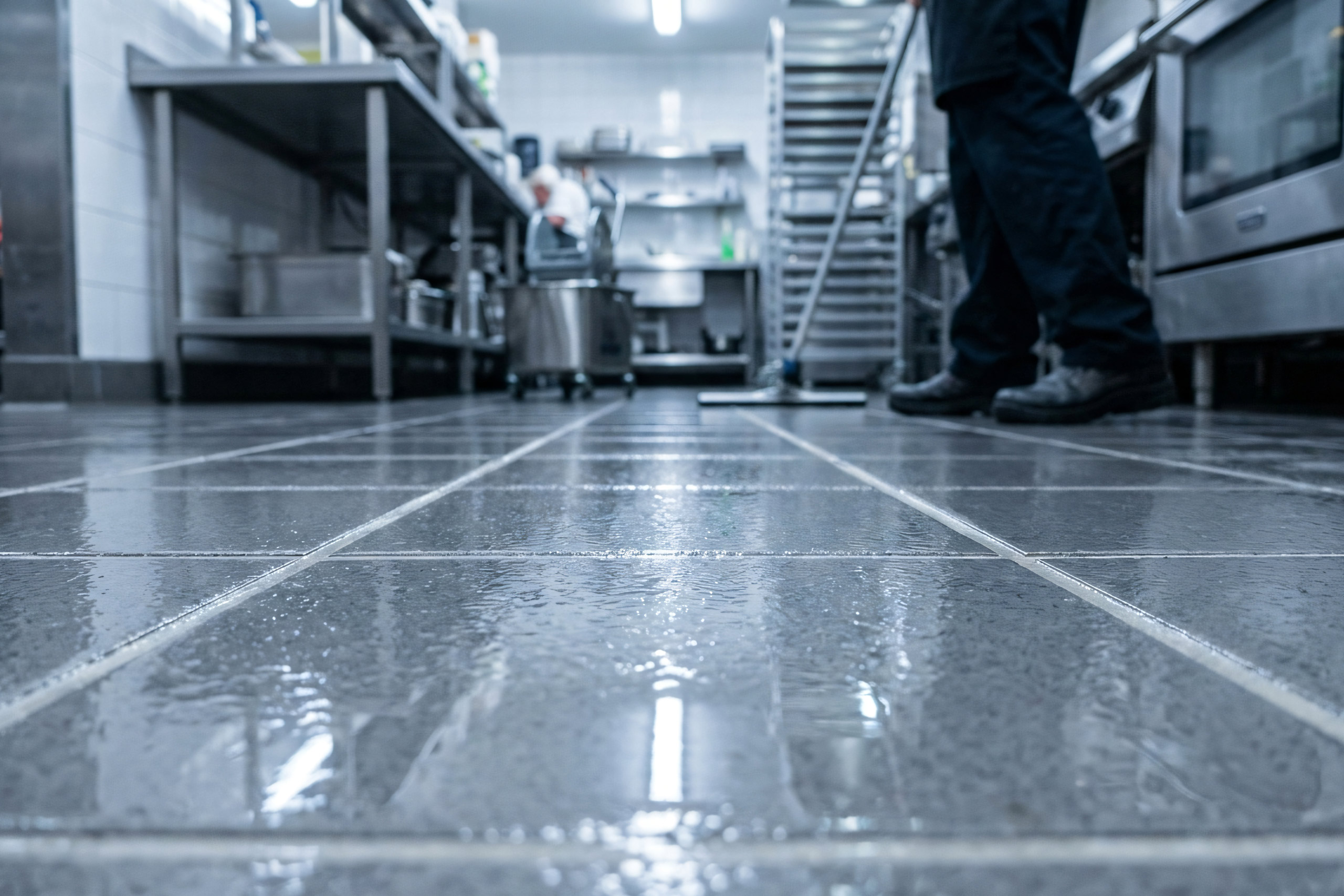
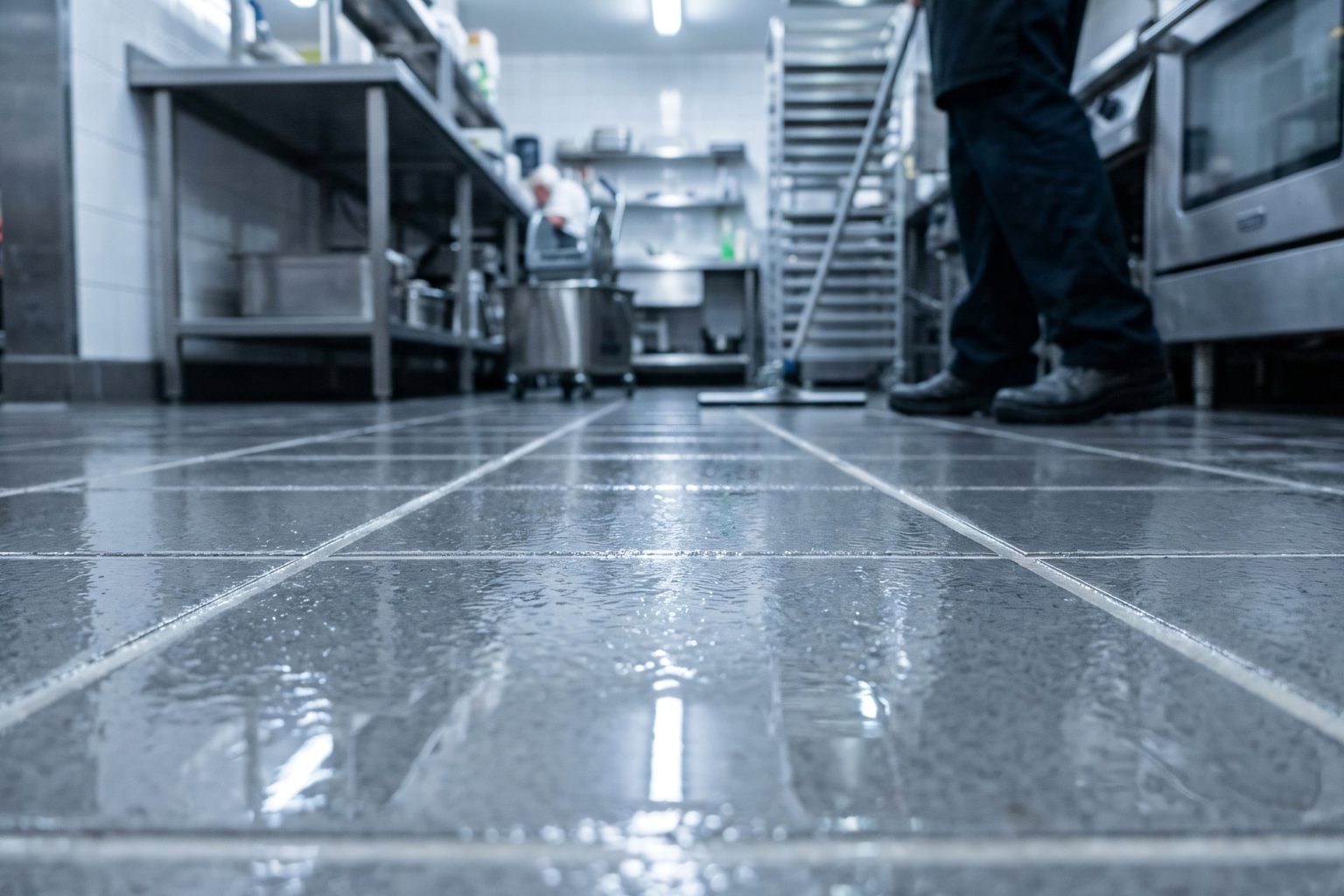
A commercial kitchen floor deals with oils, water, food debris, and constant movement. A family kitchen retains light daily soil, while a restaurant kitchen collects commercial soil hour after hour.
How old sealers, wax buildup, and hard water affect grout lines
Old grout sealer can break down unevenly. Once buildup is present, deep cleaning becomes the next step.
Grout cleaning vs regular floor cleaning: what is the difference?
Regular floor cleaning handles surface soil.
Why cleaning grout needs more than a mop and bucket
A mop glides over tile. It does not create enough controlled agitation in the grout. A grout brush, floor machine, and proper rinse process can reach areas a mop misses. Steel wool should not be used because it can scratch tile or leave metal residue.
How professional grout cleaning removes embedded soil
The process usually starts by removing loose debris. Then technicians apply the right cleaning solution, allow dwell time, scrub, rinse.
When tile flooring needs deep cleaning before sealing
Sealing dirty grout locks in the problem. If stains, soap scum, mold growth, or greasy residue remain, a sealer will not create a clean look. Deep cleaning first gives the grout a better chance of returning closer to its original color.
How professional floor grout cleaning works
A good grout job starts with inspection, not scrubbing. This deep cleaning method can also change for vertical surfaces such as shower walls, where gravity, moisture, and soap residue behave differently than they do on open floors. Crews remove loose debris first so the cleaning solution reaches the grout instead of sitting on dust.
Floor inspection and grout condition check
Technicians look for missing grout, cracked joints, loose tiles, stains, moisture, and areas where cleaning may not be enough. Damaged grout may need repair before color sealing.
Soil removal, agitation, and commercial tile cleaning equipment
After dry soil is removed, the team chooses equipment based on the floor. Some areas need hand detail work.
Rinsing, extraction, and drying before color sealing
Rinsing removes suspended soil and cleaner residue. The grout must dry before sealing because trapped moisture can interfere with appearance.
What is grout color sealing for commercial floors?
Grout color sealing applies a colored protective sealer over clean grout lines. It can even out the appearance and reduce how quickly the grout absorbs new soil.
How color sealing protects grout lines after cleaning
Color sealing helps block surface soil from entering grout as quickly. This prevents dirt from returning too quickly after service.
When color sealing is better than clear sealing
Clear sealing works when the grout already looks even. Color sealing is better when grout colors are blotchy, stained, or faded after cleaning. It gives the floor a more consistent appearance without replacing tile.
How color sealing improves stained or uneven grout
Color sealing can make older grout look cleaner, especially in bathrooms, restaurants, and retail areas. It will not fix cracked tile or missing grout, but it can improve the visible lines after soil has been removed.
Grout restoration: when cleaning alone is not enough
Some grout problems are too deep for cleaning alone. Restoration is needed when grout is broken, permanently stained, or no longer protecting the edges of tile.
Signs grout needs restoration instead of basic cleaning
Look for cracking, gaps, powdery grout, loose tiles, recurring stains, or dark areas that return quickly after cleaning. These signs usually mean the issue is more than surface dirt.
Cracked, missing, or deeply stained grout lines
Damaged grout can let moisture move under tile. In kitchens, restrooms, and entryways, that moisture can create odor, instability, and more staining. Restoration may include targeted grout repair before sealing.
When related professionals may be needed for tile or substrate issues
Floor cleaning companies can clean, restore, and protect many grout surfaces. If the tile is loose, the substrate is failing, or water damage is present, tile installers or other related professionals may need to handle repairs first.
Best commercial spaces for grout cleaning, color sealing, and restoration
The spaces that need grout care most are usually the same spaces that get the most traffic, moisture, and spills.
Restaurant and commercial kitchen floor areas
Restaurants need clean grout because food, grease, and water can settle into low areas. A better restaurant floor cleaning plan helps the kitchen floor stay safer and easier to maintain between professional visits.
Retail stores, offices, schools, and healthcare buildings
In public buildings, dirty grout can make the whole floor look poorly maintained. Lobbies, corridors, checkout lanes, cafeterias, and waiting areas benefit from scheduled tile cleaning because appearance matters every day.
Restrooms, lobbies, entryways, and other high-use tile flooring areas
Restrooms and entries collect moisture, soap, dust, and outdoor soil. These areas often need more frequent attention than back rooms. Scher’s commercial tile floor cleaning process can be matched to the surface and traffic.
How often should commercial tile and grout be cleaned?
There is no single schedule for every building. A quiet office and a busy restaurant do not soil at the same speed.
Suggested cleaning schedules by traffic level
| Traffic level | Common areas | Suggested professional attention |
| Light | Small offices, storage rooms | 1 to 2 times per year |
| Moderate | Lobbies, retail aisles, restrooms | 2 to 4 times per year |
| Heavy | Restaurants, schools, healthcare, entries | Quarterly or more often |
Why kitchens, restrooms, and entrances need more frequent service
These areas collect moisture and soil at the same time. They also show stains faster. If grout turns into darker territory soon after mopping, the floor probably needs deeper service.
How maintenance plans keep grout lines from turning dark again
A custom floor maintenance plan prevents dirt from building up to the point where restoration is the only option. The goal is simple: clean before the grout looks dirty again.
Mistakes businesses make when cleaning grout
Most grout problems get worse because people use the wrong method with good intentions. Residential tips from a tile store, low maintenance kitchen countertops blog, or bright new cabinets remodel guide do not always apply to commercial floors.
Using harsh chemicals that damage grout or tile
Harsh chemicals can weaken grout, dull natural stone, or leave residue. Baking soda may be fine for homeowners testing a small spot, but commercial grout often needs controlled products and equipment.
Scrubbing dirty grout without removing residue properly
Scrubbing moves soil. It does not always remove it. If dirty water is not rinsed and extracted, the grout can dry darker than before.
Sealing over soil, stains, or moisture too soon
A sealer should go on clean, dry grout. Sealing too soon traps stains and moisture. That is why the order matters: clean, rinse, dry, inspect, then seal.
Scher Flooring’s practical recommendation for commercial tile floors
Scher Flooring Services recommends treating grout care as part of the building’s floor maintenance, not as a one-time rescue job.
Clean first, restore where needed, then seal for easier maintenance
The right order is cleaning, restoration if needed, then grout sealer or color sealing. This protects the work and helps the floor stay cleaner between visits.
Match the grout cleaning plan to the building, traffic, and soil type
A tile store, office restroom, hotel lobby, and restaurant kitchen do not need the same process. Subway tile offers a different cleaning challenge than textured tile on a busy floor, and natural stone needs more care than standard porcelain tile because it is a porous material.
When to schedule professional commercial tile and grout service
Schedule service when grout stays dark after mopping, the floor feels sticky, stains return, or the tile no longer looks clean after normal cleaning. A better floor cleaning plan is easier than waiting until grout needs full restoration.
FAQs about floor grout cleaning and color sealing
These answers cover the questions business owners and facility managers usually ask before scheduling service.
What is the best way to clean grout lines on commercial floors?
The best method is professional deep cleaning with the right cleaning solution, agitation, rinse, and extraction. The process should match the tile, grout condition, soil type, and traffic level.
Can dirty grout be made to look new again?
Sometimes. Dirty grout can often look much cleaner after deep cleaning and color sealing. If grout is cracked, missing, or permanently damaged, repair or restoration may be needed.
Is color sealing worth it for commercial tile flooring?
Yes, when grout is clean but uneven, stained, or hard to maintain. Color sealing improves appearance and helps prevent dirt from soaking in as quickly.
How long should grout dry before sealing?
Drying time depends on the floor, airflow, humidity, and cleaning method. The grout should be fully dry before sealing so moisture is not trapped.
How often should a commercial kitchen floor get grout cleaning?
A busy commercial kitchen may need professional grout cleaning quarterly or more often. Lighter food service areas may need it two to four times per year, depending on grease, spills, and traffic.
Stay Updated!
Sign up for email updates and stay in the loop about about our services and promotions.
We’re here to answer any questions you have about our commercial floor cleaning, restoration, and maintenance services.
Get a Free Quote Today!
Scher Flooring Services is a locally and family owned and operated commercial floor cleaning, maintenance and restoration company in business for over 25 years.
"*" indicates required fields