

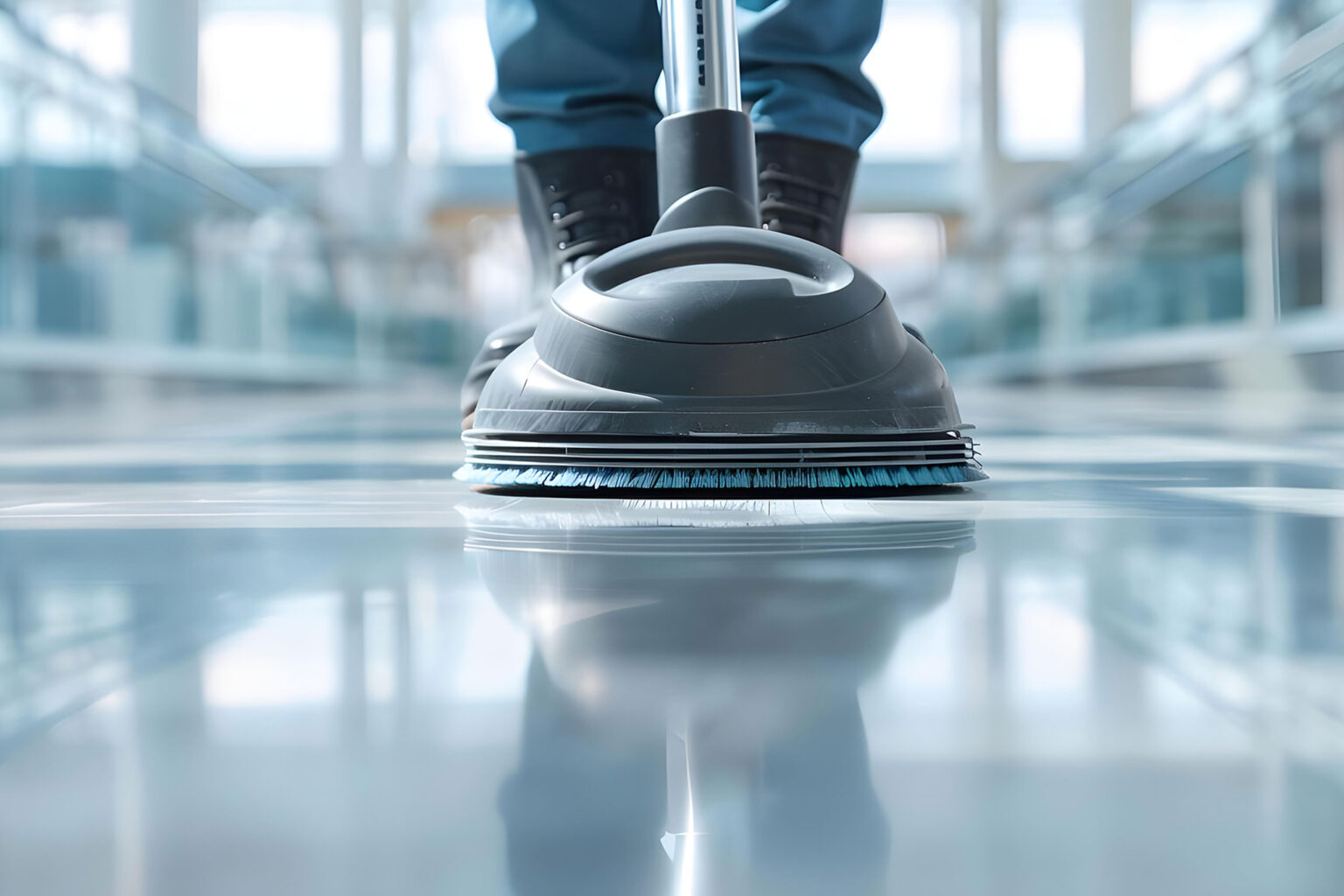
Indoor air quality considerations during stripping determine how safely a facility completes floor finish removal without raising indoor air pollution. Indoor air quality changes fast during stripping because chemical pollutants and airborne contaminants move through indoor air in enclosed indoor spaces.
Scher Flooring Services provides professional VCT floor cleaning services for commercial buildings, including floor finish stripping as part of scheduled maintenance programs. A stripping project affects building occupants, facility managers, and building systems, so the work plan needs clear air quality controls from the first step to the final rinse and recoat.
This guide explains how stripping can affect indoor air quality, which indoor air pollutants matter most, and which controls improve indoor air quality and support good indoor air quality in commercial buildings.
What Are Indoor Air Quality Considerations During Stripping?
Indoor air quality considerations during stripping include the steps a team uses to limit air pollutants, manage air movement, and reduce exposure to chemical pollutants released during finish removal. Indoor air quality IAQ depends on source control, ventilation system performance, and how stripping chemicals evaporate into indoor air.
Floor stripping often overlaps with other indoor pollutants already present in an indoor environment, such as tobacco smoke residue, wildfire smoke infiltration, dust mites, or mold growth in damp areas. Air conditioning systems and air conditioning equipment can spread airborne contaminants if outdoor air intakes, air filters, and exhaust fans are not managed correctly.
A safe plan starts with a clear definition of stripping and a clear definition of IAQ problems, then it moves into how stripping operations affect air quality and indoor air quality problems across the building. The next section explains how stripping affects indoor air quality and why poor indoor air quality appears during active work.
How Does Floor Stripping Affect Indoor Air Quality in Commercial Buildings?
Floor stripping affects indoor air quality because stripping chemistry releases volatile organic compounds into indoor air, and agitation lifts fine particulate matter from the floor surface into the breathing zone. Mechanical action, warm water, and faster drying conditions can increase vapor release, which can affect indoor air quality even when the work area looks controlled.
Commercial buildings create specific IAQ issues during stripping because indoor spaces connect through hallways, return ducts, stairwells, and shared air conditioning systems. Air movement carries indoor air pollutants beyond the immediate work zone when pressure control is weak or when outdoor air intakes pull contaminated air back into the HVAC system.
Common triggers for poor indoor air quality during stripping include:
- High chemical load in a small room
- Limited outside air and limited exhaust
- Air conditioning systems running in recirculation mode
- Doors open to occupied zones
- Uncontrolled air movement from fans pushing contaminants into corridors
A stripping plan protects clean air by controlling the emission source and controlling where air contaminants travel. The next section identifies the main air pollutants released during stripping and why they drive indoor air quality problems.
What Air Pollutants Are Released During Floor Stripping?
Floor stripping releases a mix of chemical pollutants and airborne contaminants. The specific air pollutants depend on the stripping solution, dwell time, temperature, agitation, and the ventilation system performance. This section groups the most common pollutant categories that affect indoor air quality in commercial buildings.
What Volatile Organic Compounds (VOCs) Are Present in Stripping Solutions?
Volatile organic compounds are a primary driver of odor and irritation during stripping. VOCs evaporate into indoor air during chemical application, dwell time, scrubbing, and slurry recovery. VOC concentration rises when air movement is low and when outdoor air exchange is limited.
VOC exposure commonly connects to respiratory symptoms such as throat irritation, coughing, and headaches. VOC control starts with source control and controlled ventilation, not with masking odors.
How Do Chemical Pollutants From Stripping Solutions Impact Air Quality?
Chemical pollutants impact air quality when vapors mix with moisture and circulate through indoor spaces. Strong alkaline products can create unusual odors and a harsh sensation in the eyes and throat. Even low-odor products can contribute to indoor air pollution if they are used at high concentration or in poorly ventilated areas.
A basic control checklist for chemical pollutants includes:
- Follow manufacturer’s instructions for dilution and dwell time
- Use outdoor air and filtered air to dilute vapors
- Keep containers closed when not dispensing
- Recover slurry quickly to reduce evaporation time
Can Carbon Monoxide Be a Concern During Stripping With Gas-Powered Equipment?
Carbon monoxide becomes a concern when gas-powered equipment or other appliances run indoors. Gas stoves in adjacent food service areas, kerosene heaters used for spot warming, or gas-powered tools can elevate CO levels and increase health risks. Carbon monoxide poisoning risk rises when ventilation is limited and when exhaust is not directed outside air pathways.
A commercial building plan treats carbon monoxide as a separate hazard from VOCs. CO needs direct measurement when combustion sources are present.
How Do Air Contaminants Accumulate in Poorly Ventilated Spaces?
Air contaminants accumulate when the ventilation system does not remove vapors and particles at the same rate they are produced. In a small room, airborne contaminants reach higher concentrations faster. In larger indoor spaces, the HVAC system can spread contaminants across zones if pressure differentials are not controlled.
Air pollutant buildup leads directly to health effects in workers and building occupants. The next section explains the health effects linked to poor indoor air quality during stripping and why reduce exposure procedures matter.
What Health Effects Are Associated With Poor Indoor Air Quality During Stripping?
Poor indoor air quality during stripping increases health risks because chemical pollutants, particulate matter, and smoke particles irritate the respiratory system and can affect cardiovascular strain in sensitive people. Health effects vary by exposure level, duration, and individual vulnerability. Facility managers and building owners benefit from a clear exposure prevention plan because complaints often appear first as unusual odors or respiratory symptoms.
What Immediate Health Effects Can Occur From Chemical Exposure?
Immediate health effects often include:
- Eye irritation and watering
- Nose and throat irritation
- Headaches and dizziness
- Coughing and short-term respiratory symptoms
These effects become more likely when indoor air pollutants concentrate in indoor air due to weak ventilation or excessive chemical application.
How Does Poor Air Quality Affect Workers in Commercial Settings?
Workers face higher exposure because they stay in the work zone longer and handle the chemical source directly. Respirators and adequate ventilation reduce exposure when VOCs are present. Training and strict manufacturer’s instructions support safe handling and prevent over-application.
Why Are Sensitive Occupants at Higher Risk?
Sensitive occupants include people with asthma, COPD, allergies, and cardiovascular conditions. Heart disease risk can increase when particulate matter levels rise. Older adults, young children, and immunocompromised occupants also respond more strongly to poor IAQ.
Commercial buildings that include healthcare facilities require stricter control because patients and staff have higher vulnerability. Clean room areas require additional control because clean air targets are higher.
How Does Prolonged Exposure Influence Long-Term Health Effects?
Prolonged exposure can contribute to chronic irritation patterns and ongoing health problems in a workplace. Repeated episodes of poor IAQ increase complaints, raise absenteeism, and increase conflict between facility managers and tenants. A long-term program focuses on maintaining good IAQ, not only fixing problems after they occur.
Health effects connect directly to ventilation and pollutant removal. The next section explains why ventilation is essential for maintaining good IAQ during stripping and how air movement, outside air, and exhaust fans control indoor air quality.
Why Is Ventilation Essential for Maintaining Good IAQ During Stripping?
Ventilation is the primary control method for limiting indoor air pollution during stripping because ventilation reduces airborne contaminant concentration through dilution and removal. A ventilation system that provides fresh air, controlled air movement, and directed exhaust improves indoor air quality and stabilizes conditions during high-emission tasks.
Air conditioning and air conditioning systems can support IAQ when outdoor air intakes bring outside air into the building and when the HVAC system maintains stable airflow patterns. The same building systems can worsen IAQ when they recirculate contaminated indoor air into occupied zones.
A practical IAQ approach uses two actions at the same time:
- Source control to limit emissions
- Ventilation to remove what still enters indoor air
How Does Adequate Ventilation Reduce Air Contaminants?
Adequate ventilation reduces air contaminants by increasing the rate of clean air replacement in the work zone. When outside air flow increases and exhaust removal increases, VOC concentration drops and odor intensity decreases. Ventilation also helps reduce carbon dioxide buildup in enclosed indoor spaces when occupancy overlaps with work.
What Role Do HVAC Systems Play in Controlling Chemical Pollutants?
The HVAC system controls chemical pollutants through air exchange rate, filtration, and pressure balance. Facility managers can adjust outdoor air intake settings, confirm air filters are installed correctly, and isolate return pathways from the stripping zone. In some cases, the HVAC system requires temporary zoning changes to prevent spread.
How Do Exhaust Fans and Airflow Management Improve Air Quality?
Exhaust fans improve air quality by removing contaminated air directly to outside air. Exhaust placement matters. An exhaust fan at the wrong location can pull contaminants through occupied corridors. Controlled air movement directs air from clean zones toward dirty zones, then out.
A simple airflow plan uses:
- Fresh air entry on one side of the zone
- Exhaust exit on the opposite side
- Door sealing or temporary barriers to limit leakage
What Is the Difference Between Dilution Ventilation and Local Exhaust Ventilation?
Dilution ventilation reduces pollutant concentration by mixing contaminated air with outdoor air and exhausting the mixture. Local exhaust ventilation captures contaminants near the source before they spread. Local exhaust becomes more effective when VOC release is strong and when a small room limits dilution potential.
Ventilation reduces concentration, but filtration and air cleaning improve control further. The next section explains how air cleaner strategies, air filters, and high efficiency particulate air approaches improve indoor air quality during stripping.
How Do Air Cleaners and Filtration Systems Improve Indoor Air Quality During Stripping?
Air cleaners and filtration systems improve indoor air quality by removing airborne contaminants that ventilation alone does not eliminate. Filtration matters during stripping because agitation can release particulate matter from old finish residue and because some buildings already carry wildfire smoke infiltration or smoke particles from nearby sources.
Air cleaning works best when it supports source control and ventilation. An air cleaner does not replace outdoor air exchange. A strong plan uses filtered air delivery, targeted capture, and correct placement to avoid pushing contaminants into adjacent indoor spaces.
What Types of Air Cleaner Systems Remove Chemical Pollutants?
Different air cleaner systems address different pollutant types:
- Activated carbon media reduces some VOC odors and chemical pollutants
- Portable scrubbers reduce airborne contaminants in contained zones
- Negative air machines support pressure differentials and zone isolation
Portable systems work best when the space is contained and when airflow direction is controlled.
How Do HEPA Filters and Activated Carbon Filters Work?
High efficiency particulate air filtration captures fine particulate matter and smoke particles, including particles tied to wildfire smoke. HEPA filtration targets particle removal, not gases. Activated carbon targets some gaseous pollutants and odors. A combined setup can reduce both particulate matter and some chemical pollutant signatures.
A simple comparison table helps facility managers choose the right tool:
| IAQ Target | Best Control | What It Removes |
| Fine particulate matter | high efficiency particulate air | dust, smoke particles, airborne contaminants |
| VOC odors | activated carbon | some chemical pollutants and odors |
| Cross-zone spread | negative pressure setup | limits movement into occupied areas |
When Should Portable Air Cleaners Be Used in Commercial Buildings?
Portable air cleaners are most useful when:
- The stripping zone is a small room or enclosed corridor
- Outdoor air intake is limited due to weather or building constraints
- The building experiences IAQ problems from wildfire smoke or other outside sources
- The project occurs near sensitive occupants
Placement matters. A unit placed incorrectly can increase air movement into hallways and affect indoor air quality beyond the zone.
How Do Air Cleaners Support Clean Air Standards in Healthcare and Clean Room Environments?
Healthcare facilities and clean room environments rely on stable clean air control, controlled pressure differentials, and low airborne contaminant levels. During stripping, the work zone requires physical separation and dedicated air cleaning to prevent infiltration into controlled areas. Clean room protection often requires negative pressure in the work zone and positive pressure maintenance in protected spaces.
Air cleaning and ventilation are not the only factors that affect IAQ. Building materials also influence how pollutants persist and travel. The next section explains how building materials affect air quality during stripping and why indoor pollutants linger in certain structures.
How Do Building Materials Influence Air Quality During Stripping?
Building materials influence air quality during stripping because surfaces absorb, trap, and later release chemical pollutants into indoor air. Porous building materials such as drywall, acoustic ceiling tiles, insulation, and some flooring substrates can temporarily hold volatile organic compounds and then re-release them after active work stops. This delayed release contributes to indoor air quality problems even after visible work is complete.
Commercial buildings often contain layered materials, adhesives, sealants, and coatings that interact with stripping chemistry. Moisture from stripping and rinsing can also increase off-gassing duration if humidity levels remain elevated.
How Do Porous Building Materials Absorb Chemical Pollutants?
Porous building materials absorb chemical pollutants when vapors contact their surface. Absorption increases in areas with limited air movement and high relative humidity levels. When the ventilation system slows or when air conditioning systems switch to low outdoor air intake, trapped pollutants may re-enter indoor air.
Absorption and re-emission cycles explain why unusual odors sometimes return the day after stripping. Facility managers should monitor air quality for at least 24–48 hours in sensitive commercial settings.
Why Do Enclosed Commercial Spaces Trap Air Contaminants?
Enclosed indoor spaces trap air contaminants when airflow paths are limited. A small room without outside air exchange accumulates airborne contaminants quickly. Corridors with limited exhaust allow pollutants to migrate slowly into adjacent zones.
Pressure differentials matter. If the stripping zone operates at positive pressure, contaminants move into cleaner areas. If negative pressure is maintained in the stripping zone, pollutants move toward exhaust fans and outside air.
How Do Floor Types and Substrates Influence Off-Gassing Duration?
Different floor systems respond differently during stripping. Vinyl composition tile often sits over concrete or adhesive layers. Adhesive materials can absorb moisture and chemical vapors, which may extend off-gassing. Areas that were previously over watered during cleaning may hold moisture longer, which increases emission time.
How Does Moisture Affect Chemical Emissions During Stripping?
Moisture influences chemical emissions because water slows evaporation but extends drying time. When excess moisture remains on the surface, relative humidity levels rise, which may contribute to mold growth in hidden areas. Controlled rinse steps and proper slurry removal reduce moisture load and support maintaining good IAQ.
Building material interaction highlights the importance of careful chemical selection. The next section explains how different stripping chemicals influence indoor air quality and how product choice can reduce indoor air pollution.
How Do Stripping Chemicals Differ in Their Impact on Indoor Air Quality?
Stripping chemicals differ based on formulation, alkalinity, solvent content, and emission profile. Some products release higher levels of volatile organic compounds, while others are designed to reduce indoor pollutants and limit odor intensity. Chemical selection directly affects indoor air quality IAQ in commercial buildings.
A professional plan requires facility managers and building owners to carefully evaluate product data before use.
What Makes Low-VOC Stripping Solutions Safer for Air Quality?
Low-VOC stripping solutions reduce airborne contaminant concentration during application. Lower vapor pressure means fewer chemical pollutants enter indoor air. Low-emission formulations help reduce exposure and support good indoor air quality in occupied commercial settings.
How Do High-Alkaline Strippers Affect Air Pollutant Levels?
High-alkaline stripping solutions can release strong odors and irritants, which contribute to indoor air pollution. When over-applied or used without ventilation, these chemicals increase indoor air pollutants and create poor IAQ conditions. Proper dilution according to manufacturer’s instructions prevents excessive emissions.
Why Does Product Labeling and SDS Review Matter?
Safety Data Sheets provide details about chemical pollutants, recommended ventilation, exposure limits, and PPE requirements. Reviewing SDS documents helps industrial hygienists and facility managers understand health risks and prevent IAQ issues.
How Do EPA and OSHA Guidelines Influence Chemical Selection?
EPA guidelines influence allowable VOC levels and environmental emissions. OSHA regulations focus on worker exposure limits and co levels when combustion sources exist. Following regulatory standards supports clean air goals and reduces liability for building owners.
Chemical selection works best when aligned with regulatory compliance. The next section explains which regulatory standards govern indoor air quality during stripping in the United States.
What Regulatory Standards Govern Indoor Air Quality During Stripping?
Regulatory standards guide safe stripping practices in commercial buildings. OSHA establishes permissible exposure limits for air contaminants and carbon monoxide. EPA guidance supports indoor air quality management in schools, healthcare facilities, and commercial environments.
Building owners and facility managers benefit from understanding these frameworks because compliance reduces health problems and legal exposure.
How Does OSHA Regulate Worker Exposure to Air Contaminants?
OSHA regulates exposure to air pollutants through permissible exposure limits. Employers must monitor air when chemical pollutants or carbon monoxide are present. CO levels must remain below established thresholds to prevent carbon monoxide poisoning.
What EPA Guidelines Address Indoor Air Quality in Commercial Buildings?
EPA guidance focuses on combating indoor air pollution through ventilation improvement, source control, and filtration. The EPA promotes maintaining good IAQ by combining outdoor air ventilation with proper filtration and moisture control.
How Do State-Level Regulations Influence Chemical Use?
Some states impose additional VOC restrictions and building system standards. Facility managers should confirm compliance with local codes before large-scale stripping projects.
How Are Good IAQ Benchmarks Measured in Commercial Spaces?
Good IAQ benchmarks often include:
- Acceptable VOC concentration
- Controlled carbon dioxide levels
- Stable humidity levels
- Minimal particulate matter readings
Regulation defines limits, but measurement confirms conditions. The next section explains how indoor air quality is measured during and after stripping.
How Is Indoor Air Quality Measured During and After Stripping?
Indoor air quality measurement identifies IAQ problems before occupants return. Monitoring ensures indoor air pollutants drop to safe levels and confirms that ventilation and air cleaners performed effectively.
What Instruments Detect Air Pollutants and Chemical Emissions?
Common monitoring tools include:
- VOC meters for volatile organic compounds
- Carbon monoxide detectors for combustion sources
- Particulate matter sensors for fine particulate matter
- Carbon dioxide monitors to assess ventilation performance
An industrial hygienist often uses calibrated instruments in sensitive commercial settings.
How Are VOC Levels Quantified in Commercial Buildings?
VOC levels are quantified in parts per million or parts per billion. Readings are taken during stripping and after cleanup. Continuous monitoring may be used in healthcare facilities and clean room environments.
What Threshold Levels Indicate Unsafe Air Quality?
Threshold levels depend on chemical type and regulatory standards. Elevated CO levels, high VOC readings, or rising particulate matter indicate poor IAQ. Action includes increasing ventilation, adjusting air movement, or extending downtime.
How Long Should Air Quality Be Monitored After Stripping?
Air quality should be monitored until readings stabilize and unusual odors dissipate. Monitoring often continues 24 hours after stripping in high-risk environments.
Measurement leads directly into prevention strategies. The next section outlines best practices that protect indoor air quality during stripping.
What Best Practices Protect Indoor Air Quality During Stripping?
Best practices protect indoor air by combining source control, ventilation, filtration, and scheduling. A structured IAQ plan reduces exposure and improves IAQ before occupants re-enter.
How Does Scheduling Stripping After Business Hours Reduce Exposure?
Scheduling stripping after hours limits building occupants’ exposure to chemical pollutants. Empty indoor spaces allow for longer ventilation cycles and better air exchange with outside air.
Why Should Occupants Be Temporarily Relocated During High-Emission Processes?
Temporary relocation protects sensitive occupants and reduces health risks. Areas near gas stoves or other appliances require additional monitoring when stripping overlaps with other emission sources.
How Do Professional Cleaning Teams Implement IAQ Protection Protocols?
Professional teams:
- Isolate zones with temporary barriers
- Establish negative pressure
- Use exhaust fans and air cleaner units
- Follow manufacturer’s instructions strictly
How Does Controlled Chemical Application Minimize Air Pollutants?
Controlled chemical application uses measured dilution and precise distribution. Avoiding over watered conditions reduces vapor emission and moisture retention.
Best practices work best when handled by experienced professionals.
How Does Proper Stripping Support Long-Term Clean Air in Commercial Buildings?
Proper stripping supports clean air by preventing repeated IAQ problems. Maintaining good IAQ requires consistent planning, correct chemical selection, ventilation management, and air quality monitoring.
Why Maintaining Good IAQ Protects Workers and Occupants?
Good IAQ reduces respiratory symptoms, lowers health risks, and limits complaints related to poor indoor air quality. Building occupants perform better in environments with clean air and stable humidity levels.
How Does Responsible Floor Maintenance Improve Overall Air Quality?
Responsible maintenance prevents mold growth, limits particulate matter buildup, and reduces chemical exposure. Regular review of air filters, outdoor air intake, and exhaust performance improves indoor air quality across the building.
Why Choosing Experienced Commercial Floor Specialists Matters?
Choosing experienced specialists ensures indoor air quality considerations during stripping remain central to the project. Scher Flooring Services delivers structured, compliant, and safe stripping programs that protect commercial buildings and support good indoor air quality for long-term performance.
Conclusion: Creating a Smarter, Safer Floor Maintenance Plan for Schools
School floor maintenance is a year-round priority. By balancing daily maintenance during class days with deep cleaning during breaks, schools can extend the life of their flooring, maintain safe conditions, and avoid costly repairs. Using the right cleaning products, training staff, installing walk-off mats, and working with commercial floor cleaning professionals helps create cleaner, healthier learning environments.
Whether it’s high foot traffic zones or quiet administrative areas, every surface benefits from a customized, consistent, and well-timed maintenance plan—ultimately saving your school time, money, and stress.
Stay Updated!
Sign up for email updates and stay in the loop about about our services and promotions.
We’re here to answer any questions you have about our commercial floor cleaning, restoration, and maintenance services.
Get a Free Quote Today!
Scher Flooring Services is a locally and family owned and operated commercial floor cleaning, maintenance and restoration company in business for over 25 years.
"*" indicates required fields


