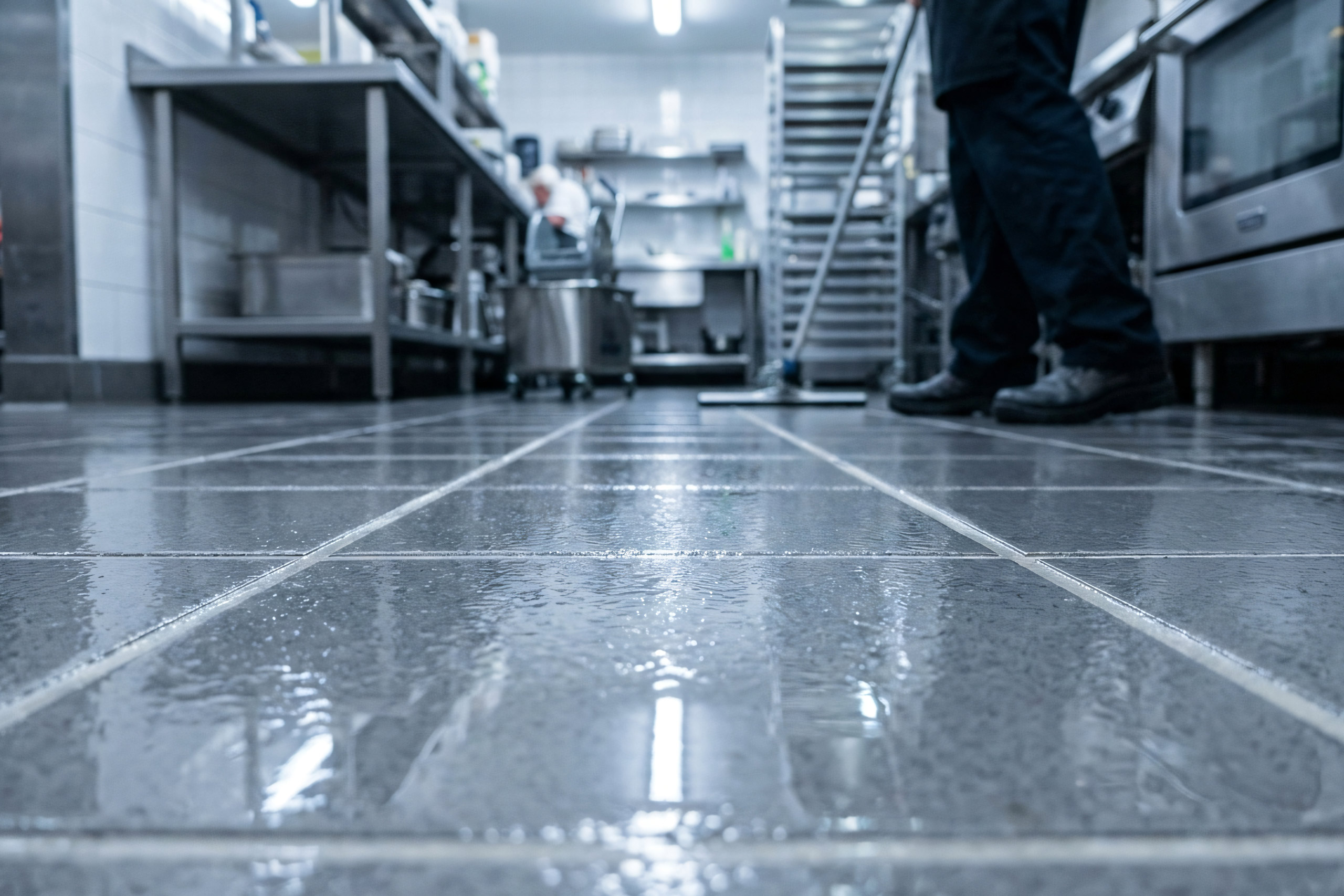
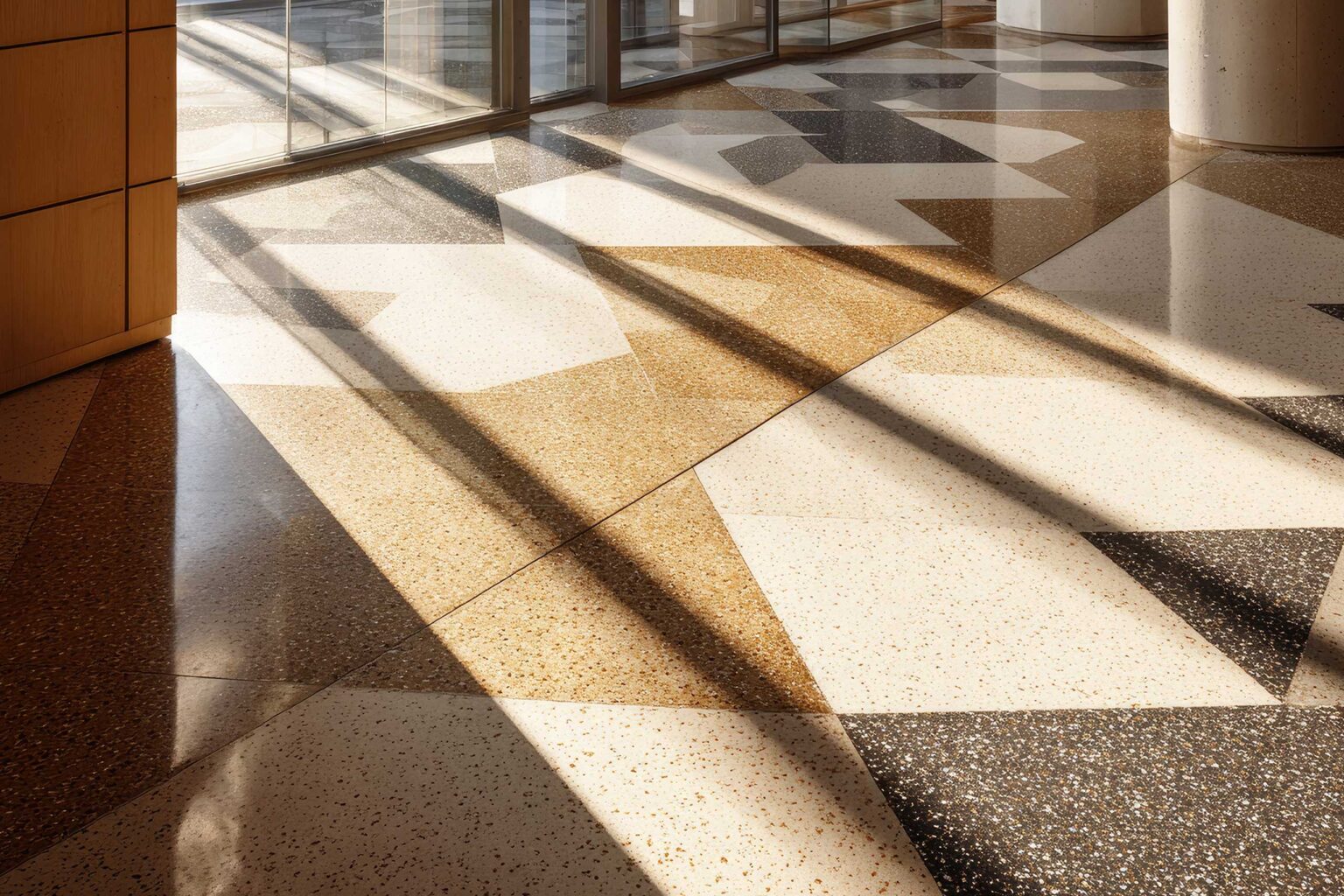
Commercial stone floor needs restoration when the surface stops responding to daily cleaning and the floor’s appearance keeps getting worse. A commercial stone floor needs restoration when natural stone surfaces show embedded dirt, deep scratches, stains, uneven wear, or permanent damage caused by foot traffic and acidic substances.
Scher Flooring Services provides commercial stone floor cleaning services for hard floor surfaces, including commercial tile and natural stone floors in commercial spaces. Many businesses start with regular cleaning and proper care, then realize the stone type and traffic level require a professional stone approach with specialized equipment and a structured restoration process to protect the original beauty and first impression of the facility.
What Does It Mean When a Commercial Stone Floor Needs Restoration?
A commercial stone floor needs restoration when regular maintenance and regular cleaning no longer restore the original luster of stone surfaces. Stone floor restoration goes beyond routine cleaning because it corrects surface wear, eliminates scratches, removes embedded dirt, and rebuilds a protective layer that supports lasting beauty on natural stone floors.
Natural stone restoration is an essential part of maintaining beautiful stone floors in commercial settings. Different stones react differently to foot traffic, moisture, and cleaning chemicals. Marble, limestone, travertine, and granite each have a different porosity level and scratch sensitivity, so the type of stone affects the restoration services required.
How Natural Stone Surfaces Deteriorate in Commercial Spaces
Natural stone surfaces deteriorate as dirt grinds into the surface, finishes wear down, and microscopic scratches scatter light. High traffic areas accelerate this process. Over time, the floor loses clarity, the surface becomes dull, and stains become harder to remove.
Common causes of deterioration in commercial stone include:
- Foot traffic carrying grit across surfaces
- Embedded dirt settling into pores and grout edges
- Acidic spills and acidic substances causing etching
- Improper cleaners that leave residue or damage the protective layer
Why Daily Cleaning Alone Cannot Preserve a Commercial Floor Long-Term
Daily cleaning removes surface dirt, but daily cleaning cannot correct deep scratches, etching, or uneven wear. A soft mop and ph balanced products help reduce risk, but they cannot reverse progressively deeper surface damage or remove embedded dirt trapped below the top layer.
Daily cleaning works best when it supports a larger plan that includes periodic deep cleaning, sealing, and polishing based on usage.
How Foot Traffic and Improper Maintenance Affect Commercial Stone
Foot traffic creates uneven wear patterns, especially in entryways, hallways, and checkout lines. When cleaning routines miss these zones or use DIY methods that are too aggressive, the surface can develop permanent damage that spreads outward.
A stone restoration plan makes all the difference because it targets the worn zones first, then blends the finish across the full commercial floor.
The next section explains the most common early warning sign that triggers restoration decisions: embedded dirt and why deep cleaning is required to remove embedded dirt safely.
How Does Embedded Dirt Signal That Your Commercial Stone Floor Needs Restoration?
Embedded dirt signals stone restoration because embedded soil does not lift with regular cleaning and keeps returning even after the floor looks “clean.” Embedded dirt makes natural stone floors appear darker, blotchy, and aged, especially in commercial spaces with constant traffic.
What Causes Embedded Dirt in Natural Stone
Embedded dirt forms when fine grit and oils get pressed into pores and micro-scratches. Some stone type surfaces, like limestone and travertine, absorb contaminants more easily than denser granite.
Embedded dirt increases when:
- Entry mats are missing or undersized
- Floors are wet-mopped too often with excess water
- Cleaners leave a film that traps dirt
Why Deep Cleaning Is Required to Remove Embedded Contaminants
Deep cleaning targets the soil that sits below the visible surface. Professional services use specialized tools and ph neutral cleaner or ph balanced products matched to the type of stone. This approach removes embedded dirt without creating additional scratches.
A practical sign deep cleaning is needed:
- You can mop, rinse, and dry the floor, and dark lanes reappear within 24–72 hours.
How Embedded Dirt Affects the Appearance and Safety of a Commercial Floor
Embedded dirt reduces traction and makes floors look neglected. In a business environment, the floor’s appearance affects first impression and overall quality for customers and staff.
Quick check for embedded dirt:
- Run a clean white cloth with water across a “clean” area.
- If the cloth turns gray or brown quickly, embedded dirt is likely present.
Embedded dirt often shows up alongside dullness and loss of shine. The next section explains how fading gloss and reduced clarity indicate natural stone restoration is necessary and how restoration can dramatically improve surface clarity.
Why Does Dullness or Loss of Shine Indicate Natural Stone Restoration Is Necessary?
Dullness indicates professional restoration because the reflective top layer of stone surfaces has been worn down or scratched. Stone restoration restores the surface’s light reflection by removing damage, refining the surface, and rebuilding protection.
How Worn Protective Layers Reduce Surface Clarity
Stone floors often rely on a protective layer, sealers, or a polished surface profile for clarity. When this layer breaks down, the surface scatters light instead of reflecting it evenly. The floor looks cloudy, flat, or dirty even after cleaning.
Common dullness triggers:
- Uneven wear from high traffic areas
- Abrasive debris grinding into the surface
- Incorrect pads or harsh brushes used during cleaning
Why Daily Cleaning Cannot Restore a Commercial Stone Surface Once Etched
Etching is chemical damage caused by acidic spills or acidic substances reacting with certain stones, especially marble and limestone. Etching changes the surface structure. A mop and cleaner cannot “wash out” etched marks because the surface has been altered.
This is where DIY methods often fail. DIY methods may hide the problem temporarily, but they do not restore the surface structure or the original luster.
How Professional Stone Restoration Dramatically Improve Floor Appearance
Professional stone restoration uses specialized equipment and progressively finer abrasives to refine the surface until the stone regains clarity. Polishing then restores a high gloss finish when that finish matches the facility’s needs.
Professional restoration can:
- Dramatically improve shine and clarity
- Restore the original beauty of the stone
- Improve the first impression in customer-facing areas
Dullness is usually followed by visible scratches and etching patterns. The next section explains how deep scratches and surface damage reveal the need for expert restoration and how professionals bring stone back to life safely.
How Do Scratches, Etching, and Surface Damage Reveal the Need for Expert Restoration?
Scratches and etching reveal the need for expert restoration when damage is visible from standing height, spreads across traffic lanes, or keeps returning after cleaning. Deep scratches also trap dirt, which makes the surface look darker and older.
What Causes Etching on Natural Stone in Commercial Spaces
Etching is common in marble and limestone because these stones react to acidic substances. Acidic spills from beverages, cleaning products, or food service areas can etch within minutes, leaving dull rings or patches.
Etching indicators:
- A mark looks lighter or duller than the surrounding stone
- The area feels slightly rough compared to polished zones
How High-Traffic Commercial Areas Accelerate Surface Wear
High traffic areas concentrate abrasion. Entryways, elevator lobbies, and corridors experience more grit, more moisture, and more friction. That friction produces scratches faster, especially on softer stone surfaces.
Wear patterns often appear as:
- “Runway” lanes through the facility
- Dull zones near entrances
- Scratched arcs near chairs and carts
Why Expert Restoration Is Required to Bring Stone Back to Life
Expert restoration removes a controlled micro-layer of stone using specialized tools and specialized equipment. Technicians refine the surface with progressively finer abrasives to reduce scratches, then polish and seal to rebuild protection. This is the controlled restoration process that brings commercial stone back to life without creating uneven results.
Scratches and etching are surface problems. The next section covers structural warning signs—cracks, chips, and uneven surfaces—that can lead to costly repairs if ignored.
Why Are Cracks, Chips, and Uneven Surfaces Warning Signs of Restoration Needs?
Cracks, chips, and uneven wear indicate restoration is needed because they create safety risks, accelerate damage, and can compromise the life of the installation. These issues often signal that the stone or its support layers are under stress.
How Minor Chips Progress into Larger Surface Failures
Minor chips collect dirt and moisture at the edges. Over time, the edges break further, especially under carts and heavy foot traffic. Chips can also spread when cleaning tools catch on raised edges.
Why Ignoring Structural Damage Increases Commercial Repair Costs
Ignoring cracks and chips often leads to costly repairs because the damage spreads. A small repair can become a larger replacement zone, especially when water enters the surface or underlayment.
How Professional Stone Repair Stabilizes Commercial Stone Floors
Professional stone repair stabilizes edges, fills cracks, and levels transitions where needed. Repair is usually paired with restoration so the repaired area blends into surrounding stone surfaces. A consistent surface improves safety and appearance.
Structural issues often appear alongside moisture staining and discoloration. The next section explains how stains and moisture damage indicate a commercial stone floor needs restoration and when sealing becomes necessary.
How Does Staining and Moisture Damage Indicate a Commercial Stone Floor Needs Restoration?
Staining and moisture damage indicate restoration because stains often penetrate below the top layer, especially in porous natural stone. When stains keep returning after cleaning, the stone likely needs deep cleaning, surface correction, and sealing.
What Causes Deep Stains in Natural Stone
Deep stains come from oils, food spills, tracked-in grime, and cleaners that leave residue. Food service areas often develop stubborn staining because grease and acidic spills can combine.
How Moisture Penetration Weakens Stone Integrity
Moisture penetration can darken stone, weaken grout edges, and increase the risk of microbial growth in porous stone. Over time, the surface can look patchy, with inconsistent tone across the floor.
Why Deep Cleaning and Sealing Are Essential in Commercial Spaces
Deep cleaning lifts embedded contaminants, then sealing adds an invisible barrier that helps block new staining. Penetrating sealers are commonly used for many natural stone floors because they protect without creating a slippery topcoat.
Sealing is also cost effective because it reduces the frequency of intensive restoration services.
When staining and moisture issues appear, traction often changes too. The next section explains how increased slipperiness signals surface degradation and why professional services can restore safer traction.
Why Does Increased Slipperiness Signal Surface Degradation in Commercial Stone?
Slipperiness signals degradation because wear changes the surface texture and can leave residue that reduces grip. In commercial settings, slip risk affects safety and liability.
How Worn Finishes Reduce Slip Resistance
When the protective layer wears unevenly, the surface can become slick in some areas and rough in others. Residue from improper cleaners can also create a film that increases slip risk.
Why Commercial Floor Safety Standards Require Restoration
Commercial floor programs often require consistent traction. Restoration corrects uneven surfaces, removes residues, and rebuilds a stable finish profile suited to the facility.
How Professional Cleaning Services Restore Surface Traction
Professional cleaning services remove embedded soil and residues that reduce traction. When polishing is required, technicians match the finish to facility needs rather than chasing shine alone. Safety and function come first.
Slipperiness is strongly tied to maintenance routines. The next section explains how inconsistent maintenance history leads to restoration needs and how customized maintenance plans prevent repeat damage.
How Does Inconsistent Maintenance History Lead to the Need for Natural Stone Restoration?
Inconsistent maintenance leads to restoration because small issues compound over time. Skipped cleaning steps, wrong products, and uneven attention to traffic lanes create uneven wear and permanent damage that eventually requires professional restoration.
Why Irregular Daily Cleaning Causes Long-Term Damage
Irregular daily cleaning allows dirt to grind into stone surfaces. Over time, scratches deepen and embedded dirt increases, making restoration more frequent and more expensive.
How Improper Cleaning Products Accelerate Surface Breakdown
Wrong products, especially harsh cleaners not designed for natural stone, can cause chemical damage. Acidic products can etch marble and limestone. High-alkaline products can degrade sealers and dull the finish. Using ph balanced products and a ph neutral cleaner reduces risk for many stone types.
Why Professional Cleaning Services Prevent Premature Restoration
Professional services build routines that match the stone type, traffic level, and business needs. Customized maintenance plans combine daily cleaning, deep cleaning intervals, sealing schedules, and polishing where appropriate. This is proper care that protects surfaces and reduces costly repairs.
When multiple signs appear at the same time, timing matters. The next section explains when property managers should seek expert restoration services and what outcomes to expect.
When Should Commercial Property Managers Seek Expert Restoration Services?
Property managers should seek expert restoration services when multiple symptoms appear together, when the floor’s appearance impacts first impression, or when routine cleaning cannot restore results. Expert restoration is the most reliable way to restore surfaces and protect long-term value.
How Expert Restoration Brings Commercial Stone Back to Life
Expert restoration corrects the surface profile through the restoration process:
- Evaluate the stone type and damage level
- Deep cleaning to remove embedded dirt
- Grinding or honing with progressively finer abrasives
- Polishing to restore original luster or a controlled sheen
- Sealing with penetrating sealers to form an invisible barrier
This process makes eliminating scratches possible without creating uneven patches.
Why Professional Stone Restoration Dramatically Improve Long-Term Durability
Professional stone restoration improves durability because it restores a uniform surface and rebuilds protection. A consistent surface resists uneven wear and is easier to maintain with regular maintenance.
How Professional Cleaning Services Extend the Life of a Commercial Floor
Professional cleaning services extend floor life by matching tools and chemicals to the surfaces being cleaned. Specialized equipment and specialized tools help keep results consistent across large commercial spaces, which supports lasting beauty and a better first impression.
The final section summarizes why early action matters and closes with clear service context for Scher Flooring Services.
Final Thoughts: Why Acting Early Prevents Costly Commercial Stone Replacement
A commercial stone floor needs restoration when embedded dirt, dullness, deep scratches, stains, and uneven wear stop responding to regular cleaning. Acting early protects stone surfaces, reduces costly repairs, and preserves the original beauty of natural stone floors in commercial spaces.
How Early Natural Stone Restoration Preserves Commercial Spaces
Early restoration keeps floors functional and attractive. It protects the business environment, improves the floor’s appearance, and supports a stronger first impression for customers, patients, and staff.
Why Professional Cleaning Services Provide Long-Term Protection
Professional services support long-term protection by using ph balanced products, the right pads, and the correct restoration services based on stone type. That consistent approach is cost effective because it reduces repeat damage and lowers lifecycle cost.
How Scher Flooring Services Restores Commercial Stone Floors with Expert Restoration Methods
Scher Flooring Services provides commercial cleaning services for commercial floors, including natural stone restoration and commercial tile floor cleaning in commercial settings. Scher Flooring Services evaluates the type of stone, identifies embedded dirt and surface damage, then applies a restoration process using specialized equipment to restore surfaces and bring commercial stone back to life with durable protection.
If your floors need deep cleaning, sealing, polishing, or a full stone floor restoration plan, professional restoration makes all the difference in how your facility looks and performs every day.
Conclusion: Creating a Smarter, Safer Floor Maintenance Plan for Schools
School floor maintenance is a year-round priority. By balancing daily maintenance during class days with deep cleaning during breaks, schools can extend the life of their flooring, maintain safe conditions, and avoid costly repairs. Using the right cleaning products, training staff, installing walk-off mats, and working with commercial floor cleaning professionals helps create cleaner, healthier learning environments.
Whether it’s high foot traffic zones or quiet administrative areas, every surface benefits from a customized, consistent, and well-timed maintenance plan—ultimately saving your school time, money, and stress.
Stay Updated!
Sign up for email updates and stay in the loop about about our services and promotions.
We’re here to answer any questions you have about our commercial floor cleaning, restoration, and maintenance services.
Get a Free Quote Today!
Scher Flooring Services is a locally and family owned and operated commercial floor cleaning, maintenance and restoration company in business for over 25 years.
"*" indicates required fields