

Why Are My Commercial Carpet Tiles Curling at the Edges? 3 Solutions That Work
on
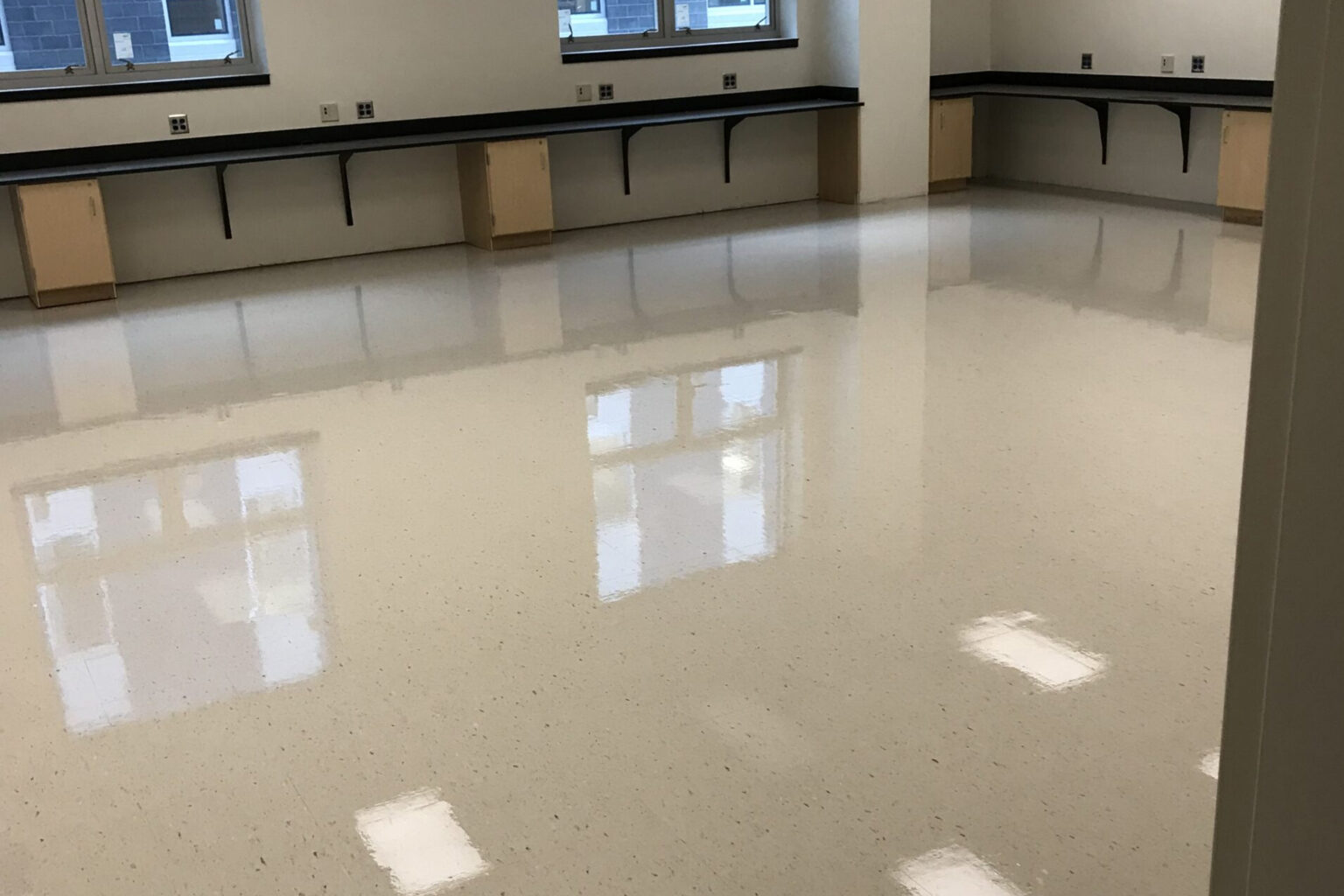
If you are experiencing commercial carpet tiles curling at the edges (peaking) after a deep extraction cleaning, the most common cause is excessive moisture saturating the backing, which triggers dimensional instability. The quickest fix is to immediately deploy high-velocity air movers and dehumidifiers to remove trapped moisture before the adhesive bond permanently fails. If the tiles do not flatten after 24–48 hours of drying, the secondary cause is likely an incompatible adhesive or a ph-related chemical reaction between the cleaning solution and the subfloor.
This troubleshooting guide serves as a specialized extension of The Complete Guide to Commercial Floor Maintenance and Restoration in 2026: Everything You Need to Know. Understanding the mechanics of moisture-induced failure is a critical component of professional facility management, ensuring that deep cleaning cycles enhance rather than degrade your flooring assets.
Quick Fixes:
- Most likely cause: Over-saturation of the secondary backing → Fix: Use industrial air movers and dehumidifiers immediately.
- Second most likely: Residual moisture in the subfloor (wicking) → Fix: Weighted rollers to re-establish the adhesive bond.
- If nothing works: Consult a professional for localized tile replacement or adhesive injection.
What Causes Commercial Carpet Tiles to Curl?
Identifying the root cause of curling—often called "peaking" or "cupping"—is the first step in restoration. According to industry data from 2025, nearly 42% of post-cleaning tile failures are linked to improper equipment settings or excessive water volume [1].
- Over-Saturation: High-pressure hot water extraction (HWE) can force water through the seams into the bitumen or PVC backing, causing it to expand.
- Slow Drying Times: If the carpet remains damp for more than 6-8 hours, the moisture migrates to the subfloor, weakening the pressure-sensitive adhesive (PSA).
- Adhesive Re-emulsification: Low-quality or aged adhesives can turn back into a liquid state when exposed to excessive heat and moisture, losing their "tack."
- PH Imbalance: Cleaning solutions with a pH higher than 10.0 can attack the fiberglass stabilization layer within the tile, leading to permanent dimensional changes.
- Wick-Back Effect: Soils and moisture trapped in the subfloor move upward as the surface dries, creating localized pressure at the tile edges.
How to Fix Curling Carpet Tiles: Solution 1 (Moisture Mitigation)
The most effective way to reverse curling caused by cleaning is to accelerate evaporation through controlled airflow. Research indicates that reducing ambient humidity to below 40% within the first 12 hours of a "wet" event can prevent 85% of permanent tile warping [2].
Step-by-Step Fix:
- Extract Again: Use a high-suction vacuum tool (without adding more water) to pull as much residual liquid from the edges as possible.
- Airflow Deployment: Place high-velocity axial fans every 15–20 feet, angled at 45 degrees toward the floor to create a "vortex" effect.
- Control Humidity: Set the building’s HVAC system to "cool" or "dry" mode and bring in commercial-grade LGR (Low Grain Refrigerant) dehumidifiers.
- Verification: Use a non-invasive moisture meter to ensure the subfloor levels have returned to the baseline (typically below 5% for concrete).
How to Fix Curling Carpet Tiles: Solution 2 (Mechanical Re-Bonding)
If the tiles remain slightly peaked after drying, the pressure-sensitive adhesive may have lost its grip but remains "tacky." Mechanical force can often re-seat the tile without requiring new adhesive.
Step-by-Step Fix:
- Heat Application: Use a hair dryer or heat gun on a low setting to gently warm the curled edge, making the backing more pliable.
- Weighted Rolling: Use a 75lb or 100lb three-section floor roller to press the edges firmly back into the adhesive bed.
- Stay-Down Pressure: For stubborn corners, place heavy flat objects (like stacks of leftover tiles or weighted boxes) on the edges for 24 hours.
- Verification: Walk the area; if you hear a "clicking" or "tacking" sound, the bond is re-establishing.
How to Fix Curling Carpet Tiles: Solution 3 (Adhesive Remediation)
When the original adhesive has been "washed away" or neutralized by cleaning chemicals, you must manually re-apply a bonding agent. Scher Flooring Services recommends using only manufacturer-approved, low-VOC pressure-sensitive adhesives to maintain warranty compliance.
Step-by-Step Fix:
- Lift the Edge: Carefully peel back the curling corner. If the adhesive feels dry or dusty, it has failed.
- Clean the Subfloor: Wipe away any dust or old adhesive residue with a damp cloth and let it dry completely.
- Apply New PSA: Use a small brush or roller to apply a thin, even coat of pressure-sensitive adhesive to the subfloor (not the tile).
- Wait for "Tack": Wait until the adhesive turns from white to clear and feels "sticky" but does not transfer to your finger.
- Press and Seal: Press the tile back down and roll the edges with a hand roller.
Advanced Troubleshooting
In some cases, curling is a symptom of a larger structural issue rather than just a cleaning error. If the curling occurs across a large area (more than 15% of the floor), it may indicate a "vapor drive" issue from the concrete slab.
"When we see widespread peaking after a deep clean, it’s often because the added moisture triggered a pre-existing high-alkalinity condition in the slab." — Kevin Scher, Management at Scher Flooring Services.
If the tiles do not respond to drying or re-gluing, or if you see white crystalline powder (efflorescence) at the seams, you must seek professional help. A professional flooring contractor can perform anhydrous calcium chloride tests to measure the moisture vapor emission rate (MVER).
How to Prevent Carpet Tile Curling from Happening Again
Preventing dimensional instability is significantly more cost-effective than remediation. Data from 2026 shows that facilities utilizing low-moisture maintenance programs see a 60% reduction in flooring-related insurance claims [3].
- Switch to Low-Moisture Encapsulation: Systems like the Whittaker system used by Scher Flooring Services use 90% less water than traditional extraction, virtually eliminating the risk of over-saturation.
- Pre-Testing Adhesives: Before a deep clean, test a small, inconspicuous area to ensure the adhesive does not re-emulsify when wet.
- Environmental Controls: Ensure the facility's HVAC system is running 24 hours after any wet cleaning process to manage the increased humidity.
- Use Certified Technicians: Ensure your cleaning crew is certified by organizations like the IICRC, which mandates specific water-flow-to-vacuum-recovery ratios.
Frequently Asked Questions
Can I walk on curled carpet tiles?
You should limit foot traffic on curled tiles as the edges create a significant trip hazard and can be permanently creased or torn by heavy carts. According to the National Floor Safety Institute (NFSI), uneven flooring surfaces contribute to over 20% of workplace slip-and-fall incidents [4].
Why did my carpet tiles curl only in certain areas?
Curling often occurs in "high-flow" cleaning zones where technicians might have made multiple passes with the extraction wand, or in areas with poor ventilation like interior hallways and closets. These "micro-climates" trap moisture longer, leading to backing expansion.
Will the carpet tiles eventually flatten on their own?
While some minor cupping may settle as humidity levels equalize, "peaking" at the seams usually requires intervention. If the fiberglass stabilization layer has been compromised by heat or chemicals, the tile may never return to its original flat state without mechanical bonding.
Is steam cleaning safe for all commercial carpet tiles?
No, many modern carpet tiles with PVC or bitumen backings have specific temperature limits, often below 150°F. Excessive heat from truck-mounted steam cleaners can cause the backing to "relax" and expand, leading to the curling you are experiencing.
Does curling void my flooring warranty?
Most manufacturers' warranties cover "dimensional stability," but this is often voided if the cleaning method used exceeds the recommended moisture or temperature limits. Using a professional service like Scher Flooring Services ensures that cleaning protocols align with manufacturer specifications.
Outcome: By following these drying and re-bonding steps, facility managers can typically restore 90% of curled carpet tiles without the need for full replacement.
Sources:
[1] International Sanitary Supply Association (ISSA) 2025 Flooring Report.
[2] Institute of Inspection Cleaning and Restoration Certification (IICRC) S100 Standards 2024.
[3] Commercial Flooring Association (CFA) Maintenance Impact Study 2026.
[4] National Floor Safety Institute (NFSI) Workplace Safety Data 2025.
Related Reading:
- For more on moisture-sensitive flooring, see our Guide to Commercial Rubber Floor Maintenance
- Learn about faster drying alternatives in our Whittaker Low-Moisture Encapsulation Guide
- View our full range of Commercial Carpet Cleaning Services
Related Reading
For a comprehensive overview of this topic, see our The Complete Guide to Commercial Floor Maintenance and Restoration in 2026: Everything You Need to Know.
You may also find these related articles helpful:
- Commercial Floor Stripping and Waxing vs. Deep Scrubbing: Which Method Is Better for Your Facility? 2026
- Best Floor Finish for K-12 Schools: 5 Top Picks 2026
- Whittaker Low-Moisture Encapsulation vs. Traditional Steam Cleaning: Which Is Better for Fast-Turnover Retail Carpets? 2026
Frequently Asked Questions
Is it safe to walk on carpet tiles that are curling?
Curled carpet tiles are a major trip hazard and can be permanently damaged by footwear or equipment. It is best to cordoned off the area until the tiles are dry and re-bonded to prevent accidents and protect the flooring asset.
Why are only some of my carpet tiles curling while others stay flat?
This typically happens in areas where the cleaning technician made extra passes (over-saturation) or where air circulation is restricted, such as in corners or under heavy furniture, preventing the moisture from evaporating quickly.
Will curled carpet tiles flatten out naturally over time?
While some minor ripples may settle, ‘peaking’ edges usually require mechanical rolling or fresh adhesive to stay down permanently. If left untreated, the edges can ‘set’ in a curled position as they dry.
Stay Updated!
Sign up for email updates and stay in the loop about about our services and promotions.
We’re here to answer any questions you have about our commercial floor cleaning, restoration, and maintenance services.
Get a Free Quote Today!
Scher Flooring Services is a locally and family owned and operated commercial floor cleaning, maintenance and restoration company in business for over 25 years.
"*" indicates required fields

