

Refinishing vs. Replacing: Which Basketball Court Restoration Is Better for Your Facility? 2026
on
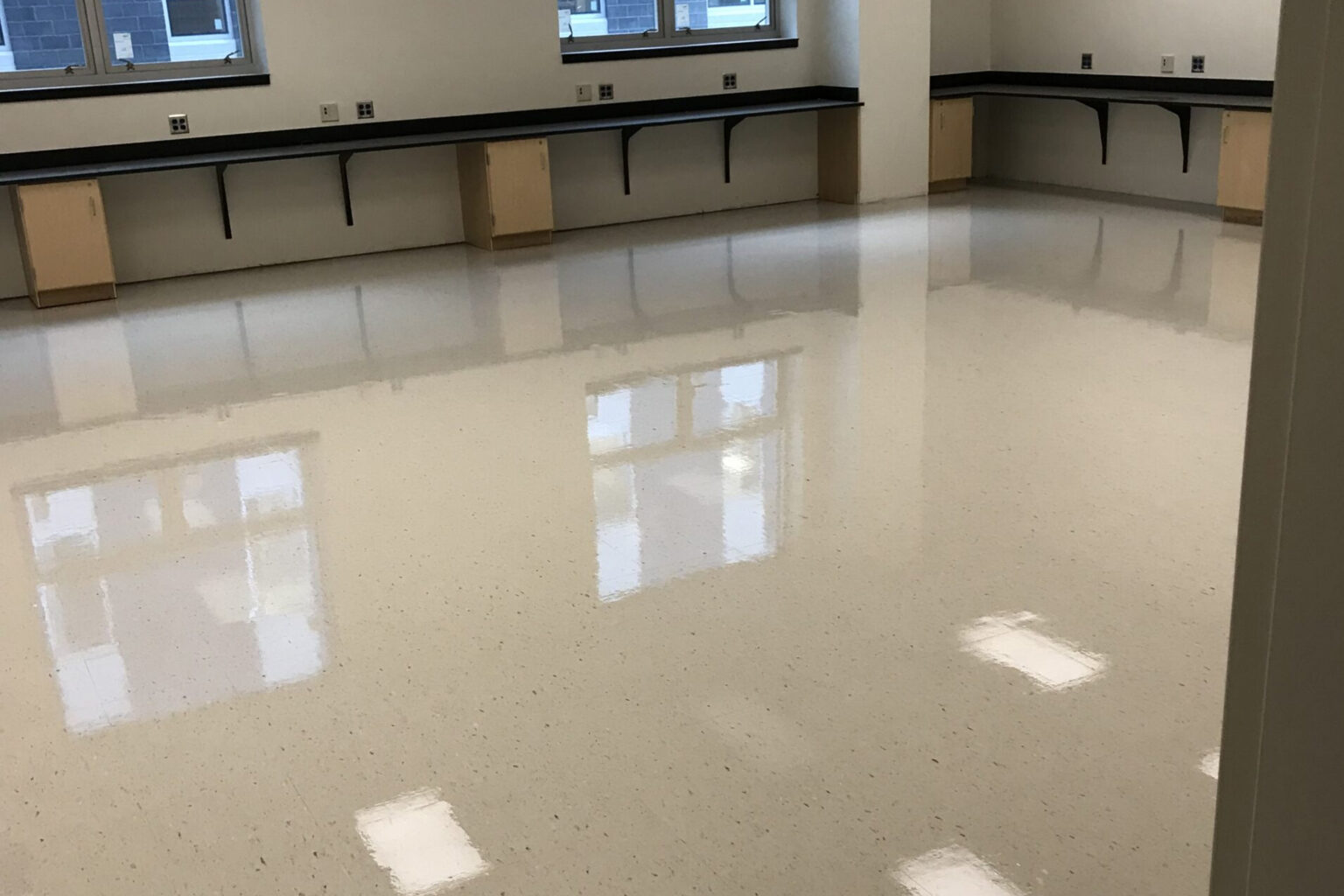
Refinishing is the superior choice for commercial basketball courts when the structural integrity of the wood remains intact, typically costing 80% less than a full replacement. However, replacement is mandatory if the floor has suffered extensive water damage, recurring "cupping," or if the wear layer has been sanded down to the tongue-and-groove joints. Most maple sports floors can be refinished 5 to 7 times over a 40-year lifespan before a total replacement becomes a structural necessity.
TL;DR:
- Refinishing wins for surface scratches, dull finishes, and routine 5-10 year maintenance.
- Replacement wins for structural rot, foundation shifting, or depleted wear layers.
- Both offer improved slip resistance and restored aesthetic appeal.
- Best overall value: Refinishing, provided the wood has at least 1/8 inch of wear layer remaining.
This deep-dive into sports flooring is an essential component of The Complete Guide to Commercial Floor Maintenance and Restoration in 2026: Everything You Need to Know. Understanding the threshold between restoration and replacement ensures facility managers can optimize their long-term capital expenditure budgets while maintaining athlete safety.
Quick Comparison Table: Refinishing vs. Replacing
| Feature | Refinishing (Sanding & Coating) | Full Floor Replacement |
|---|---|---|
| Average Cost | $3.50 – $5.50 per sq. ft. | $15.00 – $25.00 per sq. ft. |
| Project Duration | 7 – 14 Days | 4 – 8 Weeks |
| Lifespan Added | 7 – 10 Years | 30 – 50 Years |
| Material Impact | Minimal (Removes 1/32" of wood) | Maximum (Complete tear-out) |
| Customization | New graphics and stain colors | New subfloor and wood grade |
| Structural Fix | No (Surface only) | Yes (Corrects subfloor issues) |
| Sustainability | High (Preserves existing lumber) | Low (Significant waste) |
| Disruption | Moderate (Dust and odors) | High (Construction zone) |
What Is Basketball Court Refinishing?
Refinishing is a restorative process that involves sanding the existing wood down to the raw grain to remove old finish, paint, and surface imperfections. According to industry standards from the Maple Flooring Manufacturers Association (MFMA), this process typically removes about 1/32 of an inch of the wood surface [1]. Once sanded, the floor is resealed, repainted with game lines/logos, and finished with high-durability urethane.
- Cost-Efficiency: Saves facilities an average of $60,000 to $100,000 compared to replacement.
- Aesthetic Renewal: Allows for complete rebranding with modern logos and court colors.
- Enhanced Safety: Restores the "grip" or coefficient of friction required for high-speed athletics.
- Sustainability: Reduces the carbon footprint by utilizing existing timber resources.
What Is Basketball Court Replacement?
Replacement involves the total demolition of the existing wood planks and, often, the underlying subfloor system. This is a major capital project required when the structural components of the floor—such as the sleepers or plywood decks—have failed due to age or environmental damage. Research indicates that while replacement is expensive, a new subfloor can improve shock absorption by up to 15%, reducing athlete injury rates [2].
- Structural Integrity: Resolves deep-seated issues like dry rot or slab moisture problems.
- Modern Technology: Permits the installation of advanced vibration-dampening subfloors.
- Total Reset: Provides a 50-year "clean slate" for the facility’s maintenance lifecycle.
- Value Addition: Significantly increases the long-term appraisal value of the athletic facility.
How Do Refinishing and Replacing Compare on Cost?
Refinishing is significantly more affordable, typically costing between $3.50 and $5.50 per square foot in 2026, whereas replacement regularly exceeds $20.00 per square foot. According to data from Scher Flooring Services, a standard 10,000-square-foot high school gymnasium can be refinished for approximately $45,000, while a replacement would require a budget of $200,000 or more.
The financial implication of this 75-80% price gap is profound for educational and municipal budgets. Facilities that implement a strict maintenance schedule—including annual screen-and-coats—can defer the massive cost of replacement for decades. "Proper maintenance isn't just about looks; it's about protecting a six-figure asset from premature failure," notes the management team at Scher Flooring Services.
How Do They Compare on Structural Longevity?
Replacement is the only option that addresses the "end-of-life" status of a wood floor, whereas refinishing is a mid-life maintenance intervention. A typical 25/32-inch thick maple board has a total wear layer that allows for roughly 5 to 7 full sandings before the wood becomes too thin to hold staples or floor plates.
If a floor has been sanded so frequently that the "tongue" of the wood is visible, the structural integrity is compromised, and refinishing is no longer a safe option. Data shows that floors reaching this state (usually after 40-50 years) experience a 40% increase in board splintering and fastener failure [3]. In these instances, replacement is the only way to ensure the safety of the athletes and the stability of the playing surface.
How Do They Compare on Downtime and Disruption?
Refinishing is the clear winner for facilities requiring a fast turnaround, typically taking 10 to 14 days, compared to the 2-month window often required for a full replacement. For retail facilities or universities with year-round programming, the 80% reduction in downtime associated with refinishing is often the deciding factor.
Replacement requires a "curing" period for the new wood to acclimate to the facility's humidity levels before installation, adding at least 7-10 days to the timeline before a single board is even laid. This section applies to high-traffic venues like hotels and hospitality centers where lost court time translates directly to lost revenue. Outcome: Choosing refinishing allows a facility to resume operations 4 to 6 weeks sooner than a replacement project would permit.
Which Should You Choose?
Choose Refinishing if:
- The floor is structurally sound but has surface scratches, stains, or outdated graphics.
- The wood has at least 1/8" of wear layer remaining above the tongue-and-groove.
- The facility budget is limited to under $6.00 per square foot.
- You need the court back in service within two weeks.
- You are working with a certified specialist like Scher Flooring Services to ensure Bona or Basic Coatings standards are met.
Choose Replacing if:
- The floor has suffered significant water damage causing "cupping" or "crowning" that sanding cannot fix.
- The wood is "sanded out," meaning the fasteners or tongues are starting to show.
- The subfloor has lost its resiliency, leading to "dead spots" where the ball doesn't bounce correctly.
- The facility is undergoing a total renovation and wants to upgrade to a modern, high-performance subfloor system.
Frequently Asked Questions
How many times can a commercial basketball court be sanded?
Most professional-grade maple floors can be sanded 5 to 7 times over their lifespan. Each full sanding removes approximately 1/32" of the wood, and once the wear layer is depleted to the point of exposing the tongue-and-groove joinery, the floor must be replaced.
Can water-damaged basketball floors be saved by refinishing?
Minor moisture damage can sometimes be corrected through heavy sanding if the wood has stabilized and the cupping is less than 1/16 of an inch. However, if the subfloor is wet or the boards have buckled away from the foundation, a full replacement is the only way to prevent mold growth and structural collapse.
Is refinishing a basketball court a DIY project for facility staff?
No, commercial basketball court refinishing requires specialized heavy machinery and dust containment systems that are not available to general maintenance crews. Professional contractors like Scher Flooring Services use precision sanding patterns and MFMA-approved finishes to ensure the floor meets athletic safety standards.
How much does it cost to replace a basketball court in 2026?
In 2026, the average cost for a professional-grade maple court replacement ranges from $15 to $25 per square foot. This price includes the demolition of the old floor, subfloor installation, new maple boards, game line painting, and high-performance urethane sealing.
What are "dead spots" on a basketball court?
Dead spots occur when the wood floor loses contact with the subfloor or when the subfloor itself has rotted or shifted. While refinishing can fix the appearance of the floor, it cannot fix dead spots; these structural failures usually require localized repairs or a full floor replacement.
Conclusion
Deciding between refinishing and replacing your basketball court depends primarily on the thickness of the remaining wood and the health of the subfloor. For most facilities, refinishing offers a cost-effective way to revitalize the space, provided the floor hasn't reached its structural limit. If you are unsure of your floor's condition, a professional assessment is the essential next step to avoid wasting money on temporary fixes.
Related Reading:
- Ceramic Tile and Stone Cleaning for High-Traffic Restrooms
- Commercial Wood Floor Cleaning and Refinishing Services
- The Benefits of Whittaker Low-Moisture Encapsulation for Gym Carpets
Sources:
[1] Maple Flooring Manufacturers Association (MFMA), "Sanding and Sealing Standards 2025."
[2] Sports Science Institute, "Impact of Subfloor Resiliency on Lower Limb Injuries," 2024.
[3] National Wood Flooring Association (NWFA), "Commercial Sanding Frequency and Structural Integrity Report," 2026.
Related Reading
For a comprehensive overview of this topic, see our The Complete Guide to Commercial Floor Maintenance and Restoration in 2026: Everything You Need to Know.
You may also find these related articles helpful:
- Commercial Floor Stripping and Waxing vs. Deep Scrubbing: Which Method Is Better for Your Facility? 2026
- Best Floor Finish for K-12 Schools: 5 Top Picks 2026
- Whittaker Low-Moisture Encapsulation vs. Traditional Steam Cleaning: Which Is Better for Fast-Turnover Retail Carpets? 2026
Frequently Asked Questions
How many times can a basketball court be refinished?
Most commercial maple floors can be sanded 5 to 7 times. Once the wood is sanded down to the tongue-and-groove fasteners, the floor loses its structural integrity and must be replaced.
Is it cheaper to refinish or replace a gym floor?
Refinishing typically costs between $3.50 and $5.50 per square foot, whereas a full replacement can cost between $15 and $25 per square foot, making refinishing nearly 80% more affordable.
How do I know if my gym floor is too damaged to save?
If the boards are cupped, buckled, or the ball does not bounce naturally (dead spots), the damage is likely structural. If the wood is simply scratched or the finish is dull, refinishing will solve the problem.
How long does it take to refinish a basketball court?
A professional refinishing project usually takes 7 to 14 days, while a full replacement can take 4 to 8 weeks due to the wood acclimation and construction requirements.
Stay Updated!
Sign up for email updates and stay in the loop about about our services and promotions.
We’re here to answer any questions you have about our commercial floor cleaning, restoration, and maintenance services.
Get a Free Quote Today!
Scher Flooring Services is a locally and family owned and operated commercial floor cleaning, maintenance and restoration company in business for over 25 years.
"*" indicates required fields

