In house floor cleaning vs hiring a professional commercial floor service is a common decision for business owners who want clean, safe, and presentable floors without wasting time or money. The right choice depends on your cleaning needs, floor types, cleaning frequency, budget, health and safety standards, and how much responsibility your internal team can manage.
For most businesses, floor care is not just about daily cleaning. Commercial floors deal with foot traffic, spills, dirt, moisture, cleaning chemicals, furniture movement, and long-term wear. A simple in house cleaning team may handle light cleaning tasks, but deep cleaning, floor restoration, stripping and waxing, carpet extraction, rubber floor care, and delicate surfaces often require trained professionals, specialized equipment, and a clear maintenance plan.
Scher Flooring Services has served commercial floor cleaning, restoration, and maintenance needs since 1995, offering custom maintenance plans for commercial floors, including VCT, LVT, ceramic, stone, rubber, carpet, and wood surfaces. Their service model is built around proactive floor care, not just one-time cleaning. This matters because the real decision is not only who cleans the floor today. It is who protects the floor’s appearance, safety, and lifespan over time.
What Is In House Floor Cleaning vs Hiring a Professional Commercial Floor Service?
In house cleaning means your business uses its own cleaning team, in house cleaners, or in house cleaning staff to manage daily or routine floor cleaning. Hiring a professional commercial floor service means you use a professional cleaning service or commercial cleaning companies for scheduled services, deep cleaning, floor maintenance, and specialty cleaning services.
Both models can help keep a business clean, but they are not the same. In house teams usually handle routine tasks, while professional cleaning companies offer trained staff, professional equipment, advanced techniques, and floor-specific knowledge.
What does in house cleaning staff mean in commercial cleaning?
In house cleaning staff are employees or workers hired directly by a business to handle cleaning tasks inside the facility. They may sweep, mop, vacuum, empty trash, clean restrooms, manage cleaning supplies, and respond to spills during business hours.
An in house cleaning team is useful when a facility needs daily attention. For example, a school, office space, retail store, or healthcare facility may need quick cleanup throughout the day. However, hiring in house also means the business manages payroll, training, sick days, supervision, cleaning equipment, cleaning chemicals, and health insurance if applicable.
Common in house cleaning responsibilities include:
- Daily sweeping and mopping
- Vacuuming carpeted areas
- Restroom cleaning
- Trash removal
- Spot cleaning spills
- Basic dusting
- Light janitorial services
- Restocking paper products and cleaning supplies
This model gives the business more direct control, but it also creates time consuming management responsibilities.
What do professional cleaning companies provide in commercial floor care?
Professional cleaning companies provide commercial cleaning services using trained professionals, professional cleaners, specialized equipment, and floor-specific processes. Instead of only handling surface-level cleaning, they focus on cleaning standards, floor protection, appearance, safety, and long-term maintenance.
Professional cleaning companies offer services such as:
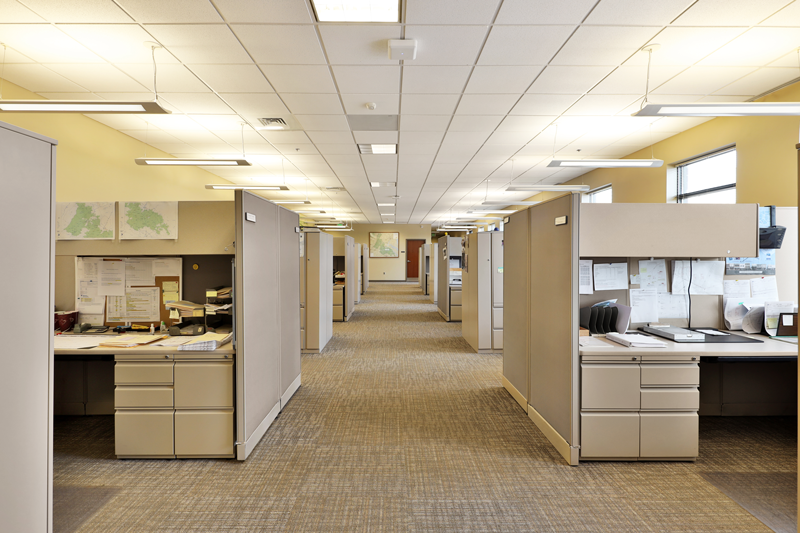
- Commercial carpet cleaning
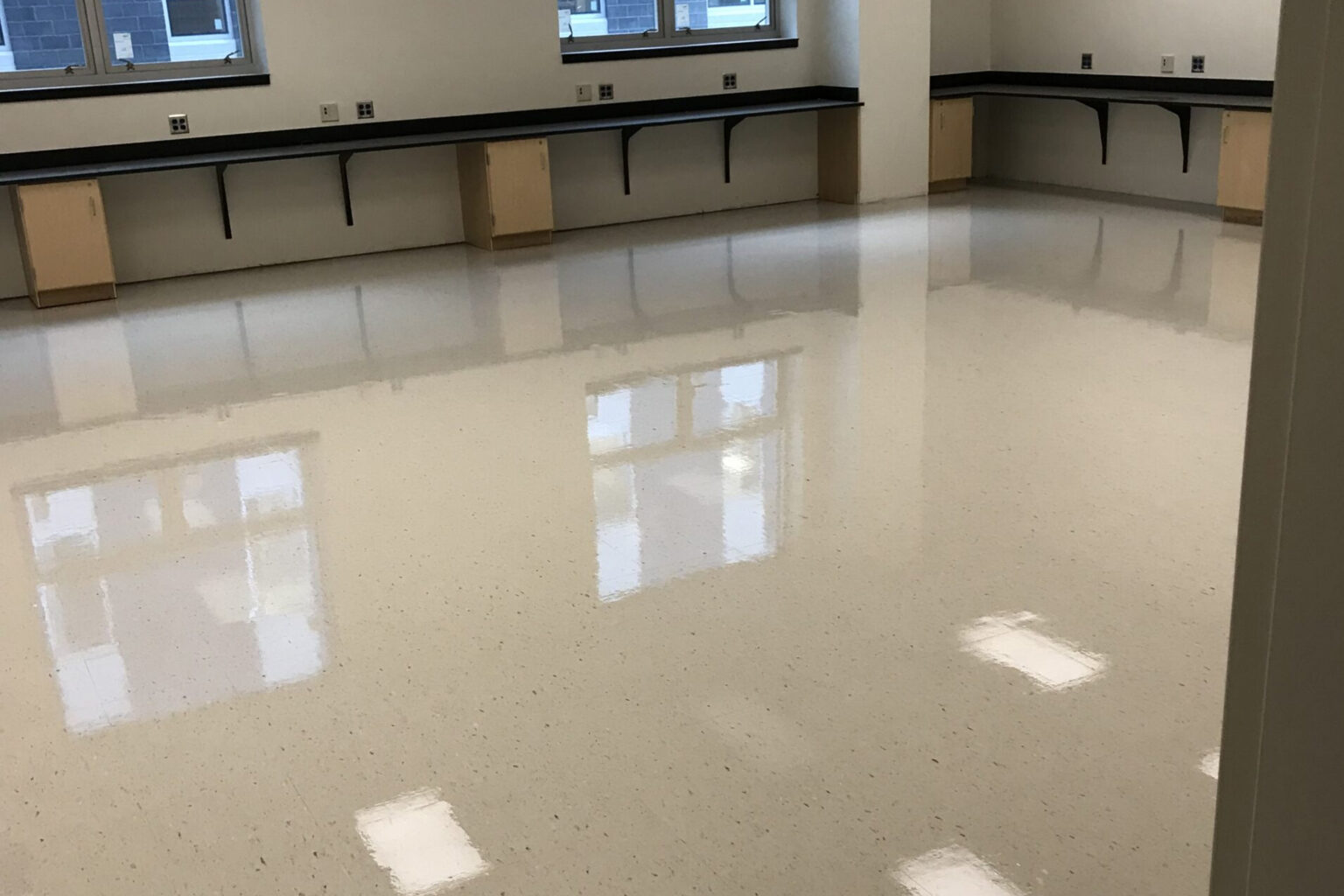
- VCT and LVT cleaning, stripping, and waxing
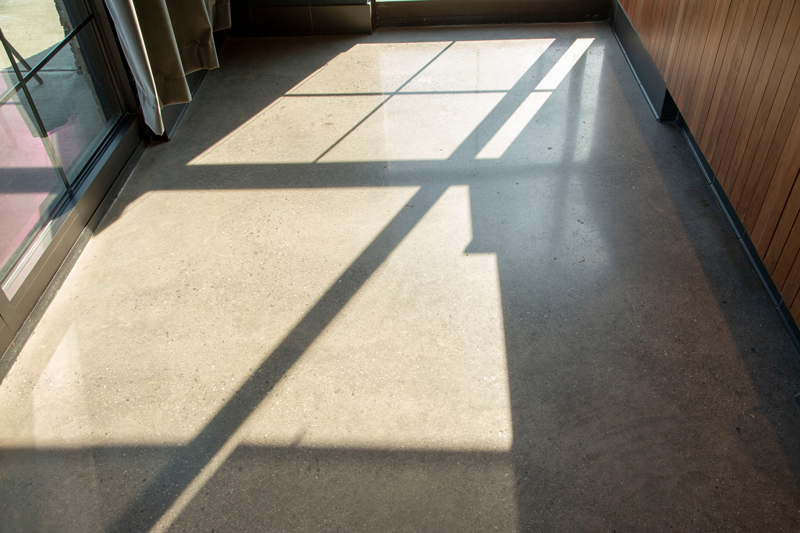
- Ceramic, porcelain, stone, and tile cleaning
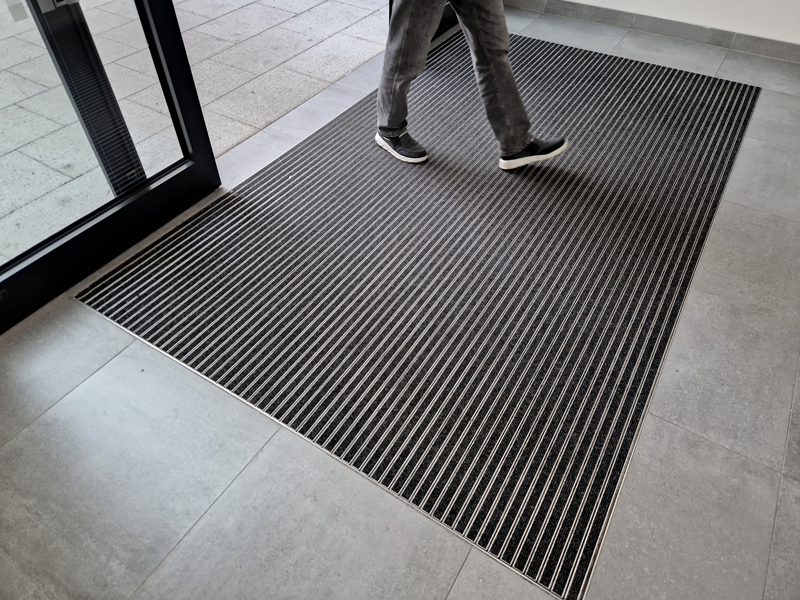
- Rubber floor cleaning
- Natural oil finished wood floor care
- Scheduled floor maintenance plans
- Deep cleaning for high-traffic areas
- Specialty cleaning services for industry-specific needs
Scher Flooring Services, for example, provides commercial floor cleaning, restoration, and maintenance plans designed around a facility’s unique needs, including single and multiple-location support.
How do janitorial services differ from specialized commercial cleaning services?
Janitorial services usually focus on everyday cleaning tasks. Commercial floor cleaning services focus more deeply on floor surfaces, floor finish, machine cleaning, restoration, and maintenance cycles.
| Service Type | Main Focus | Common Tasks |
| Janitorial services | Daily cleanliness | Trash removal, restroom cleaning, vacuuming, light mopping |
| Commercial cleaning | Broader business cleaning | Office cleaning, window cleaning, deep cleaning, scheduled services |
| Professional floor service | Floor care and maintenance | Scrubbing, waxing, polishing, carpet extraction, tile and grout care |
This difference becomes important when comparing costs, because the cheapest option for daily cleaning may not be the most cost effective option for long-term floor care.
How Does Hiring In House Cleaning Staff Compare to Outsourced Cleaning Models?
Hiring in house gives a business direct control over its cleaning crew. Outsourced cleaning gives the business access to professional cleaning, specialized knowledge, professional equipment, and scheduled commercial cleaning services without managing every detail internally.
The best model depends on whether your business needs daily cleaning support, periodic deep cleaning, or a combination of both.
What are the responsibilities of in house cleaning staff?
In house cleaning staff usually handle routine cleaning tasks that keep the business clean during normal operations. They may be available during business hours, which helps when spills or urgent cleaning needs come up.
Their responsibilities often include:
- Keeping entrances and walkways clean
- Mopping visible dirt or spills
- Vacuuming carpeted office space
- Cleaning breakrooms and restrooms
- Reporting damage or safety concerns
- Maintaining basic cleaning supplies
- Supporting a healthier work environment
The challenge is that many in house cleaners are not trained to identify floor finish damage, chemical exposure risks, wax buildup, rubber floor residue, grout discoloration, or the correct cleaning method for delicate surfaces.
What is outsourced cleaning and how do commercial cleaning services operate?
Outsourced cleaning means a business hires an outside cleaning company instead of relying only on its own cleaning team. Outsourced commercial cleaning can include daily cleaning, weekly maintenance, monthly deep cleaning, seasonal restoration, or scheduled floor care.
Professional commercial cleaning companies usually begin by reviewing:
- Floor type
- Facility size
- Foot traffic
- Industry regulations
- Cleaning frequency
- Business hours
- Safety standards
- Existing floor condition
- Budget and overhead costs
A company like Scher Flooring Services may also conduct floor care audits and design proactive floor maintenance plans within budget parameters. This helps businesses avoid random cleaning and move toward planned maintenance.
Which cleaning model is more scalable for growing businesses?
Outsourced cleaning is usually more scalable because the provider can adjust staffing, equipment, and cleaning schedule as the facility grows. Hiring in house can work for a small business, but scaling an internal team often means more payroll, training, supervision, cleaning equipment, and liability insurance.
For a business deciding between both models, scalability often comes down to one question: will your cleaning needs grow faster than your ability to manage an internal team?
What Are the Overhead Costs of Hiring In House vs Hiring a Professional?
The visible cost of in house cleaning is payroll. The real cost includes hidden costs such as training, equipment and supplies, management time, health insurance, sick days, liability exposure, replacement hiring, and compliance responsibilities. Hiring a professional may look more expensive upfront, but it can create cost savings when specialized work, equipment, and supervision are included.
Cost should be measured by total ownership, not only hourly pay.
What costs are involved in hiring in house cleaning staff?
Hiring in house cleaning staff may include:
- Wages or salary
- Payroll taxes
- Health insurance or benefits
- Workers’ compensation
- Paid leave and sick days
- Training time
- Cleaning supplies
- Cleaning chemicals
- Floor scrubbers or other machines
- Storage space for equipment
- Management time
- Replacement hiring when employees leave
These overhead costs can be easy to overlook. A small business may start with one cleaner and basic supplies, but as cleaning needs grow, the internal cost can rise quickly.
What pricing structures do professional cleaning companies use?
Professional cleaning companies may price services based on facility size, floor type, cleaning frequency, service complexity, and whether the work is routine or restorative.
Common pricing factors include:
| Pricing Factor | Why It Matters |
| Square footage | Larger spaces require more labor and time |
| Floor type | VCT, LVT, carpet, rubber, stone, and wood need different processes |
| Cleaning frequency | Scheduled services may reduce emergency cleaning needs |
| Soil level | Heavily used floors require deeper cleaning |
| Business hours | After-hours service may affect scheduling |
| Specialty work | Stripping, waxing, buffing, and restoration require equipment and skill |
Professional cleaning companies offer more than labor. They bring process, trained staff, equipment, and accountability.
Which option reduces long-term overhead costs for a small business?
For a small business, outsourced cleaning is often more cost effective when professional equipment, deep cleaning, compliance, and consistent quality are needed. In house cleaning can still work for daily upkeep, but professional cleaning reduces the burden of buying machines, training staff, managing safety regulations, and correcting mistakes.
A balanced model often works best: use an internal team for daily cleaning and a professional cleaning service for scheduled floor maintenance.
Which Option Delivers Better Cleaning Quality and Consistency?
Cleaning quality depends on training, supervision, cleaning standards, tools, chemicals, and floor knowledge. In house cleaning can maintain basic cleanliness, but professional cleaning usually delivers more consistent quality for commercial floors because the work is performed by trained professionals using advanced techniques.
Consistency matters because floor damage often happens slowly. By the time a floor looks dull, stained, sticky, or scratched, maintenance has already fallen behind.
How does professional cleaning ensure higher cleaning standards?
Professional cleaning companies use defined cleaning standards, trained staff, professional equipment, and surface-specific methods. This helps avoid common mistakes such as using the wrong cleaning chemicals, over-wetting floors, damaging finishes, or using abrasive pads on delicate surfaces.
Professional cleaning may improve:
- Floor appearance
- Slip resistance
- Stain removal
- Odor control
- Finish durability
- Grout cleanliness
- Carpet condition
- Long-term floor lifespan
Scher Flooring Services focuses on maintenance plans that fit each business’s needs, which supports predictable floor care rather than reactive cleaning.
Can in house cleaning staff maintain consistent floor care results?
In house cleaning staff can maintain consistent results when they are properly trained, supervised, and equipped. The issue is that many in house teams are expected to handle too many cleaning tasks with limited time and basic supplies.
Common problems include:
- Using the same mop water across large areas
- Applying too much cleaning chemical
- Skipping edges and corners
- Using the wrong product for the floor type
- Not allowing proper dwell time
- Missing deep cleaning intervals
- Delaying floor finish maintenance
These mistakes may seem small, but they can reduce floor appearance and increase long-term costs.
What role does supervision and accountability play in cleaning outcomes?
Supervision is one of the biggest differences between in house and outsourced cleaning. With an internal team, the business must monitor quality. With professional cleaners, the cleaning company is responsible for staff training, quality control, service delivery, and issue resolution.
Accountability is especially important in industrial spaces, healthcare environments, schools, hotels, restaurants, and retail facilities where the facility’s cleanliness directly affects safety and customer perception.
What Role Does Professional Equipment Play in Commercial Cleaning Results?
Professional equipment makes a major difference in commercial cleaning because floors often need more than mops and buckets. Floor scrubbers, extractors, buffers, burnishers, wet vacuums, specialty pads, and correct cleaning chemicals help clean deeper and protect surfaces better.
Equipment affects both cleaning quality and the life of the floor.
What professional equipment do commercial cleaning services use?
Professional commercial cleaning services may use:
- Auto floor scrubbers
- High-speed burnishers
- Carpet extractors
- Tile and grout cleaning machines
- Wet/dry vacuums
- Floor buffers
- Stripping equipment
- Specialty pads and brushes
- Low-moisture carpet systems
- Floor finish applicators
This specialized equipment helps trained professionals remove buildup, restore shine, clean grout, maintain rubber flooring, and protect commercial surfaces.
Can in house cleaning staff match professional cleaning technology?
In house cleaning staff can use professional equipment if the business buys it and trains them properly. However, equipment ownership adds costs for storage, maintenance, repair, replacement, and safe operation.
For many businesses, it is not practical to buy expensive cleaning equipment for occasional deep cleaning. Hiring a professional cleaning company allows access to advanced equipment without purchasing it directly.
How does equipment impact floor lifespan and maintenance cycles?
The right equipment can extend floor life by removing soil before it scratches the surface, restoring finish before it fails, and cleaning without damaging the material. The wrong equipment can shorten floor life.
For example:
- Using harsh pads on LVT can damage the surface.
- Too much water on wood can cause swelling.
- Wrong chemicals on rubber floors can leave residue.
- Poor carpet extraction can leave moisture and odor issues.
- Delayed VCT maintenance can lead to finish breakdown.
This is where specialized knowledge becomes just as important as the machine itself.
Is Hiring a Professional Cleaning Service More Efficient Than In House Cleaning?
Hiring a professional cleaning service is often more efficient for deep cleaning, scheduled floor maintenance, and specialty services because the work is planned, staffed, and completed with the right tools. In house cleaning is efficient for immediate daily tasks, but it can become inefficient when the team lacks training, equipment, or time.
Efficiency should be measured by results, disruption, and management load.
How do commercial cleaning services improve operational efficiency?
Commercial cleaning services improve efficiency by creating a cleaning schedule around the facility’s actual needs. This may include after-hours service, monthly floor care, quarterly deep cleaning, or seasonal restoration.
Benefits include:
- Less disruption during business hours
- Faster completion of deep cleaning tasks
- Better use of trained staff
- Fewer emergency cleaning problems
- Reduced management burden
- Improved employee productivity
- More predictable floor appearance
A professional environment supports both staff morale and customer trust. Clean floors make a business feel organized, safe, and well-managed.
What time and labor challenges exist with in house cleaning staff?
In house cleaning staff may be pulled into many tasks beyond floor care. They may handle restrooms, trash, windows, spills, supply rooms, breakrooms, and general cleaning. When floor care becomes one task among many, deeper maintenance is often delayed.
Common labor challenges include:
- Staff shortages
- Sick days
- Limited training
- High turnover
- Time consuming management
- Inconsistent cleaning standards
- Lack of floor-specific expertise
These challenges are not always the fault of the cleaning crew. Often, they simply do not have the time, tools, or training needed for commercial floor maintenance.
Which option minimizes business disruption and downtime?
Professional cleaning usually minimizes downtime because the work can be scheduled before opening, after closing, or during low-traffic periods. This is especially helpful for retail stores, offices, healthcare spaces, gyms, schools, hotels, and property management facilities.
A planned cleaning schedule also reduces last-minute disruptions caused by floors that suddenly need emergency attention.
How Do Compliance, Safety, and Liability Differ Between the Two?
Health and safety regulations matter in commercial cleaning because floors affect slip risk, chemical exposure, indoor cleanliness, employee safety, and visitor safety. In house cleaning makes the business more directly responsible for training, safety standards, chemical handling, and liability. Outsourced cleaning shifts many operational responsibilities to the cleaning provider.
Safety is not only about avoiding accidents. It is also about creating a healthier work environment.
What OSHA and safety standards apply to commercial cleaning?
Commercial cleaning may involve wet floors, cleaning chemicals, electrical equipment, floor machines, heavy lifting, and chemical storage. Businesses must consider health and safety standards related to worker safety, chemical labeling, ventilation, protective equipment, and slip prevention.
Important safety areas include:
- Proper chemical dilution
- Safe storage of cleaning chemicals
- Wet floor signage
- Machine operation training
- Slip and fall prevention
- Personal protective equipment
- Ventilation during cleaning
- Documentation of cleaning processes
Professional cleaning companies train their cleaning crew to follow safety regulations and proper procedures.
Who is responsible for liability with in house vs outsourced cleaning?
With in house cleaning, the business is responsible for its employees, equipment, training, and cleaning practices. If an employee is injured or a visitor slips due to poor cleaning procedures, the business may face liability concerns.
With outsourced cleaning, the provider should carry liability insurance and manage its own trained staff. Businesses should still verify insurance, service scope, and safety practices before hiring a professional cleaning company.
How do professional cleaning companies manage risk and insurance?
Professional cleaning companies manage risk through training, supervision, insurance, equipment safety, and written procedures. They understand that cleaning is not just a visual task. It affects health and safety, facility operations, customer experience, and long-term asset protection.
This is especially important for industries with stricter expectations, including healthcare, assisted living, government buildings, schools, hotels, hospitality, fitness centers, restaurants, and retail facilities.
Which Option Supports Green Cleaning and Sustainability Goals?
Green cleaning focuses on reducing harmful chemical exposure, improving indoor conditions, and using safer cleaning methods where appropriate. Both in house teams and professional cleaning companies can use green cleaning practices, but professional providers may have better access to products, training, and equipment that support sustainability.
Green cleaning should still match the floor type and cleaning goal. Not every surface can be cleaned the same way.
What is green cleaning in commercial environments?
Green cleaning in commercial environments means using cleaning methods that reduce unnecessary chemical exposure, improve indoor air quality, and support safer cleaning practices. It may involve low-odor products, proper dilution, microfiber systems, efficient equipment, and processes that avoid overuse of harsh chemicals.
Green cleaning may include:
- Safer cleaning chemicals
- Proper product dilution
- Microfiber cleaning systems
- Lower water use where possible
- Reduced residue buildup
- Better ventilation practices
- Responsible disposal of waste materials
The goal is not just to use a “green” label. The goal is to clean effectively while reducing unnecessary risk.
Do professional cleaning companies offer eco-friendly solutions?
Many professional cleaning companies offer green cleaning or lower-impact cleaning options when they fit the facility and floor material. The best provider will explain what is safe for the floor, what meets cleaning standards, and what supports health and safety.
For example, a commercial carpet, rubber floor, stone floor, or VCT floor may require different cleaning chemistry. A trained professional can choose the right product rather than relying on one general cleaner for every surface.
Can in house cleaning staff implement sustainable cleaning practices?
Yes, in house cleaning staff can implement sustainable cleaning practices if they receive proper training and use the correct supplies. The business must create clear procedures for chemical use, dilution, storage, equipment cleaning, and floor-specific methods.
Without training, green cleaning can become inconsistent. Using too little product may fail to clean properly, while using the wrong product can damage floors or leave residue.
Is Hiring a Professional Cleaning Service Better for Small Business Growth?
Hiring a professional cleaning service can support small business growth by reducing management burden, improving the facility’s cleanliness, protecting floors, and allowing employees to focus on core business work. For small business owners, cleaning may begin as a simple internal task, but it often becomes harder as the business grows.
A clean facility supports customer trust, employee productivity, and a stronger professional environment.
How does outsourcing cleaning support business scalability?
Outsourcing cleaning supports scalability because the business does not need to constantly hire, train, supervise, and replace cleaning staff as needs increase. The professional cleaning company can adjust the cleaning schedule, add services, and recommend maintenance cycles based on floor condition and business use.
This is helpful when a business expands to:
- More square footage
- More employees
- More customer traffic
- Multiple locations
- Longer business hours
- More floor types
- Higher cleanliness expectations
Scher Flooring Services notes that it is staffed to provide full floor services for single and multiple locations across one or more geographic areas, which is important for businesses that need consistency across facilities.
When should a small business switch from in house to outsourced cleaning?
A small business should consider outsourced cleaning when floors begin looking dull, cleaning tasks take too much staff time, customer-facing areas are inconsistent, or specialized services are needed.
Signs it may be time to hire a professional include:
- Floors look worn even after cleaning.
- Staff are spending too much time cleaning.
- Equipment costs are increasing.
- Cleaning quality changes from day to day.
- Slip risks or residue problems appear.
- Carpet stains or odors return quickly.
- VCT or LVT floors need stripping and waxing.
- Tile and grout lines look dark or dirty.
- Rubber floors feel sticky or hard to maintain.
Hiring a professional does not always mean replacing the internal team. Many businesses use both.
What industries benefit most from professional commercial cleaning services?
Industries with high foot traffic, public-facing spaces, safety requirements, or multiple floor types benefit most from professional commercial cleaning.
These include:
- Healthcare and assisted living
- Hotels and hospitality
- Schools and universities
- Fitness centers and gyms
- Restaurants and bars
- Retail facilities
- Government buildings
- Churches and community centers
- Property management
- Industrial spaces
- Office buildings
These facilities need more than a clean appearance. They need reliable maintenance that supports safety, presentation, and long-term floor performance.
What Are the Pros and Cons of In House Cleaning Staff vs Professional Cleaning?
Both options have advantages. In house cleaning offers control and immediate availability. Professional cleaning offers trained staff, specialized equipment, consistent quality, and reduced overhead management. The right choice often depends on whether the business needs daily surface cleaning, scheduled deep cleaning, or a complete floor maintenance plan.
A practical decision compares control, cost, quality, safety, and long-term value.
Advantages of hiring in house cleaning staff
In house cleaning staff may be a good fit when the business needs daily cleaning support during operating hours.
Advantages include:
- Immediate response to spills
- Direct control over tasks
- Familiarity with the facility
- Flexible support during business hours
- Useful for routine janitorial services
- Easy communication with managers
For many businesses, an in house cleaning team is useful for daily upkeep.
Limitations of in house floor cleaning
The limitations usually appear when floors need deeper care. In house cleaners may not have the equipment, training, or specialized knowledge needed for floor restoration and maintenance.
Limitations include:
- Hidden costs
- Training responsibilities
- Equipment purchases
- Chemical exposure risks
- Inconsistent quality
- Sick days and staffing gaps
- Time consuming management
- Limited specialty cleaning services
These limitations can make in house cleaning more expensive than it first appears.
Benefits of hiring a professional commercial floor service
Hiring a professional commercial floor service helps businesses access expertise without building a full floor care department internally.
Benefits include:
- Professional equipment
- Trained professionals
- Consistent quality
- Advanced techniques
- Better floor-specific care
- Scheduled services
- Reduced management burden
- Support for health and safety standards
- Better long-term floor protection
Professional cleaning companies offer structured service plans that can be adjusted to the facility’s cleaning needs.
Potential drawbacks of outsourced cleaning
Outsourced cleaning can have drawbacks if the provider is not reliable or the scope is unclear.
Possible concerns include:
- Less direct control over workers
- Need for clear communication
- Scheduling coordination
- Service quality depends on provider selection
- Contract terms must be reviewed carefully
These risks can be reduced by choosing a company with commercial floor care experience, clear service plans, insurance, and strong communication.
What Types of Commercial Cleaning Services Are Included in Professional Cleaning?
Professional cleaning may include routine janitorial services, deep cleaning, floor maintenance, carpet care, tile and grout cleaning, floor stripping, waxing, polishing, and specialty cleaning services. The exact service mix depends on the facility, floor type, traffic level, and cleaning schedule.
This is where professional commercial cleaning becomes more valuable than general house cleaning or basic mopping.
What is included in routine janitorial services?
Routine janitorial services may include:
- Trash removal
- Restroom cleaning
- Vacuuming
- Dusting
- Light mopping
- Breakroom cleaning
- Entryway cleaning
- Restocking supplies
- Basic window cleaning
These services keep the business clean day to day, but they do not replace floor maintenance.
What specialized services are offered?
Specialized commercial floor services may include:
- VCT and LVT cleaning
- Floor stripping and waxing
- Commercial carpet extraction
- Ceramic and stone floor cleaning
- Tile and grout restoration
- Rubber floor cleaning
- Wood floor maintenance
- Floor finish protection
- Scheduled maintenance plans
Scher Flooring Services offers a full suite of commercial floor cleaning and maintenance services across these surface types, which is important for facilities with mixed flooring.
How do commercial floor maintenance industries differ in cleaning needs?
Different industries create different cleaning problems.
| Industry | Common Floor Challenge |
| Healthcare | Hygiene, safety, frequent cleaning |
| Hospitality | Appearance, stains, guest perception |
| Retail | Heavy traffic, scuffs, presentation |
| Schools | Dirt, spills, seasonal wear |
| Gyms | Rubber flooring, sweat, odor |
| Restaurants | Grease, spills, slip prevention |
| Property management | Multi-tenant consistency |
| Government buildings | Public traffic and standards |
This is why a single cleaning method cannot serve every business equally.
How Do Different Floor Types Affect the Decision Between In House and Professional Cleaning?
Floor type is one of the most important factors in choosing between in house cleaning and hiring a professional. Some floors tolerate basic cleaning well. Others require specific chemicals, machines, pads, drying times, and maintenance cycles.
Improper floor care can damage surfaces, increase safety risks, and shorten floor life.
Which floors require professional equipment and expertise?
Floors that often require professional equipment include:
- VCT floors
- LVT floors
- Commercial carpet
- Rubber floors
- Ceramic tile and grout
- Natural stone
- Oil finished wood
- Urethane finished floors
These surfaces can be damaged by the wrong cleaning chemicals, excess water, poor machine use, or skipped maintenance.
Can in house cleaning staff handle VCT, LVT, and hardwood floors effectively?
In house cleaning staff can handle basic upkeep for VCT, LVT, and hardwood floors when trained properly. However, deep cleaning, finish restoration, stripping, waxing, buffing, and delicate surface maintenance are better handled by professional cleaners.
For example, VCT floors may need periodic stripping and waxing, while natural oil finished wood requires a more careful process than standard mopping.
What are the risks of improper floor maintenance?
Improper floor maintenance can lead to:
- Dull appearance
- Scratches
- Sticky residue
- Finish breakdown
- Water damage
- Discoloration
- Grout staining
- Odors
- Slip hazards
- Premature replacement costs
A floor that is cleaned incorrectly may cost more to repair than it would have cost to maintain properly.
What Are Real Cost Comparisons Between In House Cleaning and Outsourced Cleaning?
Real cost comparison should include labor, supplies, equipment, management, insurance, quality control, floor lifespan, and downtime. In house cleaning may look cheaper on paper, but outsourced cleaning can save money when hidden costs and long-term maintenance are included.
The best comparison is not “employee vs contractor.” It is “total cleaning system vs total cleaning system.”
Monthly cost comparison for in house vs professional cleaning
| Cost Area | In House Cleaning | Professional Cleaning |
| Labor | Direct payroll | Included in service price |
| Training | Business responsibility | Provider responsibility |
| Equipment | Purchased by business | Provided by cleaning company |
| Supplies | Purchased by business | Often included or managed |
| Supervision | Internal management | Provider management |
| Insurance | Business responsibility | Provider should carry coverage |
| Deep cleaning | Often limited | Available as scheduled service |
| Quality control | Internal | Provider-led |
This makes professional cleaning easier to budget when the service scope is clear.
Hidden costs of hiring in house cleaning staff
Hidden costs may include:
- Recruiting and onboarding
- Sick day coverage
- Health insurance
- Training updates
- Equipment repair
- Chemical storage
- Safety compliance
- Manager oversight
- Inconsistent results
- Correcting floor damage
These costs are often spread across different departments, which makes them harder to see.
ROI of hiring a professional cleaning service
The return on investment comes from cleaner floors, fewer disruptions, longer floor life, improved safety, better employee productivity, and stronger customer impressions.
Professional cleaning can save money by preventing:
- Premature floor replacement
- Emergency deep cleaning
- Finish failure
- Carpet damage
- Slip-related incidents
- Repeated cleaning mistakes
- Lost time from internal staff
A clean facility also supports the brand image of the business.
How Does Cleaning Frequency Impact Cost and Effectiveness?
Cleaning frequency affects both cost and results. Too little cleaning allows soil and residue to build up. Too much cleaning with the wrong products can damage floors. The best cleaning schedule matches traffic, floor type, business hours, and industry requirements.
Professional cleaning companies can help set a schedule that supports both appearance and budget.
How often should commercial floors be cleaned professionally?
Professional cleaning frequency depends on the facility.
General guidance:
| Facility Type | Professional Cleaning Frequency |
| High-traffic retail | Monthly or quarterly floor care |
| Healthcare | Frequent scheduled maintenance |
| Office space | Quarterly or semiannual deep cleaning |
| Hotels | Routine and seasonal floor care |
| Schools | Seasonal deep cleaning and maintenance |
| Gyms | Regular rubber floor and odor control |
| Restaurants | Frequent deep cleaning due to grease and spills |
The exact schedule should be based on real floor conditions.
Can in house cleaning maintain high-frequency cleaning schedules?
In house cleaning can maintain daily schedules, but high-frequency deep cleaning is harder without proper equipment and staffing. A cleaning team may keep floors presentable, but deep soil removal, restoration, and finish protection need more planning.
This is why many businesses combine daily in house cleaning with scheduled professional services.
What is the optimal cleaning schedule for different industries?
The optimal schedule should include:
- Daily cleaning for visible dirt and spills
- Weekly or biweekly detail cleaning
- Monthly or quarterly machine cleaning
- Seasonal restoration where needed
- Annual floor care planning
A planned schedule helps prevent neglect and reduces emergency cleaning.
Is In House Floor Cleaning Cheaper Than Hiring a Professional Commercial Floor Service?
In house floor cleaning is cheaper only when the cleaning needs are basic, the facility is small, and the business already has trained staff and supplies. Hiring a professional commercial floor service is often more cost effective when deep cleaning, specialized equipment, safety standards, and long-term floor protection are included.
The clearer answer is this: in house cleaning may reduce short-term labor costs, but professional cleaning often lowers long-term overhead costs and protects floor value.
Which Is Better: In House Cleaning Staff or Professional Cleaning Companies?
Professional cleaning companies are better for specialized floor care, deep cleaning, commercial floor maintenance, and consistent quality. In house cleaning staff are better for daily cleaning, quick spill response, and routine upkeep during business hours.
The strongest model for many businesses is a hybrid approach:
- In house cleaning for daily needs
- Professional cleaning for scheduled maintenance
- Clear communication between both teams
- A floor care plan based on traffic and surface type
This gives the business control without sacrificing expertise.
Can a Small Business Rely Only on In House Cleaning Staff?
Yes, a small business can rely only on in house cleaning staff if the space is small, traffic is low, and floor care needs are simple. However, once the business has heavy foot traffic, multiple floor types, customer-facing areas, or visible wear, professional cleaning becomes important.
A small business should not wait until floors look damaged. Preventive cleaning is usually less expensive than repair or replacement.
Do Professional Cleaning Services Save Money in the Long Run?
Yes, professional cleaning services can save money in the long run by reducing floor damage, extending floor lifespan, improving cleaning efficiency, and lowering hidden costs tied to equipment, supplies, management, and training.
Savings are strongest when the business uses scheduled services instead of waiting for floors to look worn.
What Is the Best Option for Maintaining Commercial Floors in High-Traffic Areas?
The best option for high-traffic commercial floors is usually a combination of daily in house cleaning and scheduled professional floor maintenance. Daily cleaning controls dirt and spills. Professional cleaning removes deeper buildup, restores appearance, and protects the surface.
High-traffic areas need planned care because dirt acts like sandpaper under shoes. Without regular maintenance, floors wear faster and become harder to restore.
How to Choose Between In House Floor Cleaning vs Hiring a Professional Commercial Floor Service
Choosing between in house floor cleaning vs hiring a professional commercial floor service comes down to responsibility, cost, quality, safety, and long-term floor value. In house cleaning works well for daily upkeep, quick response, and basic janitorial services. Professional cleaning works better for deep cleaning, floor restoration, specialized surfaces, health and safety standards, and consistent commercial results.
For most businesses, the best decision is not one or the other. It is building a practical floor care system:
- Use in house cleaning staff for everyday messes.
- Use professional cleaning companies for scheduled floor maintenance.
- Match the cleaning schedule to traffic and floor type.
- Track hidden costs, not only payroll.
- Protect floors before they look damaged.
- Choose trained professionals for specialty cleaning services.
- Review the facility’s cleanliness as part of customer and employee experience.
Scher Flooring Services is a strong fit for businesses that need commercial floor cleaning, restoration, and maintenance plans built around real floor conditions. With decades of experience, custom maintenance planning, and services for multiple commercial floor surfaces, the company helps businesses move from reactive cleaning to proactive floor care.
Clean floors are not just an appearance issue. They affect safety, employee productivity, customer confidence, maintenance budgets, and the professional environment your business creates every day.
Stay Updated!
Sign up for email updates and stay in the loop about about our services and promotions.
We’re here to answer any questions you have about our commercial floor cleaning, restoration, and maintenance services.
Get a Free Quote Today!
Scher Flooring Services is a locally and family owned and operated commercial floor cleaning, maintenance and restoration company in business for over 25 years.
"*" indicates required fields