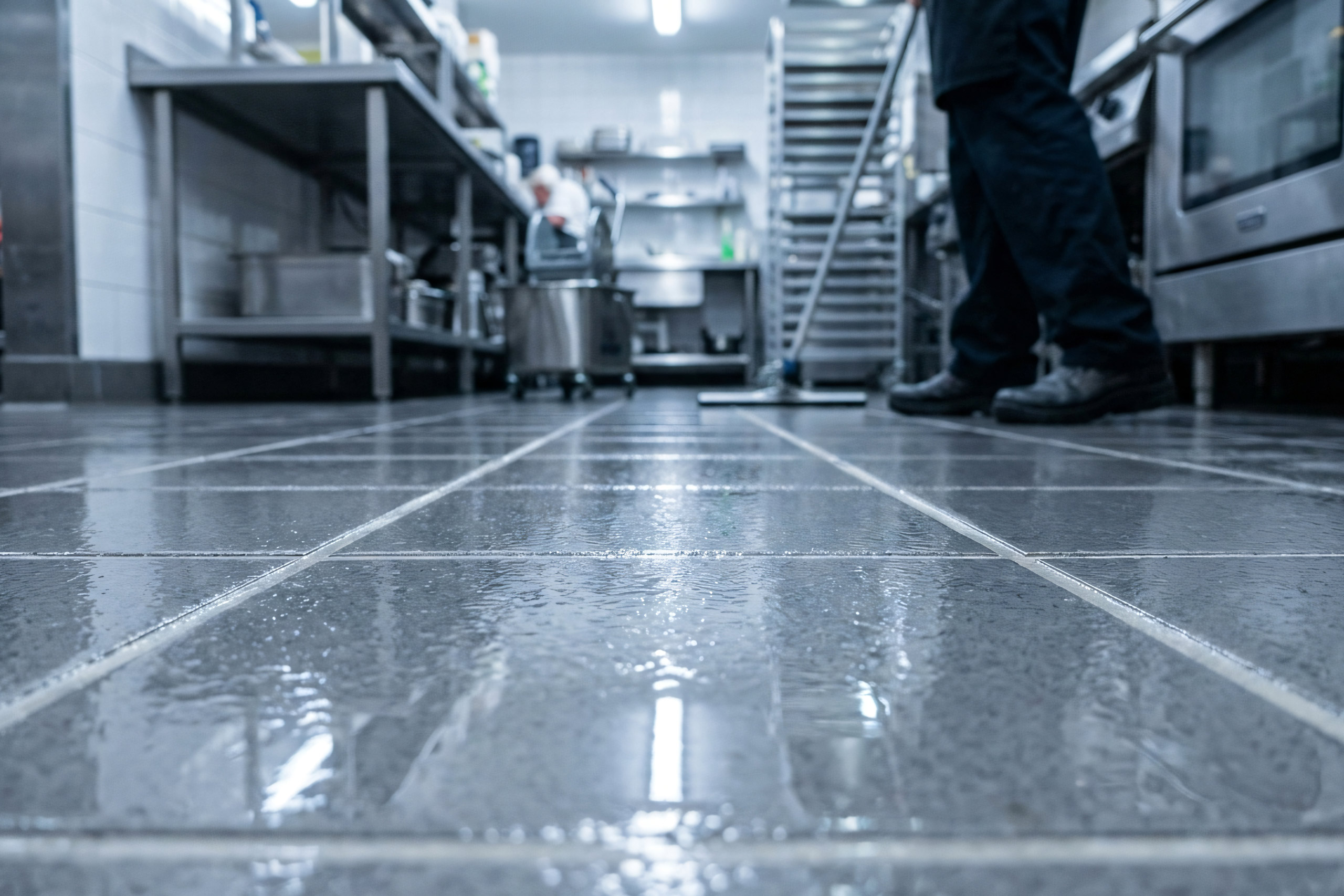
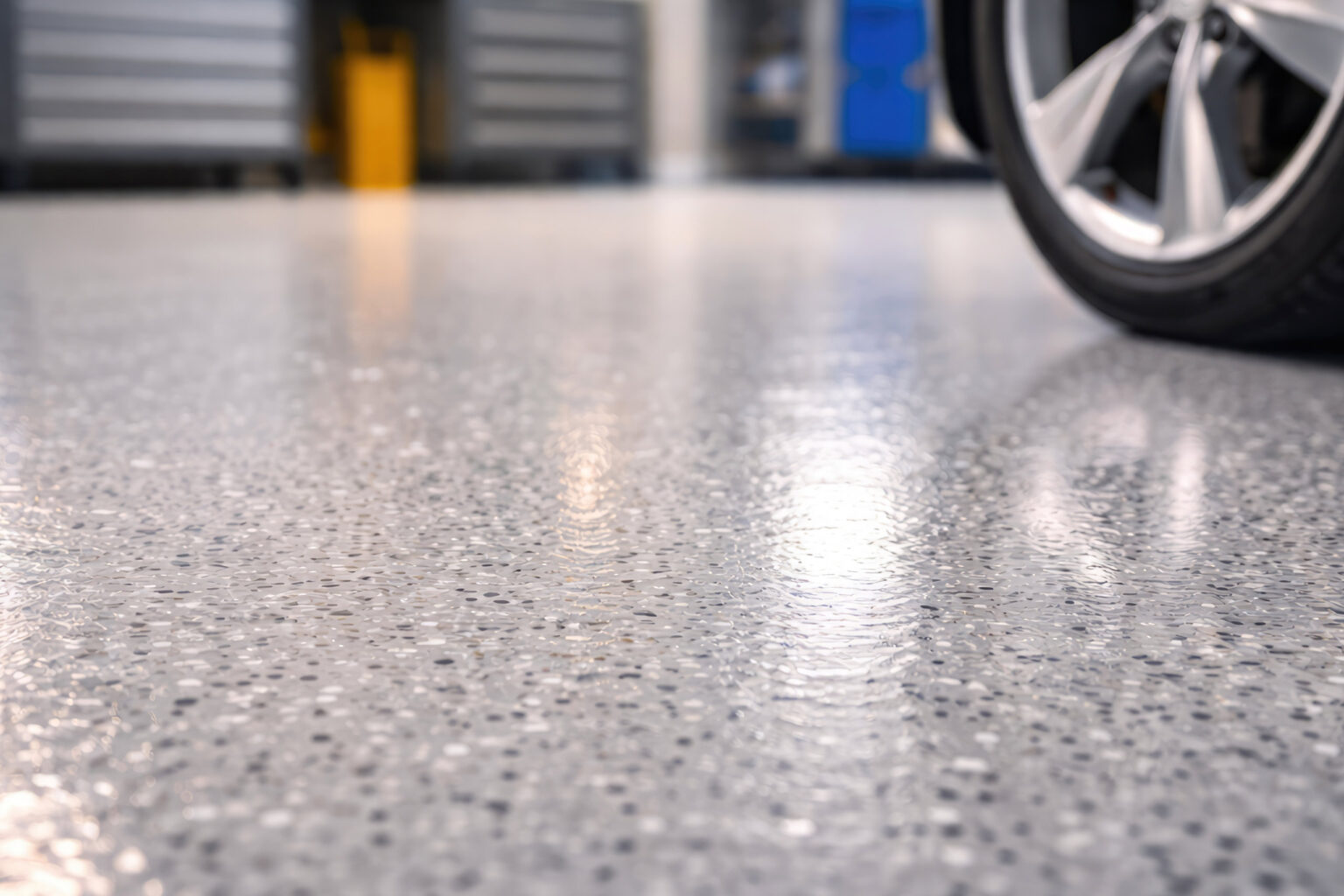
Commercial epoxy floor cleaning helps businesses keep high-traffic floors clean, safe, and professional without damaging the epoxy floor coating.
A well-maintained epoxy floor can handle daily traffic, spills, equipment, and regular cleaning, but the wrong products or process can leave residue, dull the surface, or shorten the life of the finish. For commercial spaces, cleaning epoxy floors is not only about appearance. It also supports safety, durability, and long-term floor maintenance.
Epoxy floors are common in warehouses, restaurants, garages, retail stores, schools, healthcare spaces, manufacturing areas, and other commercial buildings because they are durable and low maintenance. Still, every epoxy floor cleaning routine should match the building, traffic level, soil type, and cleaning schedule.
This guide explains commercial epoxy floor cleaning needs, what to use, what to avoid, and when professional floor cleaning from Scher Flooring Services can help protect your floors.
What Makes an Epoxy Floor Different From Other Commercial Floors?
An epoxy floor is a coated floor system usually installed over concrete. The epoxy coating creates a sealed floor surface that is more resistant to stains, moisture, oil, grease, and daily wear than bare concrete. This is why epoxy is often used in commercial and industrial spaces where durability matters.
Unlike carpet, tile, VCT, LVT, or hardwood, epoxy does not need waxing or polishing in the same way. The coating itself provides the protective layer. That means the cleaning solution, tools, and maintenance practices should protect the coating while removing dust, dirt, grime, spills, and residue.
Epoxy floors are easier to clean than many surfaces, but they are not impossible to damage. Sand can scratch the surface. Harsh chemicals can dull the glossy finish. Soap based cleaners can leave residue. Steel wool and aggressive pads can mark the coating. Even a pressure washer can cause problems if it forces water into exposed edges, cracks, or weak areas.
The right process helps you clean epoxy without slowly wearing down the floor. That becomes even more important in busy facilities where traffic and soil build up quickly.
Why Commercial Epoxy Floor Cleaning Matters in High-Traffic Facilities
Commercial spaces put more pressure on epoxy floors than smaller spaces. Employees, customers, carts, forklifts, delivery traffic, heavy equipment, food spills, grease, moisture, and tracked-in debris can all affect the floor surface.
Regular floor cleaning keeps the surface cleaner and safer while helping the epoxy coating last longer. The goal is not to overclean the floor. The goal is to remove soil before it becomes abrasive, sticky, slippery, or harder to remove.
How Dirt, Grit, and Spills Wear Down an Epoxy Floor
Dust, dirt, sand, and debris may seem minor, but they can act like sandpaper under foot traffic or wheels. Over time, this can create small scratches that make the floor look dull and collect more grime.
Spills create a different problem. Oil, grease, chemicals, food residue, and moisture can leave stains or slick spots if they are not removed quickly. Fresh spills should be blotted with a paper towel, towel, or absorbent cloth before they spread.
Common commercial soil sources include:
| Soil Source | Common Result |
| Sand and grit | Fine scratches and dull traffic lanes |
| Oil and grease | Slippery areas and sticky buildup |
| Tire marks | Black scuffs and surface transfer |
| Food spills | Stains, odor, and residue |
| Ice melt | White film and abrasive deposits |
| Soap residue | Hazy or sticky floor appearance |
Why Regular Floor Cleaning Helps Protect Safety, Appearance, and Service Life
Regular cleaning helps prevent staining, reduce slip risks, and maintain a cleaner surface for customers, employees, and visitors. A clean epoxy floor also makes the facility look better maintained.
For a business, this matters in practical ways. A restaurant floor should not feel greasy. A retail floor should not look dull at the entrance. A warehouse floor should not have loose grit or oily traffic lanes. A garage floor should not collect stains that become harder to remove later.
Businesses that need help maintaining hard commercial surfaces can benefit from professional commercial floor cleaning services that match the floor type, traffic level, and cleaning need.
Once the value of routine care is clear, the next step is deciding how often epoxy floors should be cleaned.
How Often Should You Schedule Epoxy Floor Cleaning?
Epoxy floor cleaning needs depend on the size of the space, the amount of traffic, the type of soil, and whether the floor is customer-facing, back-of-house, industrial, or service-based. A small area may only need light daily cleaning, while a large warehouse or commercial kitchen may need scheduled machine cleaning.
A practical schedule should include daily dry soil removal, regular wet cleaning, and periodic deeper maintenance.
Daily Cleaning Needs for Busy Commercial Spaces
Most commercial epoxy floors should be swept, vacuumed, or cleaned with a microfiber dust mop every day. A dust mop helps remove loose dust and debris before it can scratch the coating.
Daily tasks may include:
- Sweep or dust mop entrances and traffic lanes
- Wipe spills before they dry
- Remove oil or grease as soon as possible
- Check mats near doors and loading areas
- Spot clean scuffs, stains, or sticky areas
- Keep grit and debris away from equipment paths
This is especially important in restaurants, warehouses, garages, gyms, retail stores, and production areas.
Weekly and Monthly Epoxy Floor Cleaning Needs for Heavier Traffic Areas
Weekly cleaning usually involves a damp mop, auto scrubber, or floor scrubber with warm water and neutral pH cleaners. Monthly cleaning may include deeper scrubbing around corners, equipment, entrances, storage racks, and high-soil zones.
Here is a simple maintenance guide:
| Area Type | Daily | Weekly | Monthly or Quarterly |
| Office storage area | Dust mop | Damp mop | Detail clean |
| Retail stockroom | Sweep and spot clean | Wet clean or auto scrub | Deeper cleaning |
| Restaurant floor | Wipe spills and remove grease | Degreasing clean | Professional maintenance |
| Warehouse | Sweep traffic lanes | Floor scrubber cleaning | Deep scrub service |
| Garage or service bay | Remove oil quickly | Degrease and rinse | Professional cleaning |
When Professional Commercial Floor Cleaning Should Be Scheduled
Professional cleaning should be considered when the floor looks dirty after mopping, traffic lanes stay dull, grease returns quickly, or staff need stronger products just to get basic results.
A scheduled floor maintenance plan can help businesses avoid guesswork by setting the right frequency, equipment, and cleaning process for the facility.
After the schedule is set, the next step is using the right cleaning method.
Best Method for Cleaning Epoxy Floors in Commercial Buildings
The best method for cleaning epoxy floors is simple: remove dry soil first, use the right cleaning solution, agitate the surface gently, then rinse or recover the liquid so residue does not dry on the floor.
This process works for many commercial spaces because it protects the coating while still removing soil.
Step 1: Sweep or Dust Mop Before Wet Cleaning
Always remove loose dust and debris before wet cleaning. If you mop over grit, the dirt can spread across the floor and scratch the surface.
Use a broom, vacuum, dust mop, or microfiber dust mop depending on the square foot area. Larger facilities may need a sweeper before scrubbing.
Step 2: Choose the Right Epoxy Floor Cleaning Solution
For routine cleaning, neutral pH cleaners are usually the safest option. They help remove dirt without attacking the epoxy coating or leaving a heavy film.
For oil, grease, or industrial grime, use an epoxy-safe degreaser and dilute it correctly. Too much cleaner can leave residue and make the floor look dull or sticky.
Step 3: Use Proper Agitation to Clean Epoxy Without Damaging the Surface
Agitation helps loosen soil from the surface. In smaller spaces, use a mop or soft brush. In larger areas, use a floor scrubber with the right pad or brush.
Avoid steel wool, aggressive pads, and hard scraping tools. These can scratch the surface and make future cleaning harder.
Step 4: Rinse and Remove Cleaning Residue Properly
Rinsing matters because residue can make an epoxy floor look dirty even after cleaning. If the cleaner, degreaser, or dirty water dries on the floor, it can leave haze, streaks, or a sticky feel.
Use clean water when needed and recover the liquid with a wet vacuum, floor scrubber, or clean mop. In a small area, a clean towel can help remove leftover moisture.
With the process in place, the next decision is choosing the right products and tools.
What to Use for Epoxy Floor Cleaning
Good epoxy floor cleaning does not require harsh products. It requires the right cleaner, proper dilution, clean water, and tools that will not scratch the coating.
The best setup depends on the space, but most facilities need a mix of dust removal tools, wet cleaning tools, and occasional machine cleaning.
Neutral Cleaners for General Epoxy Floor Maintenance
Neutral pH cleaners are best for regular cleaning because they are less likely to dull the floor or leave heavy residue. They are useful for everyday dust, light grime, and general floor maintenance.
Basic tools include:
- Microfiber dust mop
- Clean mop and bucket
- Warm water
- Neutral pH cleaners
- Soft brush for small spots
- Wet vacuum for liquid recovery
- Floor scrubber for larger spaces
Use the cleaner at the recommended dilution. More product does not mean a cleaner floor.
Degreasers for Kitchens, Garages, Warehouses, and Industrial Spaces
Grease-heavy spaces need more cleaning power. Kitchens, garages, warehouses, and service bays may need an epoxy-safe degreaser.
For greasy areas:
- Blot fresh oil or grease first.
- Apply the correct cleaning solution.
- Allow short dwell time based on the label.
- Scrub with a soft brush, mop, red pad, or floor scrubber.
- Rinse and recover dirty solution.
In restaurants, bars, and food-service spaces, grease and food spills can build up quickly, so epoxy floors often need a more consistent process than a basic mop routine. Scher’s restaurant and bar floor cleaning services are relevant for facilities where daily spills and foot traffic are part of operations.
When a Floor Scrubber Is Better Than a Mop
A mop can work in smaller spaces, but a floor scrubber is usually better for larger commercial areas. It applies solution, agitates the surface, and recovers dirty water more consistently.
This is useful in warehouses, retail backrooms, industrial spaces, garages, and larger facilities with high sq ft coverage.
Once you know what to use, it is just as important to know which products to avoid.
Epoxy Floors Vinegar Warning: Why Acidic Cleaners Can Damage the Finish
Epoxy floors vinegar is a common topic because many people use vinegar as a general cleaner. For commercial epoxy floors, it is not the best choice for routine maintenance.
Acidic cleaners can dull the finish, especially when used often or mixed too strongly.
Why Vinegar Is Not Ideal for Cleaning Epoxy Floors
Vinegar is acidic. It may cut through some residue, but repeated use can affect the glossy finish of an epoxy floor. For a commercial building, that risk is not worth it when neutral pH cleaners are available.
Use vinegar only if the flooring manufacturer specifically allows it. Otherwise, choose a cleaner made for coated floor surfaces.
Why Citrus Cleaners Should Also Be Avoided on Epoxy Floors
Citrus cleaners may smell clean, but many contain acidic ingredients or strong solvents. These can leave residue, dull the surface, or affect the epoxy coating over time.
If a citrus cleaner must be used, test it in a small area first and confirm that it is safe for epoxy.
Other Products That Can Leave Residue or Dull the Surface
Avoid these products and tools unless the product label clearly says they are safe for epoxy floors:
| Product or Tool | Why It Can Be a Problem |
| Vinegar | Acidic and may dull the finish |
| Citrus cleaners | May be acidic or solvent-heavy |
| Steel wool | Can scratch the floor surface |
| Bleach-heavy cleaners | May discolor or weaken finish |
| Soap based cleaners | Can leave residue or haze |
| Harsh chemicals | Can damage or dull the coating |
| Pressure washer | Can force water into exposed edges or weak areas |
When the wrong cleaner is used, the floor may look dull even after regular cleaning. The next section explains how to handle stains and spills correctly.
How to Clean Epoxy Floor Stains, Grease, Tire Marks, and Spills
Most epoxy stains are easier to remove when they are handled early. The longer oil, grease, colored liquids, chemicals, or grime sit on the floor, the more difficult they can be to clean.
The safest approach is to start with the least aggressive method and increase cleaning strength only when needed.
Cleaning Oil and Grease From Epoxy Floors
For oil and grease, blot first so the spill does not spread. Use a paper towel, absorbent towel, or approved absorbent material.
Then clean the area with an epoxy-safe degreaser, warm water, and light scrubbing. Rinse the area and remove the dirty liquid so it does not dry into residue.
Removing Tire Marks and Scuff Marks
Tire marks can come from carts, forklifts, vehicles, rubber wheels, or heavy equipment. Start with warm water and a neutral cleaner. If the mark remains, use a soft brush or non-aggressive pad with an approved cleaning solution.
Avoid scraping too hard. Scratches can trap dirt and make the floor harder to clean later.
Handling Food Spills, Salt, Moisture, and Chemical Residue
Food spills should be wiped quickly, then cleaned with a neutral cleaner. Salt, sand, and moisture should be removed before they spread across the floor and create abrasive deposits.
During winter, salt, sand, and moisture can be tracked across commercial floors, which makes regular entryway cleaning and residue removal even more important. Scher’s winter floor care guide explains why seasonal soil control matters for commercial buildings.
After stains and spills are under control, the next step is using floor scrubbers correctly.
Floor Scrubber Tips for Commercial Epoxy Floor Cleaning
A floor scrubber can improve commercial epoxy floor cleaning results, but only when it is used correctly. The wrong pad, too much solution, poor recovery, or fast operation can leave streaks or residue.
Machine cleaning works best when the floor is swept first and the cleaner is diluted properly.
Choosing the Right Brush or Pad for an Epoxy Floor
Use a non-aggressive brush or pad for routine cleaning. A red pad is often suitable for many coated floors, but the best option depends on the epoxy texture, finish, and soil level.
Test the pad in a small area first if the floor has a high-gloss finish or decorative coating.
Why Water Recovery Matters After Scrubbing
A floor scrubber should remove dirty water after scrubbing. If recovery is poor, dirty solution can dry on the floor and leave streaks.
Check these items regularly:
- Squeegee condition
- Vacuum recovery
- Solution flow
- Pad pressure
- Cleaner dilution
- Operator speed
If the machine moves too quickly, it may not scrub or recover properly.
Common Floor Scrubber Mistakes That Can Leave Streaks or Residue
Common mistakes include using too much cleaner, skipping sweeping, using worn squeegees, scrubbing with a dirty tank, using an aggressive pad, or failing to rinse after degreasing.
Warehouses and industrial spaces usually need a different approach because forklifts, carts, pallets, dust, and large square-foot areas make machine cleaning more important. Scher’s warehouse floor cleaning guide is a helpful resource for larger facilities.
Even with the right machine, daily habits still matter.
Common Mistakes That Make Epoxy Floors Look Dirty Faster
Many epoxy floors look dirty because of small maintenance mistakes repeated over time. The floor may not need a new coating. It may need better cleaning practices.
The most common issues are residue, skipped dry soil removal, delayed spill cleanup, and harsh chemicals.
Using Too Much Cleaner
Too much cleaner can leave film on the floor. That film attracts more dirt and makes the surface look hazy.
Always dilute cleaners correctly. If the floor looks cloudy after cleaning, rinse with clean water and recover the liquid.
Skipping Dry Soil Removal
Skipping sweeping or dust mopping allows sand and debris to scratch the surface during wet cleaning.
Dry soil removal should happen before mopping, scrubbing, or using a floor scrubber.
Letting Spills Sit Too Long
Spills should be cleaned quickly. Oil, grease, food residue, chemicals, and colored liquids are easier to remove before they dry.
A simple spill kit with towels, absorbent material, and approved cleaner can help staff respond faster.
Using Harsh Chemicals Instead of the Right Floor Cleaning Process
Harsh chemicals can create more problems than they solve. Bleach, ammonia-heavy cleaners, citrus cleaners, vinegar, and strong solvents should not be used casually on epoxy floors.
The right process is usually safer than the strongest chemical.
A clear maintenance schedule helps prevent these mistakes from becoming routine.
Commercial Epoxy Floor Maintenance Schedule for Businesses
A maintenance schedule gives staff and service providers a simple plan to follow. It also helps businesses avoid emergency deep cleaning and keeps the epoxy coating in better condition.
The schedule should reflect foot traffic, equipment use, soil type, and the total square foot area.
Daily Maintenance Checklist
Use this daily checklist for most commercial epoxy floors:
| Task | Purpose |
| Sweep or dust mop | Removes grit and debris |
| Spot clean spills | Helps prevent staining |
| Check entrances | Controls sand, salt, and moisture |
| Wipe oil or grease | Reduces slip risk |
| Inspect problem areas | Finds dullness, scratches, or residue early |
Daily maintenance keeps soil from building up.
Weekly Deep Cleaning Checklist
Weekly cleaning should focus on traffic lanes, corners, equipment areas, and any place where grime collects.
Useful weekly tasks include:
- Wet mop or auto scrub with neutral pH cleaners
- Detail corners and edges
- Clean around equipment and storage racks
- Remove grease in food or service areas
- Rinse areas that look hazy
- Check for scratches or exposed coating damage
Monthly or Quarterly Professional Maintenance
Monthly or quarterly maintenance can help remove buildup that daily cleaning misses. A professional service can also identify whether the issue is soil, residue, chemical damage, or coating wear.
This is especially useful for facilities where the floor is large, exposed to grease, used by heavy equipment, or cleaned by multiple staff members with different products.
When in-house cleaning no longer gets the right result, it may be time to bring in a commercial floor cleaning company.
When to Hire a Commercial Floor Cleaning Company for Epoxy Floors
A commercial floor cleaning company can help when regular cleaning is no longer enough. This does not always mean the floor is damaged. Sometimes the floor has residue buildup, wrong cleaner history, embedded grime, or traffic lane discoloration.
Professional cleaning gives businesses a more consistent process and helps reduce trial-and-error maintenance.
Signs Your Epoxy Floor Needs Professional Cleaning
Consider professional cleaning if:
- The floor looks dull after mopping
- Traffic lanes stay darker than surrounding areas
- Grease returns quickly
- Tire marks are difficult to remove
- The floor feels sticky or slippery
- Staff keep using stronger chemicals without better results
- The surface has scratches, residue, or exposed coating wear
These signs often mean the floor needs more than basic mopping.
Why High-Traffic Businesses Need a Custom Floor Maintenance Plan
High-traffic businesses need a plan because different areas soil at different speeds. Entrances collect sand and moisture. Kitchens collect grease. Warehouses collect dust and tire marks. Garages collect oil. Public spaces need consistent appearance.
A custom plan can define:
- Daily cleaning tasks
- Weekly floor scrubber use
- Monthly deep cleaning
- Approved products
- Dilution rates
- Spill response
- Safety checks
- Seasonal maintenance needs
How Scher Flooring Services Can Help Maintain Commercial Epoxy Floors
Scher Flooring Services helps commercial properties maintain cleaner, safer, and more professional-looking floors through practical cleaning and maintenance programs. For epoxy floors, that means choosing the right process for the surface instead of using random cleaners or aggressive tools.
Their team can review the floor type, traffic level, facility use, soil load, and cleaning challenges before recommending a maintenance approach. This is helpful for businesses that need reliable results across restaurants, warehouses, schools, retail spaces, healthcare facilities, offices, and property-managed buildings.
The best epoxy floor maintenance plan is not complicated. It is consistent, realistic, and built around how the business actually uses the space.
Final Thoughts on Keeping Commercial Epoxy Floors Clean, Safe, and Professional-Looking
Commercial epoxy floor cleaning works best when it is done consistently and with the right products. Sweep or dust mop first, use neutral pH cleaners for routine care, choose epoxy-safe degreasers for grease, scrub with the right pad or brush, and remove residue before it dries.
Epoxy floors are durable, but they still need smart care. Vinegar, citrus cleaners, steel wool, soap based cleaners, harsh chemicals, and poor rinsing can make a floor look dull or dirty faster. A floor scrubber can help in larger spaces, but only when the machine is set up and operated correctly.
For businesses, a clean epoxy floor supports appearance, safety, and long-term durability. It also makes daily maintenance easier because staff are not constantly fighting tough stains, grime, dull spots, and sticky residue.
Scher Flooring Services can help businesses build a commercial floor maintenance routine that fits the building, traffic level, and floor condition. With the right plan, epoxy floors can stay clean, safe, and professional-looking throughout the year.
Stay Updated!
Sign up for email updates and stay in the loop about about our services and promotions.
We’re here to answer any questions you have about our commercial floor cleaning, restoration, and maintenance services.
Get a Free Quote Today!
Scher Flooring Services is a locally and family owned and operated commercial floor cleaning, maintenance and restoration company in business for over 25 years.
"*" indicates required fields