Floor cleaning for medical office buildings in Maryland and Virginia requires more than routine mopping or standard office cleaning. Medical office cleaning has to support patient safety, infection control, floor appearance, and the daily workflow of healthcare providers.
A medical office may not operate like a full hospital, but it still handles patients, medical equipment, exam rooms, waiting rooms, high touch surfaces, and potentially infectious materials. That makes floor care an important part of keeping a safe and hygienic environment for patients and staff.
Medical facilities across Maryland and Virginia often include primary care offices, dental offices, outpatient centers, specialty practices, physical therapy clinics, urgent care spaces, and multi-tenant healthcare facilities. Each setting has different flooring materials, traffic patterns, and cleaning needs. A professional cleaning service must understand those differences before building a maintenance plan.
Why Floor Cleaning for Medical Office Buildings Requires a Different Approach
Medical office floors carry more responsibility than floors in a typical office building. They help shape the patient experience, support safer movement through the facility, and contribute to the overall hygienic environment that people expect in healthcare settings.
Floors in medical environments collect soil, moisture, dust, tracked-in debris, spills, and residues from daily operations. In exam rooms and patient rooms, floor care also has to account for proximity to patient care areas, exam tables, trash cans, door handles, light switches, and other nearby touchpoints.
Healthcare Facilities Face a Higher Risk of Dirt, Moisture, Germs, and Cross Contamination
Healthcare facilities often have a higher risk of contamination because patients may arrive with illness, wounds, respiratory symptoms, mobility issues, or weakened immunity. Elderly patients and people with chronic conditions may be more sensitive to poor indoor conditions, slippery floors, or inconsistent cleaning practices.
Floors are not usually classified the same way as high touch surfaces, but they still influence the cleanliness of the facility. Dust, debris, and moisture can move through hallways, waiting areas, exam rooms, and restrooms. If cleaning tools are not properly separated or maintained, cross contamination can happen between areas.
A strong floor care plan should consider:
- Where patients enter and exit
- Which areas see the most foot traffic
- Where spills or bodily fluid incidents are more likely
- Which rooms need more frequent service
- What flooring materials are used in each zone
- How cleaning products interact with floor finishes
This is why medical cleaning should be handled with a process, not guesswork.
Why Healthcare Providers Need More Than Basic Janitorial Mopping
Basic janitorial mopping can remove visible dirt, but it often does not address embedded soil, finish wear, grout buildup, carpet residue, or damaged floor coatings. In many medical settings, repeated mopping with the wrong product can leave residue that attracts more dirt and makes floors look dull.
Healthcare providers need floors that look clean, feel safe, and hold up under constant use. A professional floor cleaning company can evaluate whether a facility needs regular cleaning, deep cleaning, buffing, scrubbing, carpet extraction, tile and grout cleaning, VCT refinishing, or a custom maintenance schedule.
The next step is understanding how cleaning medical offices differs from standard commercial cleaning.
What Makes Cleaning Medical Offices Different From Standard Commercial Cleaning?
Cleaning medical offices requires more awareness of patient flow, clinical rooms, infection risk, and surface compatibility. Standard commercial cleaning may focus on appearance and general hygiene, but medical office floors need a more careful approach because they support a clinical setting.
A medical practice may include both low-risk and higher-risk spaces under one roof. Administrative offices, waiting rooms, hallways, restrooms, exam rooms, examination rooms, lab areas, and treatment rooms may all need different cleaning practices.
Exam Rooms and Examination Rooms Need Consistent Floor Care
Exam rooms and examination rooms see frequent patient turnover. Patients, nurses, physicians, assistants, and cleaning teams may all move through these rooms many times a day. Even when surfaces like exam tables and medical equipment receive more direct disinfection, the floor still needs consistent care.
Flooring in these rooms may be exposed to:
- Paper debris from exam table covers
- Soil from shoes, wheelchairs, walkers, and carts
- Small spills near sinks, trash cans, or treatment areas
- Residue from cleaning products
- Scuff marks from stools, chairs, and rolling equipment
Consistent floor cleaning helps the room look ready for the next patient and supports a more organized care environment.
Waiting Areas, Hallways, Reception Spaces, and Restrooms See Heavy Daily Traffic
Waiting areas and reception spaces create the first impression of a medical office. Patients may judge the cleanliness of a facility before they ever enter the exam room. Dirty carpet, dull VCT, stained tile grout, or sticky restroom floors can make the facility feel poorly maintained.
High traffic spaces need more than occasional cleaning. They often require a plan that includes daily soil control, periodic deep cleaning, and scheduled restoration when floors start to show wear.
Common problem areas include:
| Area | Floor cleaning concern | Practical solution |
| Entryways | Rain, snow, salt, and grit | Walk-off matting and frequent soil removal |
| Waiting rooms | Carpet stains and traffic lanes | Scheduled carpet cleaning and spot treatment |
| Hallways | Scuffs and finish wear | Scrubbing, buffing, and finish maintenance |
| Restrooms | Moisture and odor concerns | Tile and grout cleaning with proper product selection |
| Exam rooms | Patient turnover and debris | Consistent cleaning by room type and use |
Floor Appearance Can Affect Patient Confidence and Staff Safety
Patients may not know what cleaning products are used, but they notice whether the floor looks clean. A polished, well-maintained floor can support patient satisfaction and a welcoming environment. A dull, stained, or slippery floor can create doubt.
Staff safety also matters. Nurses, front desk teams, medical assistants, and healthcare providers spend long hours walking between patient areas. Floors that are sticky, wet, unevenly finished, or poorly maintained can increase slip concerns and make daily work harder.
Once a facility understands these differences, the next question is how a professional cleaning service can support healthcare facilities in a practical way.
How a Professional Cleaning Service Supports Healthcare Facilities
A professional cleaning service supports healthcare facilities by matching cleaning methods to the flooring material, room function, and level of risk. The goal is not just to make the floor look better for one day. The goal is to create a repeatable system that protects floors and supports a clean environment over time.
Scher Flooring Services provides commercial carpet and floor cleaning, restoration, and maintenance plans across Maryland, Virginia, and Washington DC, including healthcare and assisted living environments. Their service menu includes VCT/LVT cleaning, carpet cleaning, ceramic and stone cleaning, rubber floor cleaning, and floor maintenance plans.
Removing Soil and Buildup Before Applying Hospital Grade Disinfectants
Hospital grade disinfectants work best when used correctly and according to label directions. In floor care, the first step is often removing soil, film, and buildup so the surface can be cleaned properly. Dirt and residue can interfere with the look and performance of floors, especially in high traffic medical office buildings.
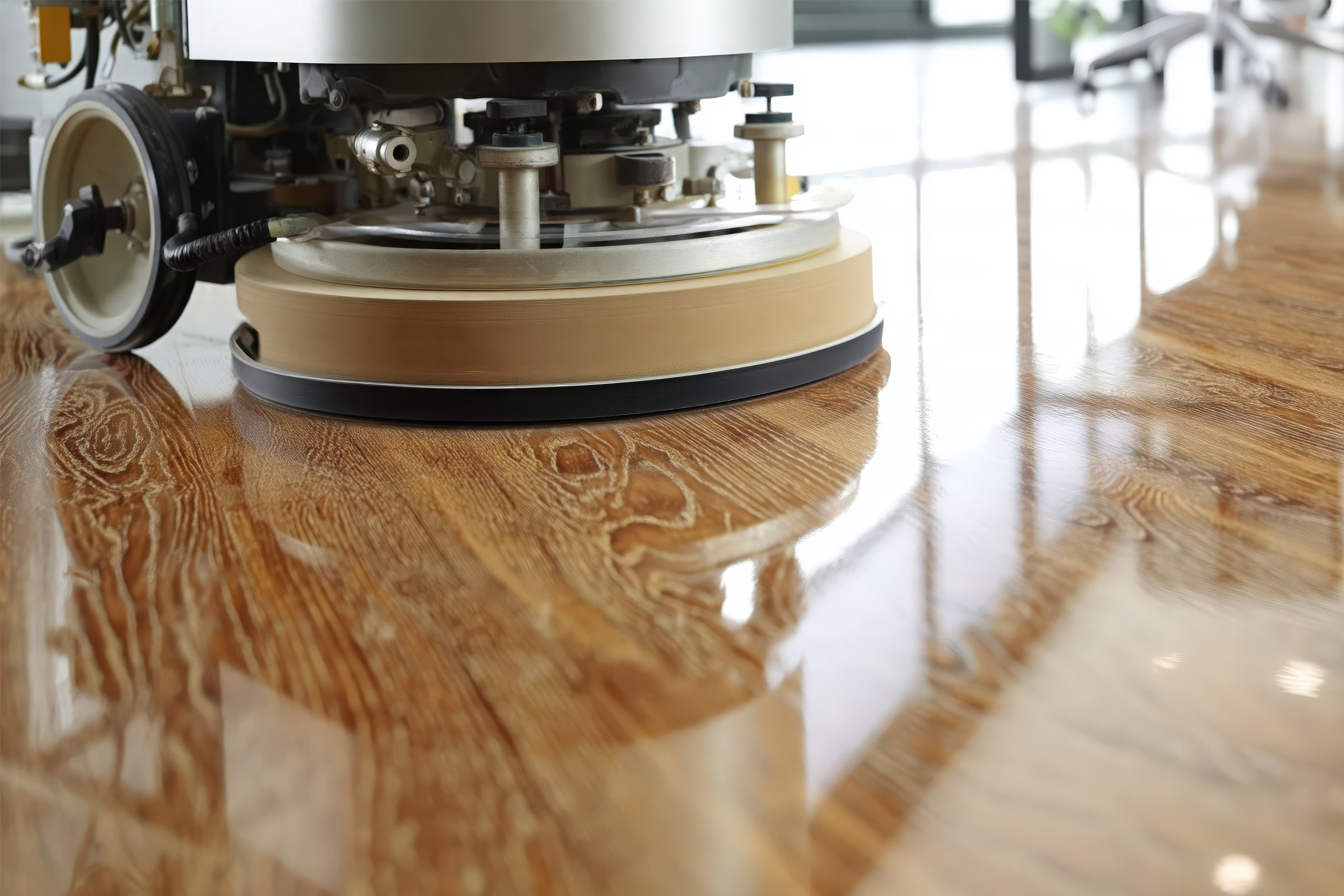
For hard floors, this may involve machine scrubbing, wet extraction, stripping, refinishing, or grout cleaning depending on the material. For carpets, it may involve vacuuming, spot treatment, soil suspension, extraction, or low-moisture cleaning.
CDC cleaning guidance emphasizes cleaning patient care areas with planned procedures, and CDC disinfection guidance notes that EPA-registered hospital disinfectants should be used according to label directions for noncritical surfaces.
Using Hospital Grade Products Correctly on Compatible Floor Surfaces
Hospital grade does not mean every product is right for every floor. Some cleaning products may damage floor finish, discolor surfaces, leave residue, or affect slip resistance if misused. A professional medical cleaning services provider should understand surface compatibility before applying cleaning products.
For example:
- VCT may need finish protection and periodic stripping or recoating.
- LVT may require careful product selection to avoid haze.
- Rubber flooring can be sensitive to harsh chemistry.
- Tile and grout may need deep cleaning to remove embedded soil.
- Carpet requires cleaning methods that control moisture and drying time.
The right approach balances infection prevention goals with floor protection.
Color Coded Cleaning Tools Help Reduce Cross Contamination
Color coded cleaning tools can help teams separate equipment by area or task. For example, a facility may use different mop heads, buckets, pads, or cloths for restrooms, exam rooms, waiting areas, and administrative spaces.
Color coding is useful because it gives cleaning teams a simple visual system. It helps prevent cross contamination by reducing the chance that tools used in one area are carried into another without proper handling.
A practical color coded system may separate:
- Restroom tools
- Exam room tools
- General office area tools
- Waiting room and hallway tools
- Spill response supplies
This kind of process connects directly to deep cleaning, where the goal is to remove buildup that regular cleaning can miss.
Deep Cleaning Needs for Medical Office Floors
Deep cleaning is important in medical office buildings because regular cleaning cannot always remove embedded soil, finish wear, grout discoloration, carpet traffic lanes, or residue buildup. A well-planned deep cleaning program keeps floors from reaching the point where replacement feels like the only option.
Deep cleaning frequency depends on foot traffic, floor type, patient volume, operating hours, and the type of medical practice. Outpatient centers, urgent care clinics, dental offices, and specialty practices may all need different service frequency.
VCT and LVT Floor Cleaning, Stripping, and Finish Maintenance
VCT and LVT are common in commercial healthcare environments because they can handle heavy use when maintained properly. However, they still need the right care.
VCT may require stripping and waxing when the finish is worn, yellowed, scratched, or uneven. Between full refinishing, the floor may benefit from scrubbing, buffing, and burnishing. LVT may not need wax in the same way, but it still needs routine cleaning and periodic deep cleaning to control dullness and residue.
Medical offices with VCT or LVT can benefit from Scher’s service and maintenance plans when the goal is long-term consistency rather than one-time cleaning.
Carpet Cleaning for Waiting Rooms, Offices, and Administrative Areas
Carpet is often found in waiting rooms, private offices, consultation rooms, and administrative spaces. It can improve comfort and air quality when maintained well, but it can also hold soil, dust, and stains if neglected.
Professional carpet cleaning helps remove trapped dirt and can improve the appearance of traffic lanes. It also supports a healthier environment by reducing buildup that routine vacuuming may not fully remove.
For medical office buildings with carpeted waiting areas or office suites, Scher’s commercial carpet cleaning services can fit into a broader floor care plan rather than being treated as a separate task.
Tile, Grout, and Rubber Floor Cleaning for Clinical and High-Traffic Spaces
Tile, grout, and rubber flooring are common in restrooms, therapy areas, labs, corridors, and other high traffic spaces. These surfaces are durable, but they can still show wear.
Grout lines can darken with soil. Rubber floors can lose their clean appearance if the wrong products are used. Tile can become slippery or dull when residue builds up.
Scher’s commercial tile floor cleaning and rubber floor cleaning services are relevant for medical facilities that need surface-specific care instead of a one-product-fits-all approach.
Flooring needs also change by region, especially in Maryland and Virginia where weather and building traffic patterns can affect cleaning schedules.
Floor Cleaning Challenges in Maryland and Virginia Medical Office Buildings
Medical office buildings in Maryland and Virginia deal with seasonal moisture, road salt, pollen, humidity, and heavy patient traffic. A floor that looks clean in mild weather can become harder to maintain during winter storms, rainy weeks, or peak appointment seasons.
Facilities in Bethesda, Baltimore, Fairfax, Arlington, Alexandria, Rockville, and surrounding areas may also operate in multi-tenant buildings where shared lobbies, elevators, and corridors affect how much dirt enters the medical suite.
Rain, Snow, Salt, and Outdoor Debris Can Damage Commercial Floors
Moisture and grit are major problems for commercial flooring. During winter, salt and ice melt can leave white residue, scratch floor finish, and dull entryways. During rainy periods, tracked-in water can increase slip concerns and make floors look dirty faster.
A practical floor care plan should include:
- Entry mat maintenance
- More frequent cleaning during winter and rainy seasons
- Prompt removal of salt residue
- Floor finish inspections
- Deep cleaning after heavy seasonal buildup
This is especially important for healthcare providers that want patient areas to look clean throughout the day.
Busy Multi-Tenant Medical Buildings Need After-Hours Cleaning Schedules
Many medical office buildings cannot stop operations for floor cleaning during patient hours. Exam rooms, examination rooms, waiting areas, and hallways may need to stay open until late afternoon or evening.
After-hours scheduling helps reduce disruption. It also gives floors enough time to dry before patients and staff return. Scher’s regional service pages note 24/7 scheduling options for commercial floor maintenance, which can be useful for medical offices with tight operating windows.
Local Healthcare Providers Need Floor Care That Fits Patient Hours
A small medical practice may need quarterly deep cleaning. A larger outpatient center may need monthly or more frequent service in high traffic zones. A dental office may need focused cleaning around treatment areas and waiting rooms. An assisted living or healthcare facility may need a more structured maintenance program.
Medical offices in Maryland can connect floor care to local service needs through pages like Scher’s Bethesda commercial floor cleaning services, while Virginia facilities may find regional relevance in Scher’s Fairfax commercial floor cleaning services.
Once local conditions are considered, the next question becomes frequency.
How Often Should Healthcare Facilities Schedule Professional Floor Cleaning?
Healthcare facilities should schedule professional floor cleaning based on floor type, patient volume, risk level, and visible wear. There is no single schedule that fits every medical office, but there are clear signs that a facility needs more frequent attention.
A maintenance plan should separate daily cleaning from periodic deep cleaning. Both matter, but they serve different purposes.
Daily Maintenance vs. Periodic Deep Cleaning
Daily maintenance keeps floors presentable and removes surface-level debris. Periodic deep cleaning removes buildup that daily cleaning leaves behind.
| Floor care task | Typical purpose | Common areas |
| Daily vacuuming or dust removal | Control loose soil | Waiting rooms, offices, hallways |
| Damp mopping | Remove surface dirt | Hard floors, corridors, restrooms |
| Spot cleaning | Address spills and stains | Exam rooms, reception, carpeted areas |
| Machine scrubbing | Remove embedded buildup | VCT, LVT, tile |
| Carpet extraction | Remove deeper soil | Waiting areas, offices |
| Stripping and refinishing | Restore worn VCT finish | Hallways, high traffic spaces |
When Medical Offices May Need More Frequent Floor Service
A medical office may need more frequent service when it has:
- Heavy daily patient volume
- Elderly patients or higher risk patients
- Frequent use of wheelchairs, walkers, and carts
- Multiple exam rooms
- Restrooms with constant use
- Visible salt, dirt, or moisture near entrances
- Dull VCT or LVT
- Carpet traffic lanes
- Tile grout discoloration
- Odor or air quality concerns
The more the floor affects patient confidence, safety, and staff workflow, the more important routine professional cleaning becomes.
Signs Your Floors Need Professional Attention
Medical office floors usually show warning signs before they fail. Facility managers should watch for dull finish, sticky areas, recurring odors, stains, visible scuffs, dark grout, cloudy LVT, or carpet that looks dirty soon after vacuuming.
If these issues return quickly after regular cleaning, the problem may be buildup, product residue, damaged finish, or the wrong cleaning process.
The next step is choosing a cleaning partner that understands medical settings and commercial flooring.
What to Look for in a Medical Office Floor Cleaning Service
A medical office floor cleaning service should understand healthcare environments, commercial flooring materials, scheduling limits, and safety expectations. The right partner should not treat a clinical setting like a basic office cleaning account.
Facility managers should look for a company that can inspect the building, identify flooring types, recommend service frequency, and adjust the process by room type.
Experience With Healthcare Facilities and Commercial Flooring Materials
Healthcare facilities often have several flooring materials in one building. A single medical office may include carpet, VCT, LVT, tile, rubber flooring, and walk-off mats. Each material needs a different method.
Scher Flooring Services has a healthcare and assisted living industry page and lists healthcare and hospitals among the industries it serves. The company also highlights commercial floor cleaning services across Maryland, Virginia, and Washington DC.
Knowledge of Hospital Grade Cleaning Expectations Without Damaging Floors
Medical office cleaning should support hospital grade expectations where appropriate, but it should not damage the floor in the process. Strong chemicals, poor dilution, excessive moisture, or incompatible products can create more problems than they solve.
A qualified team should understand:
- Cleaning before disinfecting
- Product label directions
- Dwell time where disinfectants are used
- Floor finish compatibility
- Moisture control
- Slip-resistance concerns
- Separate tools for different areas
EPA notes that registered disinfectants must be used according to label directions, and EPA-registered hospital disinfectants have specific efficacy requirements.
Flexible Scheduling for Exam Rooms, Examination Rooms, and Patient Areas
Medical offices need cleaning that fits around patient care. That may mean evening service, weekend service, phased room-by-room work, or special scheduling before inspections, seasonal changes, or high-volume periods.
A good cleaning partner should be able to work without disrupting healthcare providers, patients, or administrative staff.
Once the right service partner is in place, floor cleaning becomes more than appearance maintenance. It becomes a long-term asset protection strategy.
Why Professional Floor Cleaning Helps Protect Long-Term Flooring Value
Professional floor cleaning helps protect long-term flooring value by reducing wear, controlling buildup, and extending the useful life of commercial floors. Medical office buildings often represent a major investment, and flooring replacement can be expensive and disruptive.
A planned maintenance program can help the facility clean smarter instead of waiting until floors look worn out.
Cleaner Floors Can Reduce Wear in High-Traffic Medical Spaces
Grit, dirt, salt, and residue can act like sandpaper on commercial floors. Over time, they wear down finishes, scratch surfaces, and make flooring look older than it is.
Routine professional cleaning helps remove these materials before they cause deeper damage. In hallways, waiting rooms, and entryways, this can make a visible difference.
Proper Maintenance Can Delay Expensive Floor Replacement
Floor replacement can interrupt patient schedules, staff movement, and building operations. In many cases, proper maintenance can delay replacement by restoring shine, removing embedded soil, improving carpet appearance, or protecting the floor finish.
For VCT, this may include stripping and refinishing. For tile, it may include grout restoration. For carpet, it may include scheduled extraction. For rubber flooring, it may include surface-appropriate cleaning that avoids harsh residues.
A Custom Floor Maintenance Plan Keeps Medical Buildings Looking Consistent
Medical buildings need consistency. Patients should not see a clean lobby and dirty hallways. Staff should not have to work around slippery residue or stained floors. Facility managers should not have to guess when the next cleaning is needed.
A custom maintenance plan can organize:
- Service frequency
- Priority areas
- Floor type requirements
- Seasonal adjustments
- After-hours scheduling
- Deep cleaning cycles
- Spot treatment needs
- Long-term restoration planning
Scher’s floor cleaning service and maintenance plans are a natural fit for medical buildings that need consistent floor appearance and long-term care.
With the value of maintenance clear, the final step is choosing a plan that keeps the facility ready for patients every day.
Final Thoughts on Commercial Floor Cleaning for Medical Office Buildings
Commercial floor cleaning for medical office buildings is not just about making floors shine. It supports patient confidence, staff safety, infection control goals, facility appearance, and the long-term performance of the flooring.
Medical offices in Maryland and Virginia need a floor care strategy that accounts for exam rooms, waiting rooms, examination rooms, patient areas, high traffic spaces, and seasonal conditions.
Keeping Medical Office Floors Clean, Safe, and Ready for Patients
A clean medical office floor helps create a safe environment and a welcoming environment. It supports the well being of patients and staff while helping the facility clean more consistently.
The strongest floor care programs combine:
- Regular cleaning
- Periodic deep cleaning
- Surface-specific products
- Color coded tools where appropriate
- Hospital grade disinfectants used correctly
- Floor finish protection
- Carpet and tile maintenance
- Flexible scheduling around patient care
This approach helps medical offices stay clean without relying on rushed, reactive service.
Schedule a Walkthrough With a Commercial Floor Cleaning Team in Maryland or Virginia
If your medical office building serves patients in Maryland or Virginia, a walkthrough can help identify which floors need routine maintenance, which areas need deep cleaning, and which spaces need a higher level of attention.
Scher Flooring Services works with commercial facilities across Maryland, Virginia, and Washington DC and offers floor cleaning, restoration, and maintenance services for healthcare and assisted living environments. Their team can evaluate the flooring materials, traffic patterns, and scheduling needs of your facility before recommending a practical plan.
Stay Updated!
Sign up for email updates and stay in the loop about about our services and promotions.
We’re here to answer any questions you have about our commercial floor cleaning, restoration, and maintenance services.
Get a Free Quote Today!
Scher Flooring Services is a locally and family owned and operated commercial floor cleaning, maintenance and restoration company in business for over 25 years.
"*" indicates required fields