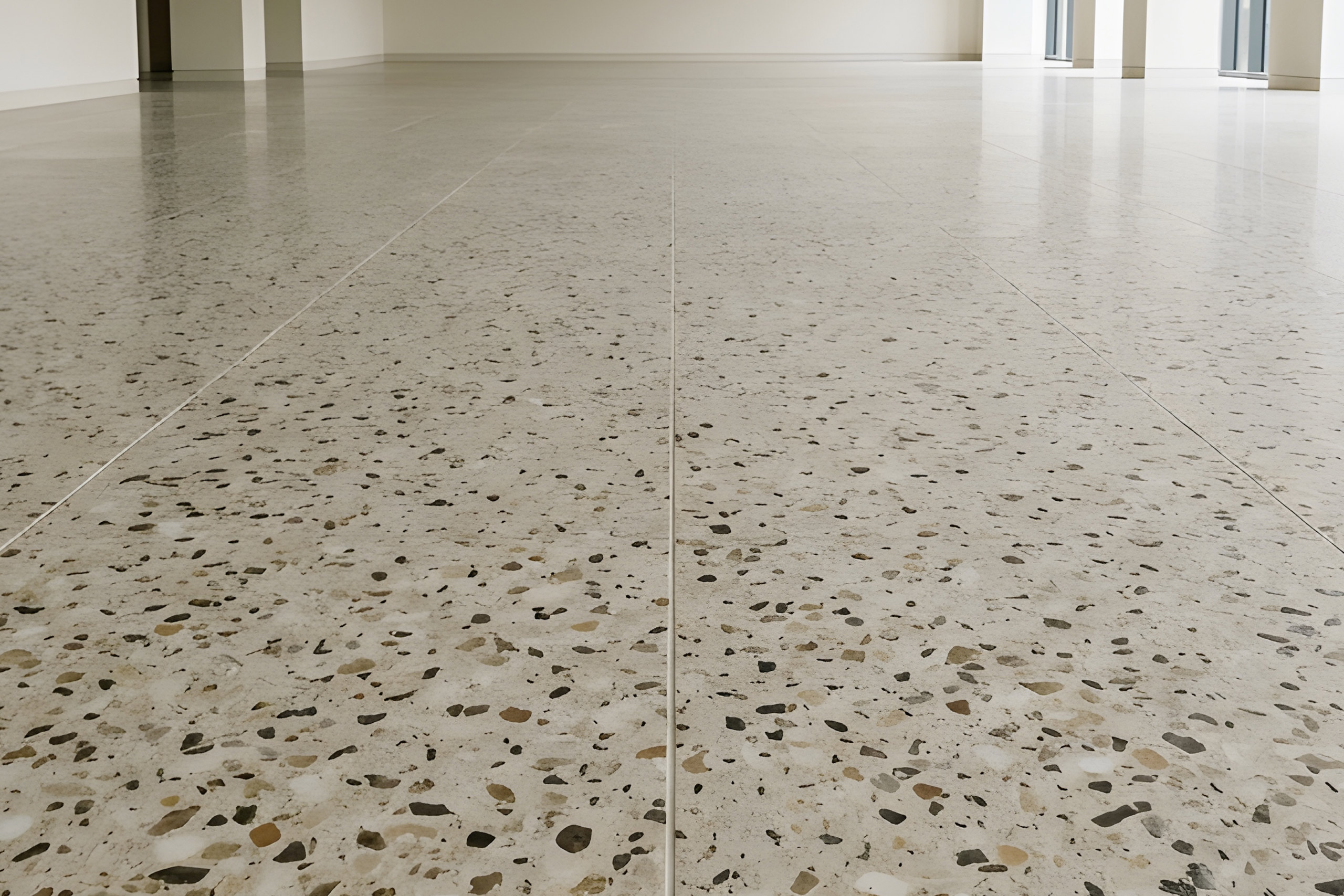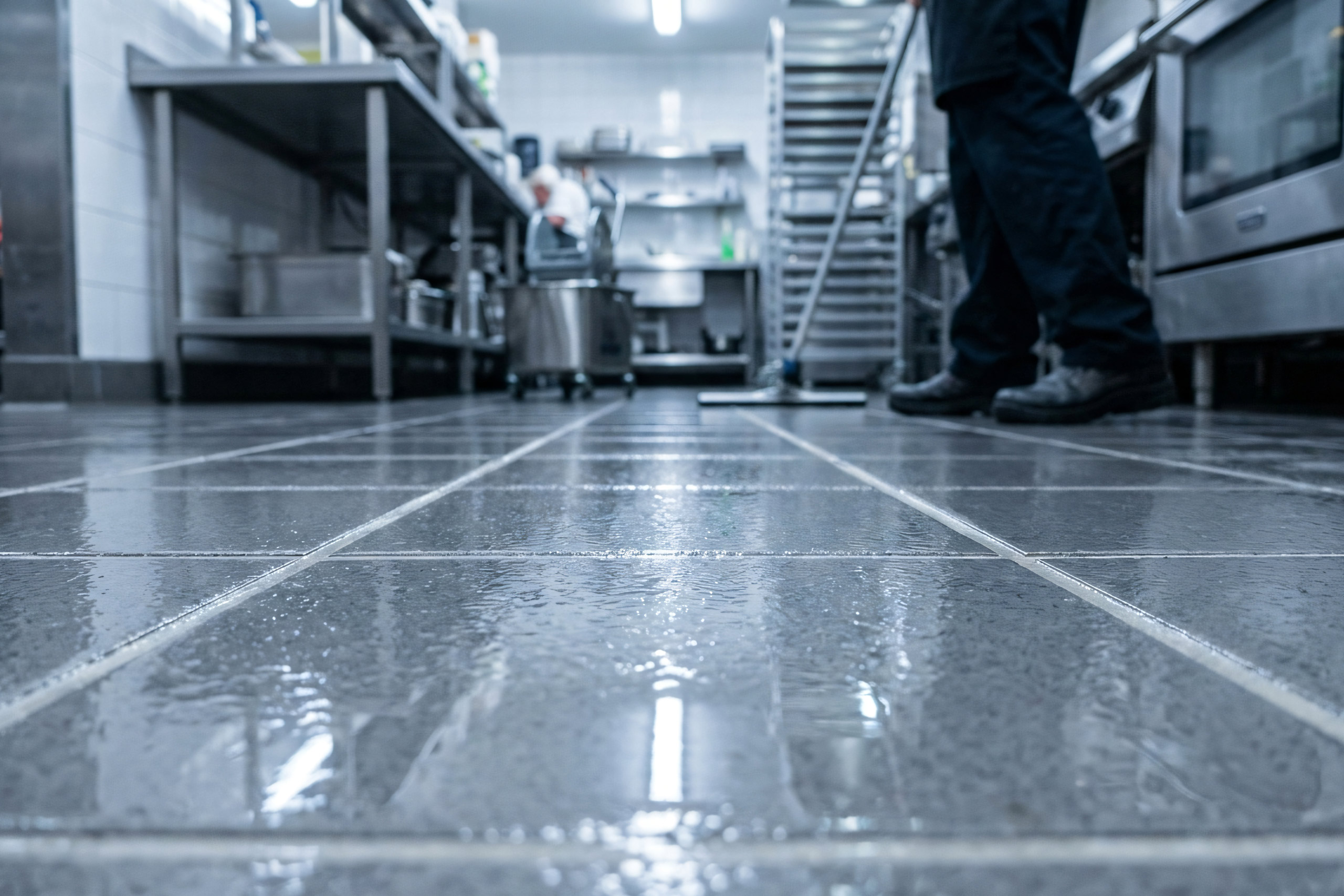
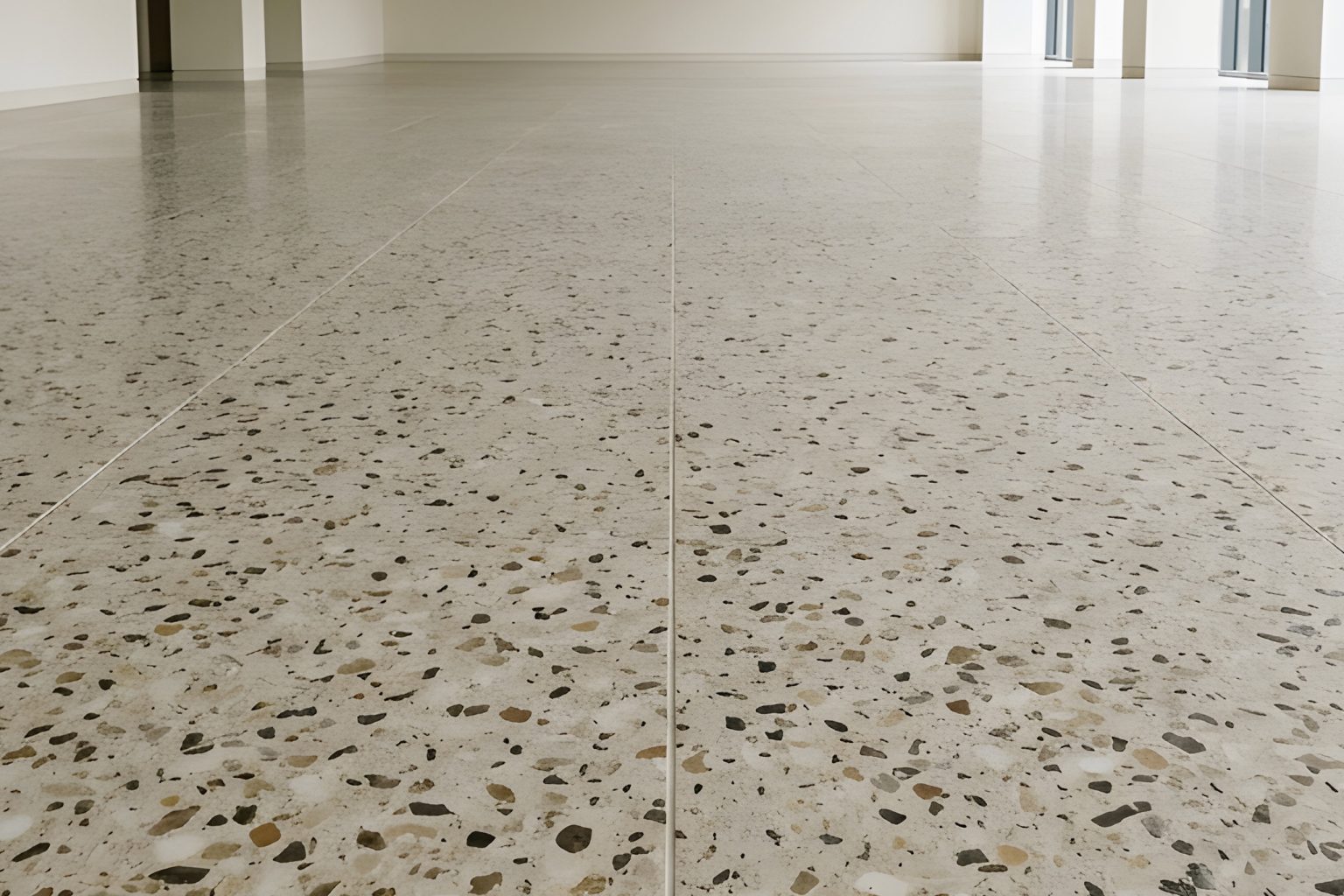
Terrazzo floor cleaning keeps commercial terrazzo safe, bright, and easier to maintain when daily soil, foot traffic, and old residue start changing the way the surface looks. A terrazzo floor can last for decades, but it still needs the right terrazzo floor care, dust mopping, cleaning products, and daily maintenance to keep floors shine clear instead of cloudy.
Quick answer: what commercial terrazzo floor cleaning should actually do
Commercial terrazzo floor cleaning should remove loose grit, oily film, mop residue, old finish buildup, and embedded soil without scratching the stone chips or damaging the binder. The goal is not to cover the floor with shine. The goal is to clean and restore the surface so the original terrazzo can reflect light again.
Good terrazzo care usually includes:
- Daily dust mopping in public areas
- Neutral pH cleaning products
- Clean rinse water
- Periodic machine cleaning
- Restoration when traffic lanes stay dull
- Diamond polishing when the surface is scratched, etched, or worn
For a commercial building, the best plan is simple: keep grit off the floor every day, clean with the right chemistry, and restore the surface before dull areas become permanent-looking wear. That is where terrazzo differs from many other hard floors. In USA commercial buildings, terrazzo also has to fit real operating schedules. Cleaning crews may have a short overnight window, tenants may walk through the lobby by 7 a.m., and wet areas may need to reopen quickly. That is why the process should be practical, not just technically correct. The best routine is one staff can repeat without guesswork, with clear products, clean tools, and a plan for when daily maintenance is no longer enough. The floor should look better after every cleaning cycle, not only after emergency restoration. That is the standard.
Why a terrazzo floor needs a different cleaning plan than other hard floors
A terrazzo floor is not the same as VCT, ceramic tile, sealed concrete, or standard stone. Terrazzo is made from aggregates such as marble, quartz, granite, glass, or porcelain chips mixed with cement or epoxy and polished into a smooth surface. NTMA
Terrazzo is durable, but grit can still wear it down
The floor may feel hard, but tracked-in sand and grit still act like fine sandpaper. In lobbies, schools, hospitals, hotels, and office corridors, that grit usually collects near doors, elevator banks, reception areas, and main paths. If it stays there, foot traffic grinds it across the finish.
This is why dust mopping is not a small task. It is the first line of protection.
Cement terrazzo and epoxy terrazzo do not always respond the same way
Cement terrazzo and epoxy terrazzo can both look beautiful, but they do not always react the same way to moisture, cleaners, stains, and restoration methods. Cement-based systems may be more sensitive to acidic cleaners because many terrazzo aggregates contain calcium-based stone.
The safest starting point is to identify the floor type before choosing products or equipment.
Why the wrong cleaner can leave residue, dullness, or surface damage
Many commercial cleaning products are too aggressive for terrazzo. The National Terrazzo & Mosaic Association advises neutral pH materials for scrubbing or mopping and warns against degreasers, bleach, vinegar, ammonia, acids, harmful alkalis, and certain all-purpose cleaners. NTMA
That makes daily maintenance the real foundation of terrazzo floor care.
Terrazzo floor care starts with daily maintenance
Terrazzo floor care is easier when the routine is consistent. Most dull floors are not ruined overnight. They lose clarity because grit, dirty mop water, residue, and spills are allowed to build up in small amounts every day.
Dust mopping keeps abrasive soil from scratching the surface
Daily dust mopping removes loose dust and grit before wet cleaning. NTMA describes daily dust mopping as a requirement in most public buildings because it removes dust and tracked-in grit. NTMA
Use a clean dust mop sized for the space. Replace or wash mop heads often.
Neutral cleaning products are safer than harsh degreasers or acidic cleaners
For routine terrazzo care, neutral pH cleaning products are the safer choice. They clean without attacking the polished surface or leaving heavy residue. Apply them according to label directions, allow a short dwell time, and recover the dirty solution before it dries.
Damp mopping, clean rinse water, and spill response matter more than over-scrubbing
Over-scrubbing can create more problems than it solves. Dirty water, aggressive pads, and poor rinsing often leave a haze that hides the floor’s natural finish.
Spills should be handled quickly, especially coffee, oils, food, ice melt, and anything acidic.
Entry mats help reduce the dirt that reaches the terrazzo floor
Good mats reduce the amount of grit that reaches the floor. They also reduce the workload for staff.
Once daily care slips, the first visible sign is usually dullness.
Why terrazzo floors shine less over time in busy commercial buildings
Terrazzo floors shine less when the surface gets scratched, coated with residue, or covered by old finish.
Foot traffic creates dull paths through lobbies, corridors, and entrances
Traffic lanes are easy to spot. They run from the front door to the elevator, from the lobby desk to the hallway, or from the cafeteria entrance to the serving line.
At first, routine cleaning may bring them back. Later, the dullness stays even after mopping.
Old wax, sealer buildup, and cleaning residue can hide the original finish
Some terrazzo floors lose their shine because layers have built up on top. Old wax, incompatible finish, soap residue, and dirty rinse water can create a gray or yellow cast.
In these cases, more finish is not the answer. The floor may need controlled stripping, deep cleaning, and polishing.
Scratches, stains, and etching need more than routine mopping
If the floor has fine scratches, stains, or etching, routine cleaning will not fully restore it. Mopping cleans soil. It does not flatten scratches or bring back clarity to a worn surface.
That is where diamond polishing changes the result.
How diamond polishing restores terrazzo floors shine without covering the surface
Diamond polishing restores terrazzo by mechanically refining the surface. Instead of creating a fake shine with finish, polishing smooths the floor so it can reflect light again.
Cleaning and stripping come before polishing
A professional restoration usually starts by removing soil, residue, and old coating layers. Polishing over buildup gives poor results because the diamonds are not working directly on the terrazzo.
Diamond honing smooths worn areas and removes surface damage
Diamond honing uses progressively finer abrasives to smooth scratches and worn traffic lanes. The technician chooses the grit sequence based on the floor condition.
Honing is controlled work. Too little does not correct the problem. Too much can remove more material than needed.
Polishing brings back clarity, reflection, and a cleaner commercial appearance
After honing, polishing refines the surface to create clarity and reflection. This is the stage where the floor starts to look clean in a deeper way.
Sealing protects the restored terrazzo floor after polishing
A restored terrazzo floor usually needs the right sealer or protective treatment. NTMA notes that sealers should meet applicable slip resistance requirements and are applied according to the sealer manufacturer’s instructions. NTMA
After restoration, the maintenance plan decides how long the result lasts.
Terrazzo care mistakes that make commercial floors harder to maintain
Most terrazzo problems come from small maintenance mistakes repeated for months. The floor may tolerate them for a while, but eventually the surface becomes dull, slippery, patchy, or hard to clean.
Using all-purpose cleaning products without checking the floor type
All-purpose does not mean safe for terrazzo. Products with strong alkalis, acids, salts, ammonia, bleach, or oily additives can leave damage or residue. If staff are unsure, the product should be checked before use.
Skipping dust mopping before wet cleaning
Wet cleaning before removing dry grit turns the mop into an abrasive tool. This is one of the simplest mistakes to fix. Dry soil removal should happen before damp mopping or auto-scrubbing.
Letting dirty mop water dry on the surface
Dirty solution should be recovered before it dries. If it dries on the terrazzo, the floor can look streaky or cloudy.
Treating polished terrazzo like VCT or waxed flooring
Terrazzo is often damaged by routines meant for waxed floors. Heavy layers of finish can hide the stone, trap soil, and create extra stripping work later. Polished terrazzo should be maintained as terrazzo, not treated like VCT.
A written schedule helps avoid these mistakes.
A practical maintenance schedule for commercial terrazzo floor care
Commercial terrazzo floor care works best when the schedule matches traffic.
| Frequency | What to do | Why it matters |
| Daily | Dust mop, spot clean spills | Removes grit before it scratches |
| Weekly | Damp mop or auto-scrub with neutral cleaner | Removes soil film and residue |
| Monthly | Inspect traffic lanes and dull areas | Finds wear before it spreads |
| Periodic | Deep clean, restore, or polish | Brings back clarity when routine cleaning is not enough |
Daily maintenance for entrances, lobbies, and high-traffic zones
Daily maintenance should focus on entrances, public paths, and visible areas. Dust mop first, then damp clean or auto-scrub where needed.
Weekly and monthly cleaning for deeper soil removal
Weekly cleaning should remove soil film that daily work misses. Monthly checks should look for dull paths, stains, residue, worn sealer, and safety issues.
When to schedule restoration or diamond polishing
Schedule restoration when traffic lanes stay dull, old finish is uneven, stains remain after cleaning, or the floor has lost reflection. Diamond polishing is usually the better route when the surface itself is scratched or worn.
How offices, schools, hospitals, hotels, and retail spaces should adjust the plan
Schools and hospitals often need more frequent cleaning because of heavy public traffic. Hotels and retail spaces need appearance-driven maintenance. Offices may need less frequent restoration but still need entrance care and dust control.
Scher Flooring recommendation for terrazzo cleaning and restoration
Scher Flooring Services looks at terrazzo as part of the full commercial floor system, not as a one-time shine project. Scher provides commercial floor cleaning, restoration, and maintenance plans, and its ceramic, stone, and tile service page references a George Washington University Hospital terrazzo restorative cleaning project. Scher Commercial Floor Cleaning Services
Start with an on-site look at traffic, finish condition, and cleaning history
The first step is inspection. A technician should look at traffic patterns, finish buildup, stains, scratches, slip concerns, and the products already being used.
Use the least aggressive process that restores the floor properly
Not every terrazzo floor needs heavy grinding. Some floors need deep cleaning and polishing. Others need stripping, honing, polishing, and sealing. The process should match the floor condition.
Build a maintenance plan that keeps the terrazzo floor looking clean after restoration
The final recommendation is simple: restore the floor once, then maintain it properly. Scher’s custom maintenance programs consider foot traffic, internal janitorial services, budget, cleaning methods, chemicals, and service frequency. Scher Commercial Floor Cleaning Services
If you are looking for a better floor cleaning plan, Scher can help set the right frequency for dust mopping, neutral cleaning, deep cleaning, restoration, and diamond polishing so the terrazzo keeps its clean commercial appearance longer.
Stay Updated!
Sign up for email updates and stay in the loop about about our services and promotions.
We’re here to answer any questions you have about our commercial floor cleaning, restoration, and maintenance services.
Get a Free Quote Today!
Scher Flooring Services is a locally and family owned and operated commercial floor cleaning, maintenance and restoration company in business for over 25 years.
"*" indicates required fields