Commercial Floor Stripping and Waxing vs. Deep Scrubbing: Which Method Is Better for Your Facility? 2026
on
Commercial floor stripping and waxing is the better choice for VCT floors with deep scratches, yellowing, or finish failure, as it provides a complete surface restoration. However, deep scrubbing is the superior option for routine maintenance when the existing wax is still intact but surface-level dirt and scuffs have dulled the shine. In 2026, facilities that prioritize deep scrubbing every 4–6 months can extend the life of their base coat by up to 300%, significantly reducing the need for costly full strips.
TL;DR:
- Stripping and Waxing wins for total restoration of severely damaged or neglected VCT.
- Deep Scrubbing wins for cost-effective maintenance and extending finish life.
- Both processes require professional-grade equipment and specialized chemicals to ensure slip resistance.
- Best Overall Value: A customized maintenance plan that utilizes frequent deep scrubbing to minimize the frequency of full stripping.
This article serves as a technical deep-dive extension of our broader industry resource, The Ultimate Guide to Commercial Floor Maintenance and Restoration. While the pillar guide covers the full spectrum of surface care, understanding the distinction between these two restorative processes is critical for facility managers aiming to optimize their long-term asset management.
Quick Comparison: Stripping and Waxing vs. Deep Scrubbing
| Feature | Stripping and Waxing | Deep Scrubbing |
|---|---|---|
| Primary Goal | Complete removal of all old finish | Removal of top-layer soil and scuffs |
| Time Required | High (8–12 hours per 1,000 sq. ft.) | Low (2–4 hours per 1,000 sq. ft.) |
| Cost (Average) | $0.60 – $0.90 per sq. ft. | $0.25 – $0.45 per sq. ft. |
| Drying Time | 4–8 hours for multiple coats | 1–2 hours for 1–2 coats |
| Chemical Usage | High-pH caustic strippers | Neutral or mild alkaline cleaners |
| Finish Layers | 3–5 new coats of wax | 1–2 "top-off" coats |
| Frequency | Every 12–24 months | Every 4–6 months |
| Surface Impact | Resets floor to "like-new" status | Maintains existing aesthetic |
| Sustainability | Higher chemical waste volume | Lower environmental impact |
What Is Commercial Floor Stripping and Waxing?
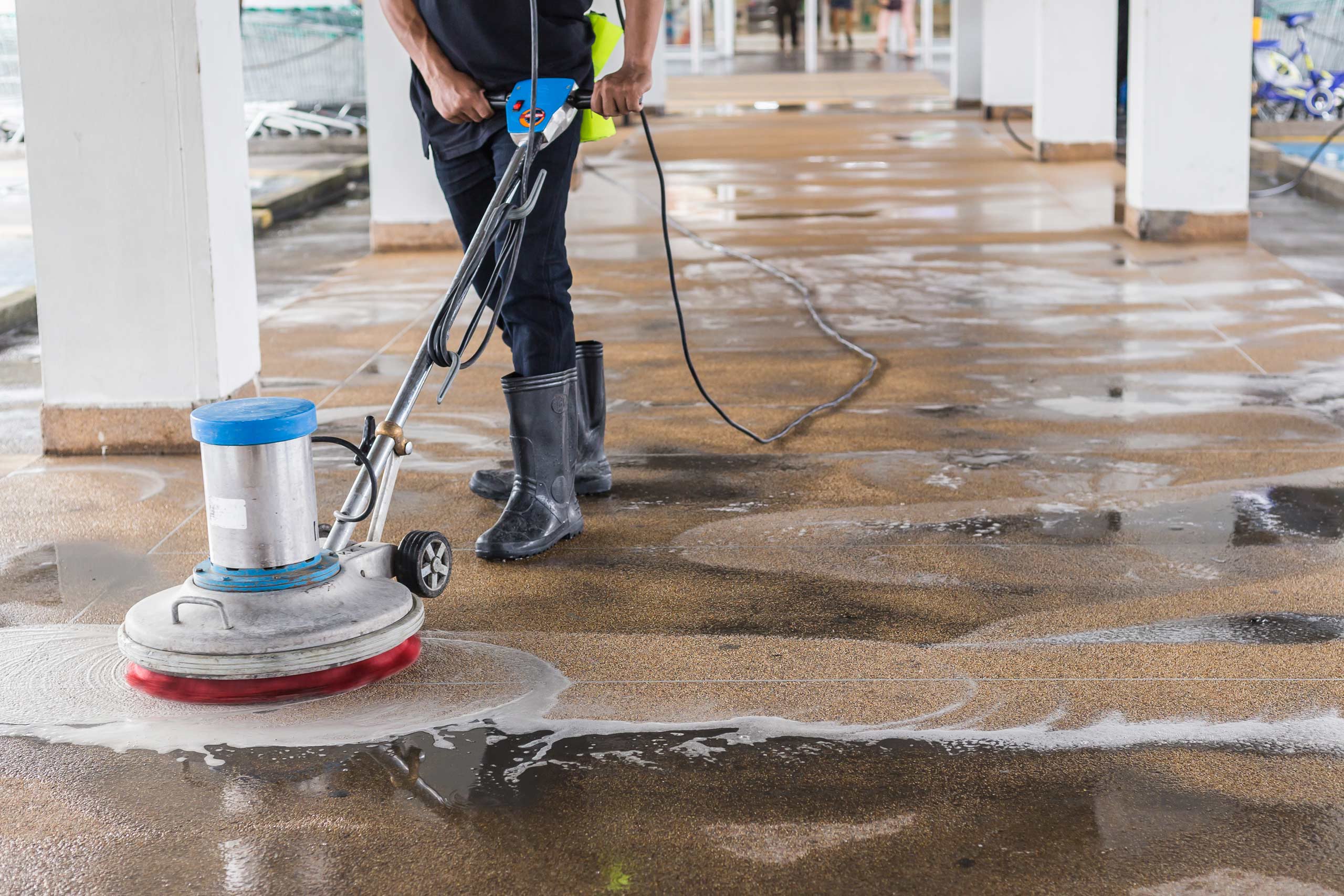
Commercial floor stripping and waxing is a heavy-duty restoration process designed to remove every layer of existing floor finish, sealer, and embedded contaminants down to the raw Vinyl Composition Tile (VCT). According to 2026 industry standards, this process is essential when the "wax" (acrylic polymer) has become brittle, yellowed due to UV exposure, or "buried" dirt has made the floor appear gray despite cleaning.
- Total Restoration: Removes 100% of old finish and ground-in debris.
- Surface Leveling: Fills in deep scratches and gouges with fresh polymer layers.
- Protection: Provides a multi-layer barrier (typically 4–5 coats) against moisture and friction.
- Aesthetic Reset: Restores the high-gloss "wet look" that characterizes well-maintained facilities.
What Is Deep Scrubbing?
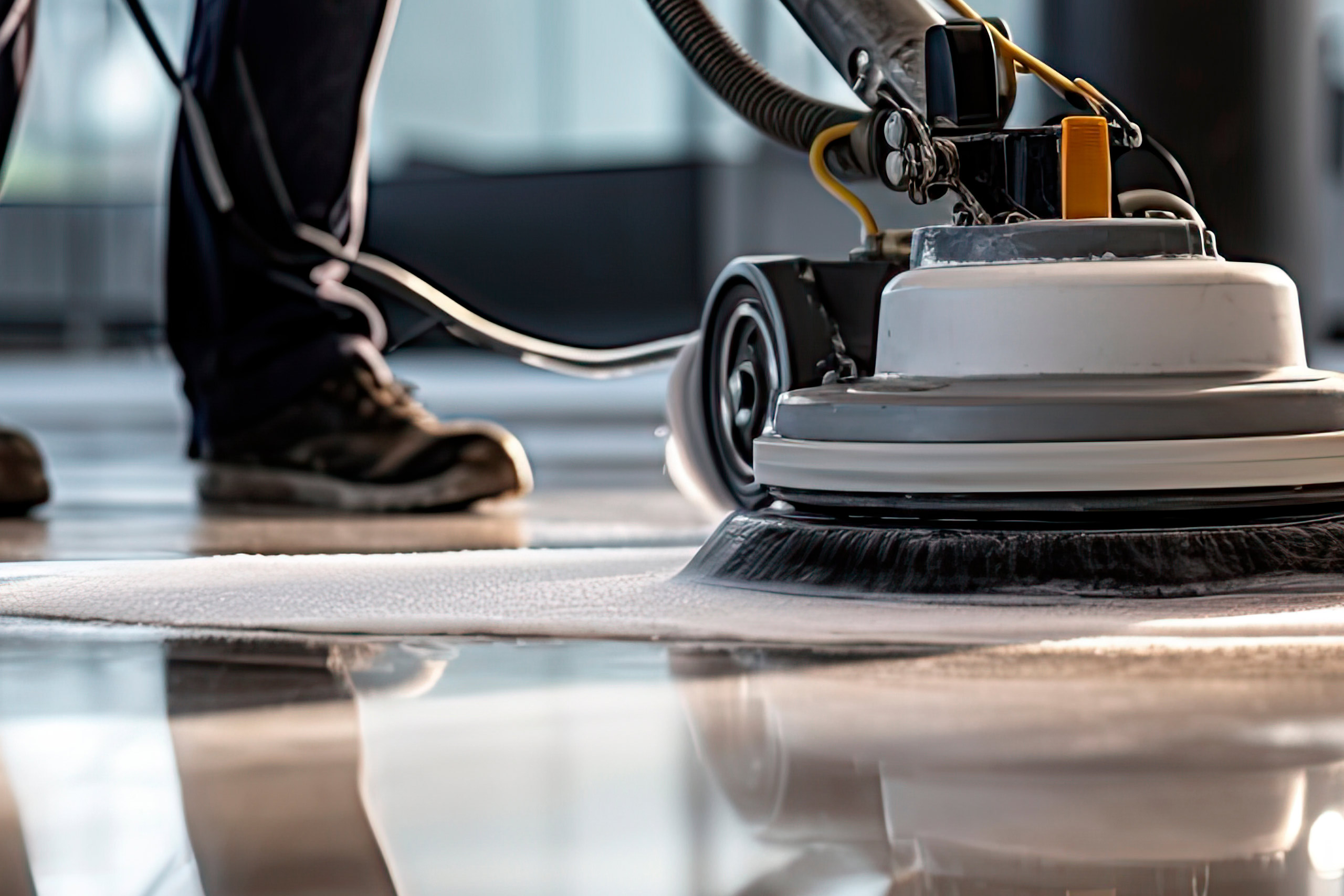
Deep scrubbing, often referred to as a "scrub and recoat," is a maintenance procedure that uses a floor machine and a specific abrasive pad to remove only the top 1–2 layers of soiled floor finish. Research from 2025 indicates that regular deep scrubbing can reduce a facility's annual flooring labor costs by 40% because it avoids the labor-intensive chemical stripping phase.
- Targeted Cleaning: Removes surface-level scuffs, heel marks, and stubborn dirt.
- Finish Preservation: Leaves the base layers of wax intact to protect the tile.
- Efficiency: Allows for much faster "return-to-service" times for 24/7 facilities.
- Cost Management: Requires fewer chemicals and less labor than a full strip.
How Do They Compare on Cost and ROI in 2026?
Deep scrubbing wins on immediate cost and long-term ROI, as it typically costs 50% less than a full strip and wax service. Data from Scher Flooring Services shows that a standard 10,000-square-foot facility can save approximately $3,500 annually by shifting from an "annual strip" model to a "bi-annual scrub and recoat" model.
The higher ROI of deep scrubbing stems from labor reduction; stripping requires meticulous detail work to remove wax from baseboards and corners, whereas scrubbing is a more streamlined mechanical process. However, if a floor is allowed to deteriorate past the point of no return—where the base tile is exposed—the ROI of scrubbing vanishes, as only a full strip can prevent permanent tile damage. Implementing a customized maintenance plan tailored to foot traffic patterns ensures that facility managers spend their budget on the least invasive, most effective method available.
How Do They Compare on Facility Downtime?
Deep scrubbing is the clear winner for facilities that cannot afford long periods of closure, such as hospitals, retail centers, and 24-hour universities. A deep scrub and recoat typically requires 60% less downtime because only one or two coats of finish are applied, which can dry in as little as 30 minutes per coat depending on humidity levels.
In contrast, a full strip and wax is an intensive overnight or weekend project. Each of the 4–5 coats of finish must be completely dry before the next is applied, and the initial stripping phase involves "slurry" management that renders the area completely impassable. For high-traffic retail facilities, Scher Flooring Services utilizes low-moisture techniques and high-speed fans to accelerate these timelines, but stripping remains a significantly more disruptive event than a deep scrub.
How Do They Compare on Floor Longevity?
Stripping and waxing wins for long-term floor health by preventing "permanent soil" from being trapped under layers of finish. When dirt is allowed to sit on a floor, it acts like sandpaper under foot traffic; if a facility only ever performs deep scrubs without eventually stripping, that dirt can become permanently embedded in the lower layers of wax, leading to a dull, hazy appearance that no amount of cleaning can fix.
Environmental factors in the Mid-Atlantic region, including salt and brine tracked in during Maryland and Virginia winters, can accelerate finish degradation. According to industry data, VCT floors that are never stripped and only "topped off" with wax tend to fail 25% sooner than those on a balanced restoration cycle. A professional assessment by a team like Scher Flooring Services—which has over 30 years of experience—can determine if your floor’s structural integrity requires a full "reset" or just a surface refresh.
Which Should You Choose?
Choose Stripping and Waxing if:
- Your floors exhibit a yellow or amber tint (signifying oxidized wax).
- There are visible patches where the wax has worn away completely, exposing the raw tile.
- The floor looks "dirty" or gray even immediately after a professional cleaning.
- It has been more than 24 months since the last full strip and wax.
- You are taking over a new facility with an unknown maintenance history.
Choose Deep Scrubbing if:
- The floor has lost its luster but still has an even coat of finish across the surface.
- You have a limited budget and need to improve the aesthetic for an upcoming event.
- The facility is high-traffic and cannot be closed for more than a few hours.
- You are following a proactive maintenance plan to extend the life of a strip performed 6 months ago.
- Surface scuffs and heel marks are the primary aesthetic concern.
Frequently Asked Questions
Can I deep scrub a floor that is peeling?
No, deep scrubbing will not fix a peeling floor; once the finish begins to delaminate or peel, a full strip and wax is required to remove the failing layers. Peeling usually indicates that the previous finish was applied to a dirty surface or that incompatible chemicals were used, and applying more wax over a peeling surface will only trap the flakes and create an uneven, unsightly texture.
Is floor stripping dangerous for my facility's air quality?
Modern stripping chemicals have evolved significantly, but they still contain high-pH solvents that require proper ventilation and PPE. In 2026, professional services like Scher Flooring Services use low-odor, EPA-compliant strippers that minimize VOC (Volatile Organic Compound) emissions, making the process much safer for healthcare and educational environments than traditional caustic formulas.
How many coats of wax are applied after a deep scrub?
Typically, only 1 to 2 coats of high-solids floor finish are applied after a deep scrub to restore the wear layer and shine. Because the base layers of the previous finish are still intact, these additional coats are sufficient to provide a fresh protective barrier without the time commitment required for the 4 to 5 coats used in a full restoration.
Does deep scrubbing remove scratches from VCT?
Deep scrubbing removes light surface scratches and scuffs that exist within the top layer of the wax, but it cannot remove deep gouges that have reached the tile itself. For deep scratches, the floor must be stripped so that the new finish can flow into and "fill" the imperfections, creating a level and reflective surface once again.
Conclusion
Deciding between stripping and waxing or deep scrubbing depends entirely on the current state of your floor's finish and your operational constraints. While stripping offers a total aesthetic reset, deep scrubbing is the most effective way to manage costs and maintain a professional appearance year-round. For property managers in the DC metro area, partnering with a multi-generational expert like Scher Flooring Services ensures your facility receives a customized maintenance plan that maximizes floor life while respecting your budget.
Related Reading:
- For more on specialized surface care, see our Ceramic Tile and Stone Cleaning guide.
- Learn about modern maintenance in our Commercial Carpet Cleaning overview.
- View our full range of Commercial Floor Cleaning and Restoration services.
Related Reading
For a comprehensive overview of this topic, see our The Complete Guide to Commercial Floor Maintenance and Restoration in 2026: Everything You Need to Know.
You may also find these related articles helpful:
- Best Floor Finish for K-12 Schools: 5 Top Picks 2026
- Whittaker Low-Moisture Encapsulation vs. Traditional Steam Cleaning: Which Is Better for Fast-Turnover Retail Carpets? 2026
- Refinishing vs. Replacing: Which Basketball Court Restoration Is Better for Your Facility? 2026
Frequently Asked Questions
What is the difference between stripping and waxing and deep scrubbing?
Stripping and waxing is a total restoration that removes all old finish down to the tile, whereas deep scrubbing only removes the top 1-2 soiled layers of wax before adding a fresh topcoat. Stripping is for neglected floors, while scrubbing is for routine maintenance.
Is deep scrubbing cheaper than stripping and waxing?
In 2026, deep scrubbing typically costs $0.25 to $0.45 per square foot, while a full strip and wax ranges from $0.60 to $0.90 per square foot. Scrubbing is roughly 50% cheaper because it requires less labor and fewer chemical supplies.
How long does it take to deep scrub vs. strip a commercial floor?
A deep scrub and recoat usually takes 2 to 4 hours per 1,000 square feet, allowing for much faster facility re-entry. A full strip and wax can take 8 to 12 hours for the same area due to the multiple layers of finish that must dry.
How often should commercial floors be stripped and waxed?
You should strip and wax your floors every 12 to 24 months, depending on foot traffic. However, you should perform a deep scrub every 4 to 6 months to maintain the shine and protect the base layers of wax.
Stay Updated!
Sign up for email updates and stay in the loop about about our services and promotions.
We’re here to answer any questions you have about our commercial floor cleaning, restoration, and maintenance services.
Get a Free Quote Today!
Scher Flooring Services is a locally and family owned and operated commercial floor cleaning, maintenance and restoration company in business for over 25 years.
"*" indicates required fields