Entryway matting systems help reduce commercial floor maintenance costs by stopping dirt, moisture, grit, and debris at the building entrance before they spread across interior floors. For facilities with heavy foot traffic, the right entrance mats can protect flooring, improve safety, and reduce the need for constant deep cleaning.
A good matting plan is not just about placing a mat near the door. It is about creating a layered entrance flooring system that removes dirt from shoes, absorbs moisture, protects the surface underneath, and supports the larger cleaning plan for the building.
Why Entryway Matting Systems Matter for Commercial Floor Care
Most commercial flooring problems begin before anyone notices visible damage. Dirt enters through the commercial entrance, moves through walkways, settles into carpet, scratches vinyl, dulls tile, and wears down protective finishes. Over time, this raises cleaning costs and maintenance costs because floors need more frequent attention.
Entryway matting systems work as the first line of defense. They help control what comes into the building before daily cleaning staff or a professional floor care team has to deal with it. That matters for offices, schools, healthcare facilities, restaurants, gyms, hotels, retail stores, and property-managed buildings.
How Dirt, Moisture, and Grit Increase Cleaning Costs
Dirt may look harmless, but it acts like sandpaper on commercial flooring. When people walk across the entrance with grit on their shoes, the particles scrape the floor surface. On VCT and LVT, that can wear away finish. On tile, soil collects in grout lines. On carpet, dirt gets pushed into the fibers and backing.
Moisture adds another layer of cost. Rain, snow, ice melt, and wet debris can leave hard-surface floors slippery and make carpet mats hold odor if they are not cleaned. In winter climates, salt and sand can damage finishes faster than normal dust.
Higher soil load usually means:
- More frequent mopping and vacuuming
- Faster finish wear on vinyl floors
- More visible traffic lanes in carpet
- More grout discoloration on tile
- Greater risk of slips near the door
- Shorter time between restorative cleaning services
Every extra square yard of dirty flooring adds labor, chemical use, drying time, and disruption.
Why the Commercial Entrance Is the First Line of Floor Protection
The building entrance decides how much soil reaches the rest of the facility. If the entrance is poorly protected, dirt moves from the lobby into hallways, offices, elevators, restrooms, treatment rooms, dining areas, and retail aisles.
A strong commercial entrance plan considers the outdoor approach, the door area, the vestibule, and the first indoor walking path. The goal is simple: remove dirt and moisture before people reach the main interior flooring.
Once you understand why the entrance controls so much of the maintenance burden, the next step is looking at how entrance mats actually trap dirt before it spreads.
How Entrance Mats Help Trap Dirt Before It Spreads
Entrance mats reduce cleaning demand by capturing soil at the point of entry. They scrape, brush, absorb, and hold contaminants that would otherwise travel deeper into the building. In a busy facility, this small barrier can make a major difference in how clean the rest of the floor looks by midday.
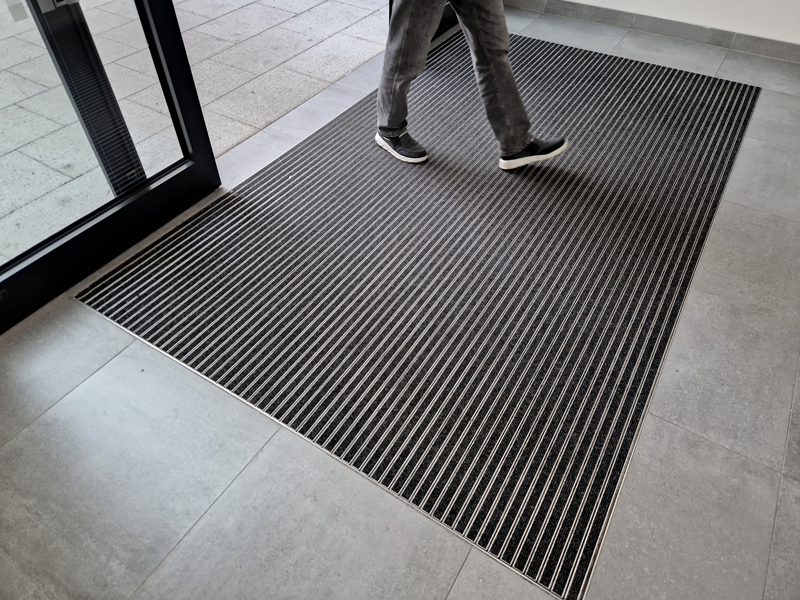
An effective entrance matting system uses more than one mat type. Outdoor mats handle heavy debris. Indoor mats capture moisture and fine dust. Transition mats support high-traffic areas where people continue walking after entering.
What Entrance Mats Remove from Shoes and Wheels
Entrance mats are designed to remove dirt from shoes, carts, dollies, strollers, wheelchairs, and rolling equipment. The type of mat determines what it captures best.
Common materials removed by entrance mats include:
| Material tracked inside | Why it matters for floor care |
|---|---|
| Dirt and soil | Scratches finishes and settles into carpet fibers |
| Moisture | Creates slip risks and water spots |
| Sand and grit | Wears down VCT, LVT, tile, and wood finishes |
| Salt and snow residue | Leaves white marks and can damage floor finish |
| Leaves and outdoor debris | Creates mess at the entrance and lobby |
| Fine dust | Travels across walkways and dulls flooring |
The best floor mats are chosen based on the location, weather, soil pattern, and type of interior flooring nearby.
How Trapped Dirt Reduces Wear on VCT, LVT, Tile, Carpet, Rubber, and Wood Floors
Different floors react to dirt in different ways. VCT and LVT often show dull traffic lanes when grit wears down the finish. Tile may hold soil in grout lines. Carpet traps dirt deep in the pile. Rubber floors can collect residue and scuff marks. Wood and engineered wood surfaces can show scratches when abrasive soil gets dragged across the surface.
Keeping dirt near the entrance helps protect each surface from early wear. It also makes professional maintenance more efficient. For example, Scher Flooring Services provides commercial floor cleaning, restoration, and maintenance for surfaces like carpet, VCT, LVT, tile, rubber, and wood. When entry mats lower the daily soil load, scheduled floor maintenance can focus on preserving the floor instead of constantly correcting preventable damage.
This is why the quality of the system matters. A single small mat may help, but a complete entrance matting system works much better.
What Makes a Good Commercial Entrance Matting System?
A good commercial entrance matting system uses layers. Each layer handles a different kind of soil before it reaches the main flooring. The system should be long enough for several steps, wide enough to cover the full walking path, and durable enough for the level of foot traffic.
The best setup usually includes outdoor scraper mats, indoor wiper mats, and transition mats. Together, they create a path that cleans shoes gradually instead of relying on one mat to do everything.
Outdoor Scraper Mats for Heavy Soil and Debris
Outdoor scraper mats are placed before or just inside the door. Their job is to break loose heavy soil, mud, leaves, salt, and debris from shoes. These mats often use rubber, brush-like surfaces, or textured patterns that scrape the bottom of footwear.
They are especially helpful for:
- Rainy locations
- Snow-prone areas
- Retail entrances
- Restaurants and bars
- Schools and universities
- Industrial facilities
- Buildings with outdoor walkways
The outdoor mat should be durable, weather-resistant, and easy to clean. If it curls, slides, or becomes overloaded with dirt, it can become part of the problem.
Indoor Wiper Mats for Moisture and Fine Dust
Indoor wiper mats are placed after the scraper zone. Their job is to absorb moisture and collect finer particles. These mats are especially useful near lobbies, reception areas, elevators, and front desks where appearance matters.
Commercial entrance mats with absorbent surfaces can reduce wet footprints across tile, vinyl, rubber, and carpet. They also help protect clients, staff, and visitors from walking across wet areas exposed to rain or snow.
The backing matters too. Mats should stay flat, resist movement, and match the floor type underneath.
Transition Mats for High-Traffic Lobbies and Hallways
Transition mats extend protection beyond the first few steps. They are useful when people enter quickly, when the lobby is small, or when weather conditions are difficult.
A transition mat can be placed:
- Between vestibule and lobby
- Near elevators
- Along main walkways
- Outside restrooms during wet weather
- Near service counters
- Between outdoor and indoor work zones
This creates a cleaner walking path and reduces soil transfer from one area to another.
Once the basic system is clear, the next decision is choosing the right commercial entrance mats for the building’s actual use, traffic, and brand needs.
Choosing the Right Commercial Entrance Mats for Your Building
The right entrance mat is not the same for every building. A medical office, hotel lobby, gym, school, and restaurant all have different soil patterns, safety concerns, traffic levels, and appearance standards.
Good mat selection starts with how people use the space. Look at the entrance, the door width, the number of people entering each day, the weather patterns, and the type of flooring installed after the mat.
Match Mat Size and Length to Foot Traffic
One of the most common mistakes is using mats that are too short. People need enough walking distance for the mat to clean their shoes. If they only take one step on the mat, most dirt remains on the shoes.
For a busy commercial entrance, consider:
- The width of the entry doors
- The length of the first walking path
- Peak traffic times
- Whether people enter with carts or equipment
- Whether the building has a vestibule
- How quickly mats fill with dirt
A larger matting zone usually performs better than a small decorative mat. The goal is not to cover the floor randomly. The goal is to guide foot traffic across enough mat surface to remove soil and moisture.
Choose Floor Mats Based on Weather, Floor Type, and Facility Use
Weather has a direct effect on mat choice. A dry climate may need more dust control. A rainy area needs moisture absorption. A snowy region needs scraper mats that handle salt, slush, and sand.
Floor type matters too.
| Floor type near entrance | Matting priority |
|---|---|
| VCT or LVT | Reduce grit that wears floor finish |
| Tile and grout | Limit soil buildup in grout lines |
| Carpet | Capture dirt before it reaches fibers |
| Rubber | Control residue, moisture, and scuffing |
| Wood or engineered wood | Reduce scratches and moisture exposure |
The facility use also affects mat thickness, durability, and cleaning frequency. A hotel lobby may need a refined appearance. A gym may need moisture control and slip resistance. A restaurant may need mats that handle grease transfer, spills, and wet conditions.
When Custom Logo Entry Mats Make Sense
Custom logo entry mats can be useful when appearance and branding matter. They create a cleaner first impression while still helping trap dirt at the entrance. For hotels, offices, retail stores, schools, and healthcare facilities, a custom logo mat can support the brand without ignoring floor care.
Still, performance comes first. A custom logo mat should be commercial grade, easy to clean, durable under traffic, and sized correctly. A mat that looks good but fails to control soil will not lower maintenance costs.
Choosing the right mat is only half the work. Many facilities lose the benefits because the mats are too small, poorly maintained, or not adjusted for seasonal conditions.
Common Entry Matting Mistakes That Raise Maintenance Costs
Entry mats save money only when they are selected, placed, and maintained correctly. When mats are treated as decoration instead of part of the floor maintenance plan, they often fail.
The biggest issues are usually simple: mats are too small, mats are not cleaned often enough, or the facility uses the same setup all year even when weather changes.
Using Entry Mats That Are Too Small
Small mats may look neat, but they rarely protect a commercial entrance properly. If visitors step on and off the mat in one stride, the system cannot remove dirt effectively.
A mat that is too small can lead to:
- Dirt spreading beyond the lobby
- Wet footprints across hard floors
- More frequent spot cleaning
- Faster carpet soiling
- More visible wear patterns
- Higher maintenance costs
The mat should match the traffic pattern, not just the open space near the door.
Not Cleaning the Mats Often Enough
A dirty mat cannot keep floors clean. Once the mat is full of soil and moisture, people begin tracking that material back into the building.
Mat cleaning should be part of the facility’s maintenance schedule. Depending on traffic and weather, this may include vacuuming, shaking out, extraction cleaning, pressure washing, or mat replacement.
The key is to account for soil load. A light office may need less frequent mat cleaning. A retail store, restaurant, school, or healthcare facility may need daily attention at the entrance.
Ignoring Wet Weather, Salt, Sand, and Seasonal Soil
Seasonal soil can change quickly. Rain brings moisture. Snow brings salt and slush. Fall brings leaves and mud. Construction nearby can bring dust and grit. If the matting plan stays the same all year, the floor may suffer during the most demanding months.
Facilities should review mat placement before peak weather seasons. This is especially important for buildings with areas exposed to outdoor walkways, parking lots, loading zones, or uncovered entrances.
Avoiding these mistakes helps entry mats do their job, but matting works best when it supports a full floor maintenance plan.
How Entryway Matting Supports a Smarter Floor Maintenance Plan
Entryway matting systems should be part of the larger floor care strategy. They do not replace cleaning, stripping, waxing, extraction, refinishing, or restoration. They reduce the amount of dirt and moisture those services have to correct.
A smarter plan connects matting, daily janitorial work, periodic professional cleaning, and long-term floor protection. This is where a commercial floor cleaning provider can help identify what is prevention and what is restoration.
Reducing Daily Soil Load on Interior Floors
The more soil mats capture, the less soil daily cleaning teams have to remove from interior flooring. That helps janitorial work become more predictable and less reactive.
Reduced soil load can support:
- Cleaner lobbies throughout the day
- Fewer wet spots near the entrance
- Less dust across walkways
- Cleaner carpet traffic lanes
- Less grit on vinyl and tile
- Better first impressions for clients and visitors
This also helps protect staff time. Instead of repeatedly cleaning the same entrance trail, the team can maintain the full facility more consistently.
Extending Time Between Deep Cleaning, Stripping, Waxing, and Restoration
Deep cleaning and restoration are still necessary, but a good entrance matting system can help extend the useful life of cleaning results. For example, VCT and LVT floors may hold their finish longer when grit is controlled. Carpet may stay cleaner between extraction services. Tile and grout may resist heavy soil buildup near entrances.
Scher Flooring Services builds maintenance programs around each facility’s flooring type, traffic level, and service frequency. That matters because a restaurant, office, school, and gym will not need the same schedule. Matting reduces the burden, while professional maintenance keeps the floor protected over time.
When to Pair Matting with Professional Commercial Floor Cleaning
Pair matting with professional cleaning when the floor shows signs that daily cleaning is no longer enough.
Watch for:
- Dull traffic lanes
- Dark carpet paths
- Sticky or cloudy floor finish
- Grout discoloration
- Salt marks near the entrance
- Rubber floor residue
- Scratches near the door
- Lingering moisture or odor
A professional floor evaluation can help determine whether the issue is soil control, cleaning method, finish wear, or a deeper restoration need.
Some facilities benefit more from matting upgrades than others, especially when the building has constant traffic or weather exposure.
Best Facilities for Entrance Matting System Upgrades
Any commercial building can benefit from better entry mats, but some facilities see the impact faster. The more people who enter the building, the more valuable soil control becomes.
Buildings with high traffic, wet entrances, or mixed floor surfaces should treat commercial floor mats as part of the maintenance budget, not a minor supply purchase.
Retail Stores, Offices, Hotels, Schools, Healthcare, Gyms, and Restaurants
Retail stores need clean aisles and strong first impressions. Offices need lobbies that stay professional all day. Hotels and hospitality spaces need clean entrances without visible traffic wear. Schools and universities need durable systems that handle students, staff, visitors, and weather. Healthcare buildings need cleaner walkways and careful moisture control. Gyms need mats that handle sweat, rain, and rubber flooring. Restaurants and bars need protection from outdoor moisture, spills, grease transfer, and heavy foot traffic.
Each environment has different needs, but the principle is the same. Stop soil early, clean mats often, and support the flooring with the right maintenance plan.
High-Traffic Buildings in Maryland, Virginia, and Washington DC
Facilities in Maryland, Virginia, and Washington DC deal with a range of weather patterns, from rain and humidity to winter salt and snow. Buildings with open entrances, parking-lot traffic, sidewalks, and outdoor walkways may need stronger matting during seasonal changes.
For these locations, an effective entrance matting system should be reviewed alongside commercial cleaning frequency. If floors look worn soon after cleaning, the issue may not be the cleaning itself. The entrance may be allowing too much soil into the building every day.
This brings the full cost picture into focus. Entry mats can lower daily wear, but long-term savings come from combining prevention with consistent floor maintenance.
Final Thoughts: Entry Mats Lower Costs, but Maintenance Keeps Floors Protected
Entry mats are one of the simplest ways to reduce commercial floor maintenance costs, but they work best as part of a complete system. The right entrance mats scrape debris, absorb moisture, protect interior flooring, and reduce the amount of dirt that spreads through the building.
A strong entryway matting plan should include the correct mat types, enough walking length, proper placement, anti-slip backing, regular cleaning, and seasonal adjustments. It should also match the flooring inside the building, whether that is carpet, VCT, LVT, tile, rubber, wood, or another commercial surface.
For facility managers and business owners, the goal is not just a cleaner entrance. The goal is lower cleaning costs, safer walkways, better first impressions, and longer-lasting floors. When entrance matting works together with a professional commercial floor maintenance plan, the building stays cleaner with less wasted effort.
Stay Updated!
Sign up for email updates and stay in the loop about about our services and promotions.
We’re here to answer any questions you have about our commercial floor cleaning, restoration, and maintenance services.
Get a Free Quote Today!
Scher Flooring Services is a locally and family owned and operated commercial floor cleaning, maintenance and restoration company in business for over 25 years.
"*" indicates required fields