High-Solids Floor Finish on LVT: 10 Pros and Cons to Consider 2026
on
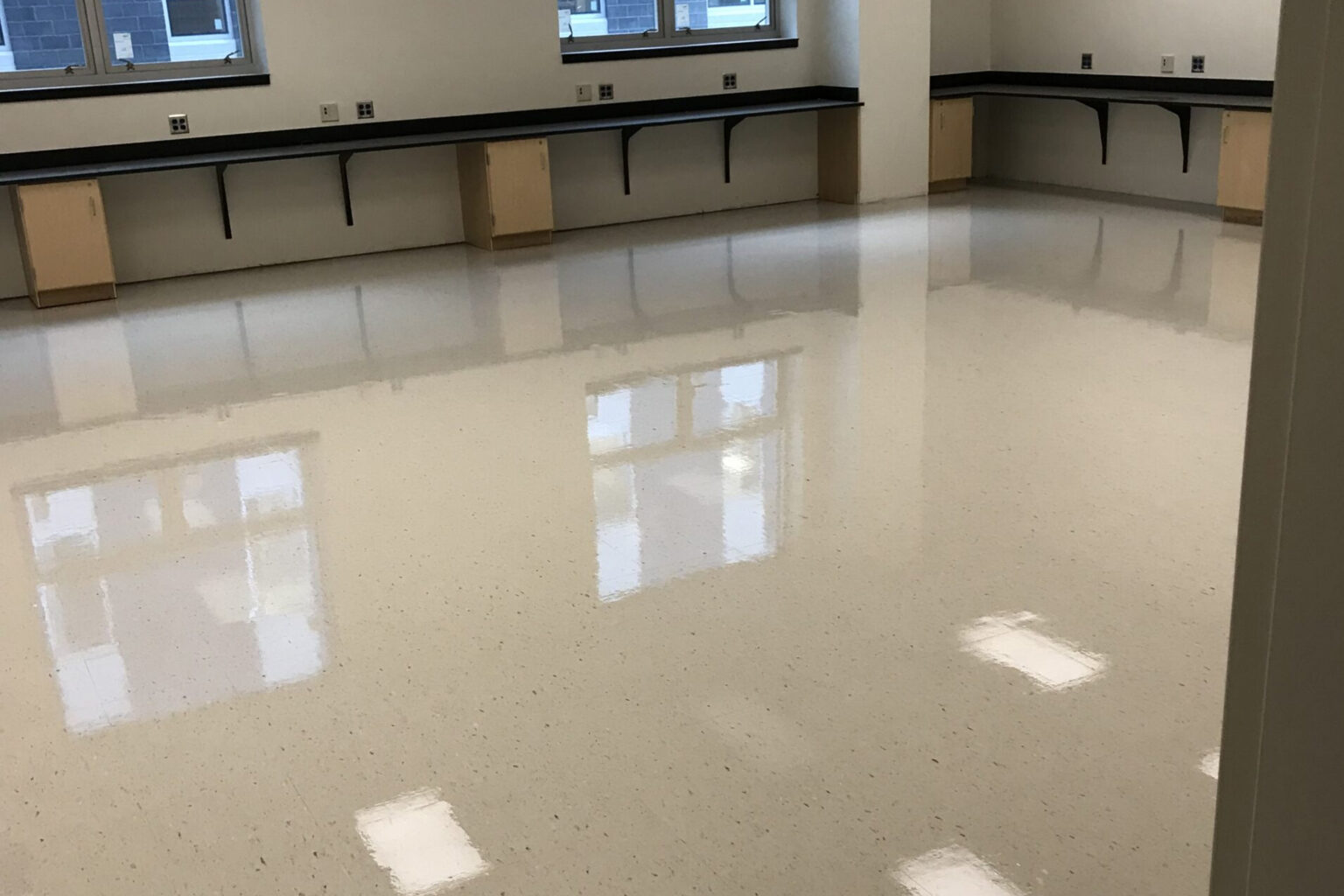
High-solids floor finish on Luxury Vinyl Tile (LVT) in healthcare settings provides a durable, high-gloss protective layer that significantly reduces bacterial harborages in tile seams. While it offers superior slip resistance and long-term surface protection, it requires a higher initial labor investment for application and a specialized stripping process. For hospitals and clinics, the decision to use high-solids finishes depends on balancing immediate aesthetic requirements with long-term maintenance budgets.
According to industry data from 2025, high-solids finishes—typically containing 25% to 30% solids—can reduce the frequency of recoating by up to 40% compared to standard 18% solids finishes [1]. Research indicates that in high-traffic healthcare corridors, these finishes maintain an acceptable Coefficient of Friction (COF) for 15% longer than traditional waxes, directly impacting patient safety and fall prevention.
As a specialized extension of The Complete Guide to Commercial Floor Maintenance and Restoration in 2026: Everything You Need to Know, this analysis explores how high-solids finishes integrate into modern infection control protocols. Scher Flooring Services leverages over 30 years of expertise to help healthcare facilities determine if this robust coating aligns with their specific sanitation and durability goals.
At a Glance:
- Verdict: Highly recommended for high-traffic clinical corridors; use with caution in patient rooms where chemical stripping odors may be an issue.
- Biggest Pro: Exceptional durability and extended lifespan between maintenance cycles.
- Biggest Con: Longer drying times and higher cost per gallon.
- Best For: Hospital lobbies, main corridors, and 24/7 emergency departments.
- Skip If: You require a "no-wax" look or have extremely limited ventilation for maintenance.
What Are the Pros of High-Solids Floor Finish on LVT?
Superior Durability and Wear Resistance
High-solids finishes create a thicker protective film per coat, which effectively shields LVT from the heavy rolling loads of hospital beds and equipment. Data shows that a 30% solids finish can provide the same protection in two coats that a standard finish provides in four, reducing labor time during initial application.
Enhanced Patient Safety Through Slip Resistance
In healthcare environments, moisture on floors is a constant risk; high-solids finishes are engineered to maintain high traction even when wet. According to 2026 safety standards, these finishes often exceed ADA recommendations for slip resistance, providing a safer walking surface for elderly patients and staff in a hurry.
Improved Infection Control and Sanitation
By sealing the microscopic pores and seams of LVT, high-solids finishes prevent bio-burden and pathogens from becoming trapped in the flooring. This creates a monolithic-like surface that is easier to disinfect with EPA-registered virucides, a critical factor for Scher Flooring Services when designing healthcare maintenance plans.
Long-Term Cost Efficiency
While the price per gallon is higher, the extended lifecycle of the finish results in fewer "strip and wax" cycles over a five-year period. Facilities can see a 20% reduction in total chemical and labor costs because the high-solids content resists the "scuffing" and "black heel marks" common in busy medical centers.
High Aesthetic Gloss and Clarity
High-solids coatings provide a "wet look" shine that signals cleanliness to patients and visitors, which is vital for hospital HCAHPS scores. The clarity of modern 2026 polymers ensures that the natural wood or stone patterns of the LVT remain visible without the yellowing seen in older acrylic products.
What Are the Cons of High-Solids Floor Finish on LVT?
Extended Drying and Curing Times
Because of the higher concentration of particles, high-solids finishes take significantly longer to dry between coats—often 45 to 60 minutes compared to 20 minutes for standard finishes. In a 24/7 healthcare facility, this increased downtime can complicate logistics in emergency rooms or active wards.
Higher Initial Product Investment
The upfront cost of high-solids finish is typically 25% to 35% higher than standard 18% or 20% solids products. For facilities operating on tight quarterly budgets, this initial price hike can be a barrier, even if the long-term ROI is demonstrably better.
Sensitivity to Application Technique
Applying high-solids finish requires a skilled hand; if applied too thickly, the finish may "mop-line" or develop bubbles that trap dirt. Scher Flooring Services emphasizes professional training because improper application on LVT can lead to uneven curing and a tacky surface that attracts soil.
Increased Stripping Complexity
When it eventually comes time to remove the finish, the high-solids content requires more aggressive stripping agents and longer dwell times. This process can be more labor-intensive and requires careful management of chemical odors in sensitive healthcare environments.
Potential for "Plastic" Appearance
If too many coats are applied, the LVT can lose its realistic texture and begin to look like a sheet of plastic. This can be a disadvantage for high-end healthcare boutiques or senior living facilities that chose LVT specifically for its natural aesthetic.
Pros and Cons Summary Table
| Feature | High-Solids Finish (LVT) | Standard Solids Finish |
|---|---|---|
| Durability | Exceptional (30% solids) | Moderate (18-22% solids) |
| Labor Cost | Lower (fewer coats needed) | Higher (more coats needed) |
| Drying Time | 45-60 mins per coat | 20-30 mins per coat |
| Slip Resistance | High / Consistent | Variable |
| Stripping Frequency | Every 24-36 months | Every 12-18 months |
| Chemical Price | $45 – $65 per gallon | $25 – $35 per gallon |
When Does High-Solids Finish Make Sense?
High-solids finish is most effective in 24-hour healthcare facilities where "down-time" for maintenance must be minimized over the long term. This section applies to facility managers overseeing high-traffic areas like hospital lobbies or surgical corridors. In these zones, the ability to go two to three years without a full strip-and-wax cycle—compared to the annual cycle required by standard finishes—justifies the higher product cost. Furthermore, if your LVT has significant "v-groove" seams, a high-solids finish is essential to prevent moisture from seeping into the subfloor during daily wet mopping.
When Should You Avoid High-Solids Finish?
Avoid high-solids finishes in patient rooms or areas with poor ventilation where the heavy scent of finish and strippers could impact respiratory health. This applies to facilities that utilize "No-Wax" LVT products specifically designed for a matte, low-maintenance look. If your facility maintenance staff is not trained in heavy-duty stripping techniques, the eventual removal of a 30% solids finish may prove too difficult, leading to floor damage or unsightly chemical burns on the tiles.
What Are the Alternatives to High-Solids Finish?
UV-Cured Coatings
These are specialized site-applied coatings that are cured instantly using a mobile UV light machine. While significantly more expensive than high-solids finish, they offer zero-VOC emissions and the floor can be walked on immediately, making them ideal for 24/7 operating rooms.
Low-Moisture Encapsulation Programs
For LVT that does not require a high gloss, a maintenance program using the Whittaker system and neutral cleaners is a viable alternative. This approach, frequently used by Scher Flooring Services, avoids the need for finishes entirely by focusing on deep scrubbing and high-speed burnishing of the factory wear layer.
Permanent Surface Sealers
Inorganic ceramic coatings provide a permanent or semi-permanent barrier that never requires stripping. These are increasingly popular in 2026 for healthcare settings due to their extreme chemical resistance to hand sanitizers and harsh disinfectants.
Frequently Asked Questions
Does high-solids finish void the warranty on LVT flooring?
Most LVT manufacturers allow the use of finishes, but it is critical to verify if the flooring has a factory-applied urethane coating. According to [2], applying finish to certain "No-Wax" floors may require a specialized bonding agent to ensure adhesion and maintain warranty compliance.
How many coats of high-solids finish are needed for a hospital corridor?
Typically, two to three coats of a 25-30% solids finish provide the equivalent protection of five coats of a standard finish. This "high-build" approach ensures the floor can withstand the 24/7 friction of foot traffic and heavy medical carts.
Can high-solids finish resist damage from hospital-grade hand sanitizers?
Modern 2026 high-solids formulas are specifically engineered with increased cross-linking to resist the "pitting" caused by alcohol-based hand rubs. However, prompt cleaning of spills is still recommended to prevent localized dulling of the gloss.
Is high-solids finish safe for use in pediatric wards?
Yes, provided the finish is UL-certified for slip resistance and has low VOC emissions. It is best to schedule application during low-occupancy periods to allow for the longer drying times required by these dense formulas.
How does the cost of high-solids finish compare to replacing LVT?
Maintaining LVT with a high-solids finish costs approximately $0.15 to $0.25 per square foot annually, whereas replacing the floor can cost $8.00 to $12.00 per square foot. "Professional restoration and maintenance are always the more sustainable choice for healthcare budgets," — John Scher, Management Team at Scher Flooring Services.
Conclusion
High-solids floor finish is a powerful tool for healthcare facilities looking to maximize the lifespan and safety of their LVT. While it requires a higher initial investment and expert application, the benefits of infection control and reduced maintenance frequency are significant. For a tailored approach to your facility's needs, consult with a professional service to ensure the right finish is selected for your specific traffic patterns.
Related Reading:
- For a broader look at maintenance, see The Complete Guide to Commercial Floor Maintenance and Restoration in 2026: Everything You Need to Know
- Learn about specialized care in our Commercial floor cleaning and restoration guide.
- Explore the benefits of Is a Professional Floor Maintenance Contract Worth It?
Sources:
[1] International Sanitary Supply Association (ISSA) 2025 Floor Care Report.
[2] Resilient Floor Covering Institute (RFCI) 2026 Maintenance Standards.
[3] Scher Flooring Services Internal Case Study: Healthcare LVT Longevity 2024-2026.
Related Reading
For a comprehensive overview of this topic, see our The Complete Guide to Commercial Floor Maintenance and Restoration in 2026: Everything You Need to Know.
You may also find these related articles helpful:
- Commercial Floor Stripping and Waxing vs. Deep Scrubbing: Which Method Is Better for Your Facility? 2026
- Best Floor Finish for K-12 Schools: 5 Top Picks 2026
- Whittaker Low-Moisture Encapsulation vs. Traditional Steam Cleaning: Which Is Better for Fast-Turnover Retail Carpets? 2026
Frequently Asked Questions
Does high-solids finish void the warranty on LVT flooring?
Most LVT manufacturers allow finishes, but you must check if the floor has a factory urethane coating. Some ‘No-Wax’ floors require a bonding agent to ensure the high-solids finish adheres correctly without voiding the warranty.
How many coats of high-solids finish are needed for a hospital corridor?
In high-traffic healthcare areas, two to three coats of a 25-30% solids finish are generally sufficient. This provides the same protective thickness as five coats of a standard finish, reducing total labor time.
Is high-solids finish more cost-effective than standard wax?
While high-solids finishes are more expensive per gallon, they reduce the frequency of stripping and recoating by up to 40%. This leads to significant long-term savings in both labor and chemical costs over a 3-5 year period.
Is high-solids finish safe for use in pediatric or sensitive wards?
Yes, high-solids finishes are safe once fully cured. However, because they have longer drying times (45-60 minutes per coat), application should be scheduled when patients are not present to avoid exposure to wet chemicals and odors.
Stay Updated!
Sign up for email updates and stay in the loop about about our services and promotions.
We’re here to answer any questions you have about our commercial floor cleaning, restoration, and maintenance services.
Get a Free Quote Today!
Scher Flooring Services is a locally and family owned and operated commercial floor cleaning, maintenance and restoration company in business for over 25 years.
"*" indicates required fields