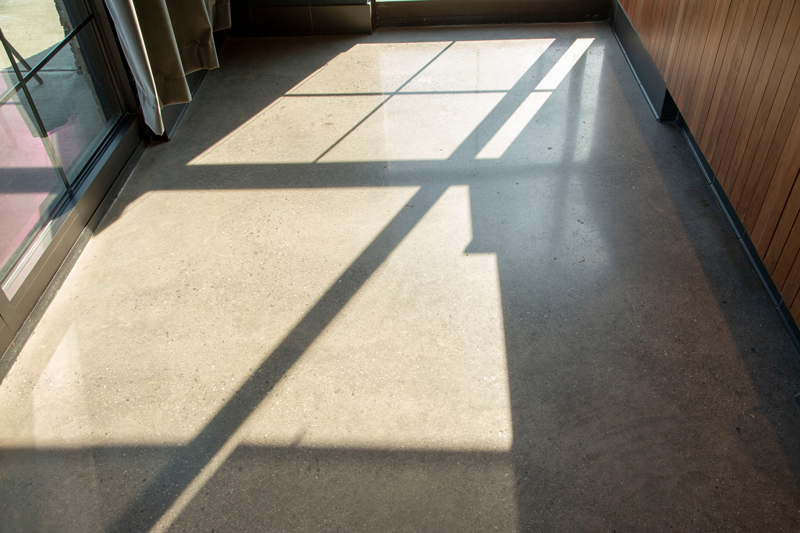
Summer humidity and heat affect commercial floors by changing indoor moisture levels, weakening protective finishes, increasing tracked-in dirt, and stressing flooring materials like solid wood, engineered wood, carpet, vinyl, rubber, tile, and laminate. In the DC metro area, the issue is not only hot weather. It is the mix of humid weather, air conditioning, direct sunlight, summer storms, foot traffic, and excess moisture that creates bigger floor maintenance problems.
For commercial buildings, these issues show up in practical ways. Floors may look dull sooner. Carpet may hold smells. VCT and LVT may collect sticky soil. Wood may swell at the edges. Tile grout may darken. Rubber flooring may feel tacky in gyms or healthcare spaces. Regular cleaning helps, but summer floor care usually needs a smarter maintenance schedule than the rest of the year.
The EPA recommends keeping indoor humidity below 60%, ideally between 30% and 50%, because moisture control is a key part of reducing mold and moisture-related building problems. Scher Flooring Services also works across Maryland, Virginia, and Washington DC with commercial carpet cleaning, VCT stripping and waxing, rubber floor maintenance, wood floor treatments, and other hard surface cleaning services, which fits the types of summer flooring problems many local businesses face.
Why Summer Humidity and Heat Affect Commercial Floors in DC-Area Buildings
DC metro summers can be hard on commercial floors because the outside air carries heat, humidity, moisture, dust, pollen, and storm debris into indoor spaces. Once that air meets air conditioning, door traffic, damp shoes, cold surfaces, and changing temperature zones, the floor becomes one of the first areas to show the impact.
For businesses in Washington DC, Maryland, and Northern Virginia, flooring is not only a design feature. It affects safety, cleanliness, customer experience, and the life of the building materials. A lobby that looks dull in July may not have a bad floor. It may have a floor finish struggling against humidity, dirt, and constant use.
Hot, Humid Weather Creates Moisture Stress Inside Commercial Spaces
Warm air holds more moisture than cool air. During the summer months, outdoor air often enters through doors, loading docks, open windows, kitchens, maintenance rooms, and service entrances. When that humid air enters a cooler building, moisture can collect on surfaces or get absorbed by materials.
This can affect floors in several ways:
- Wood can swell or cup when moisture levels rise.
- Carpet can trap humidity, dust, and smells.
- Vinyl and laminate floors may show edge problems if moisture reaches seams.
- Tile and grout can hold moisture in porous lines.
- Rubber flooring can feel sticky when sweat, humidity, and cleaning residue mix.
The problem is often gradual. A business owner may not notice damage on day one. But after weeks of high humidity, more dirt, spills, and heavy traffic, the surface starts to change.
Why DC Metro Businesses See More Floor Issues During Summer
The DC metro area has a mix of office buildings, schools, government facilities, restaurants, hotels, healthcare properties, gyms, and retail spaces. Many of these buildings see steady daily traffic, and summer adds a few extra stress points.
Customers track in moisture after rain. Employees bring in sand, dust, and debris from parking lots. Air conditioner systems run for long hours. Large glass windows expose floors to direct sunlight. Entry mats get saturated faster. In older buildings, a crawl space or crawlspace area may also contribute to moisture problems if insulation and ventilation are not controlled well.
The National Weather Service tracks Washington DC climate data for June, July, and August at Washington National Airport, which gives local property teams a useful reminder that summer heat and precipitation patterns are part of the operating environment.
How HVAC Use, Foot Traffic, and Stormy Weather Add to Floor Wear
Air conditioning helps control comfort, but it does not solve every flooring issue by itself. If the air conditioner cools the space without properly reducing relative humidity, the building may feel cool but still damp. That can leave floors vulnerable to moisture, mildew smells, and surface wear.
Foot traffic then makes the issue worse. Dirt acts like fine sandpaper. Moisture softens soil and helps it stick. Spills spread faster. Protective finishes can wear unevenly. This is why commercial floors often need more attention in summer than they do in winter.
To understand how to prevent these problems, the next step is knowing how humidity levels change the way floors behave indoors.
How Humidity Levels Change the Way Commercial Floors Perform
Humidity levels affect commercial floors because many flooring materials respond to moisture in the air. Some surfaces absorb it. Some trap it. Some allow it to reach seams, glue lines, or the subfloor. Even surfaces that look stable can react when moisture levels stay high for several days or weeks.
Commercial property teams should think of humidity as part of floor maintenance, not just part of indoor comfort. The same air that feels sticky to customers can also change how flooring materials expand, contract, dry, smell, and wear.
What Humidity Levels Are Safe for Most Commercial Interiors?
A good general target for indoor relative humidity is below 60%, with 30% to 50% being ideal when possible. EPA guidance also notes that condensation on windows, walls, or pipes can be a sign of high humidity and should be handled quickly.
For commercial floors, stable moisture levels are important because sudden changes can stress flooring materials. A building that is very humid during the day and very cold at night may create uneven movement in wood, vinyl planks, laminate edges, and adhesive-backed materials.
A simple humidity meter can help facility managers track changes in:
- Lobbies
- Hallways
- Conference rooms
- Gyms
- Kitchens
- Restrooms
- Ground-level rooms
- Rooms near exterior walls
- Spaces over a crawl space
- Areas with poor insulation or weak airflow
Why High Indoor Moisture Can Lead to Odors, Mold Risk, and Surface Damage
High humidity does not always create visible water on the floor. Sometimes the problem is hidden. Moisture may sit inside carpet fibers, under mats, near perimeter edges, along wall lines, or below furniture. Over time, this can create smells, mildew risk, and mold concerns where organic dust and moisture collect.
The EPA explains that mold spores will not grow without water or moisture, and that indoor mold growth can be prevented or controlled by controlling moisture indoors. For commercial floors, that means cleaning alone is not enough if the underlying moisture source remains.
Common warning signs include:
- Musty smells near carpeted rooms
- Damp rugs or mats that never fully dry
- Darkened grout lines
- Peeling or lifted floor edges
- Sticky film on VCT or LVT
- Cupping in hardwood or solid wood floors
- Soft or uneven spots near entry areas
- Condensation around windows or exterior doors
How Entryways, Lobbies, Restaurants, Offices, and Medical Spaces Are Affected Differently
Not every commercial space has the same moisture load. A restaurant floor deals with grease, spills, mopping, kitchen heat, and customer traffic. A medical office may need cleaner surfaces, odor control, and careful scheduling. A gym may deal with sweat, rubber flooring, and frequent wet cleaning. A lobby may face direct sunlight, rainwater, and constant traffic.
Here is a simple way to understand summer risk by area:
| Commercial Area | Summer Floor Risk | What to Watch For |
|---|---|---|
| Lobby and entrance | Rainwater, dust, direct sunlight | Dull finish, slippery spots, mat stains |
| Restaurant and bar | Spills, humidity, grease, mopping | Sticky tile, odors, dark grout |
| Office space | AC cycles, carpet soil, rolling chairs | Carpet smells, worn traffic lanes |
| Healthcare space | Cleaning frequency, moisture control | Residue, slippery film, edge wear |
| Gym or fitness center | Sweat, rubber flooring, damp air | Tacky surface, odors, buildup |
| School or university | Heavy summer use, sand, dust | Scuffs, finish wear, carpet soil |
Once humidity levels are understood, it becomes easier to see why different floor materials react in different ways.
How Summer Heat Affects Different Commercial Flooring Materials
Summer heat does not affect every floor the same way. The material, installation method, subfloor, finish, traffic level, cleaning process, and indoor climate all matter. A floor that performs well in one building may struggle in another if humidity and air flow are not managed.
That is why summer floor care should be surface-specific. VCT, LVT, carpet, tile, rubber, solid wood, engineered wood, laminate, and hardwood all need different maintenance decisions.
VCT and LVT Floors Can Lose Shine Faster in Heat and Moisture
VCT and LVT are common in commercial settings because they can handle traffic when maintained correctly. But summer heat and humidity can make soil stick to the surface faster. When moisture, dirt, and cleaning residue mix, the floor can look dull even after mopping.
VCT is especially dependent on protective finishes. If the finish is worn, moisture and dirt can reach the surface more easily. Scher Flooring Services notes that VCT periodically requires restorative cleaning such as deep scrubbing, stripping, and refinishing to renew shine and protect the floor surface.
LVT is often described as lower maintenance than VCT, but that does not mean it needs no maintenance. Summer soil can still collect in texture, seams, and edges. Commercial-grade cleaning helps remove buildup before it becomes a long-term appearance problem.
Carpet Can Trap Humidity, Odors, Allergens, and Summer Soil
Carpet can be comfortable and professional-looking, but in summer it can also hold moisture, dust, pollen, and smells. This is common in offices, hotels, churches, community centers, schools, and property management spaces.
When humid air enters a carpeted room, the fibers can hold moisture longer. Add dirt from shoes, spills from customers, and air conditioning that runs all day, and the carpet may start to smell musty. Regular vacuuming helps with dry soil, but it may not remove embedded moisture-related buildup.
Commercial carpet cleaning during summer can help with:
- Odor control
- Traffic lane soil
- Spills and stains
- Dust and pollen
- Moisture-related residue
- Better appearance for customers and employees
Scher lists commercial carpet cleaning, restoration, and maintenance services as part of its full suite of floor care offerings.
Tile and Grout Can Hold Moisture in Porous Lines
Tile often looks durable, but grout can hold moisture, dirt, spills, and cleaning residue. In restaurants, restrooms, kitchens, medical buildings, and entry areas, summer humidity can make grout lines darken faster.
Mopping may clean the tile surface, but it can also push dirty water into grout lines if the process is not controlled. Over time, the floor may look dirty even when it is cleaned every day. That usually means buildup has moved below the surface level of routine cleaning.
Professional ceramic, stone, and tile floor cleaning is useful when grout needs deeper removal of buildup and the floor needs a cleaner, more consistent appearance.
Rubber Floors Can Collect Sweat, Moisture, and Sticky Residue
Rubber floors are common in gyms, healthcare buildings, schools, and activity spaces. They are durable, but they still need routine maintenance. Heat, sweat, high humidity, and daily mopping can create a sticky or tacky feel if residue stays on the surface.
Scher notes that in-house staff can wet mop rubber floors for daily cleaning, but this is only effective on a basic level, and combining in-house cleaning with a restorative program can increase the life expectancy of rubber floors.
This matters in summer because rubber flooring often gets heavier use when people are more active, sweating more, and bringing in more moisture from outside.
Wood flooring deserves its own section because moisture movement can be more visible and more expensive to correct.
What Happens to Solid Wood Floors During DC’s Humid Summer Months
Solid wood floors are sensitive to moisture because wood naturally expands and contracts as humidity changes. In a commercial building, that movement can show up faster in high-traffic areas, sun-exposed rooms, rooms with uneven air conditioning, or spaces where the subfloor holds moisture.
Engineered wood is usually more dimensionally stable than solid wood, but it can still react to high humidity, cleaning mistakes, and moisture near seams or edges. The goal is not to panic over every seasonal change. The goal is to keep the indoor climate, cleaning process, and protective finish stable enough to avoid permanent damage.
Why Solid Wood Expands When Indoor Moisture Rises
Wood absorbs and releases moisture based on the air around it. When humidity levels rise, solid wood can swell. When the air becomes dry again, it can shrink. A small amount of seasonal movement is normal, but too much movement can create cupping, gapping, crowning, or lifted edges.
In commercial buildings, the risk increases when:
- Air conditioning is inconsistent
- Exterior doors open all day
- Windows allow direct sunlight
- Wet mopping uses too much water
- Spills are not cleaned quickly
- The subfloor has moisture problems
- Rugs trap dampness against the floor
- Humidity rises in rooms near a crawl space
Solid wood is beautiful, but it needs careful summer maintenance in commercial spaces.
Common Signs of Summer Damage on Wood Floors
A wood floor often gives warning signs before major damage appears. Facility teams should look for these issues during summer inspections:
- Cupping, where plank edges rise higher than the center
- Crowning, where the center rises higher than the edges
- Gaps that change from room to room
- Finish turning cloudy or uneven
- Boards that feel loose or hollow
- Dark areas near windows, doors, or rugs
- Raised edges around spills or mopping paths
- Scratches where dirt and debris have worn down the finish
Direct sunlight can make these problems more noticeable because heat and UV exposure may fade the finish while humidity affects the wood below.
When Wood Floor Cleaning and Maintenance Should Be Handled Professionally
Wood floors should not be treated like tile or vinyl. Too much water, harsh chemicals, aggressive pads, or the wrong cleaning product can damage the finish and create more moisture problems.
Professional maintenance is useful when a commercial wood floor has:
- Dull or worn protective finishes
- Uneven traffic lanes
- Moisture-related discoloration
- Sticky cleaning residue
- Surface scratches from sand and dirt
- Areas exposed to strong sunlight
- Seasonal cupping or swelling
Scher includes wood floor treatments and natural oil finished wood flooring services within its commercial floor care offering, including support for engineered wood flooring.
Wood is only one part of the summer problem. Direct sunlight and heat exposure can affect almost every flooring material in a commercial space.
How Direct Sunlight and Heat Exposure Damage Commercial Floors
Direct sunlight can create uneven wear because it heats certain floor areas more than others. A floor near a glass entrance, lobby window, storefront display, restaurant window wall, or office conference room may age differently from the shaded parts of the same space.
Heat exposure can dry out some surfaces, soften residue, fade colors, and weaken finishes over time. When sunlight combines with high humidity, the floor may deal with heat from above and moisture from the air at the same time.
Direct Sunlight Can Fade, Dry Out, or Discolor Flooring Surfaces
Sun-exposed flooring can fade or discolor faster than flooring in shaded rooms. This is common with wood, laminate, vinyl, carpet, and some resilient materials. The damage may not be obvious at first because it happens gradually.
Common sunlight-related signs include:
- Faded carpet near windows
- Yellowing or color shift in vinyl
- Dry-looking wood near glass doors
- Uneven shine on VCT
- Light and dark patches under rugs or furniture
- Finish wear in sun-exposed traffic lanes
Curtains, blinds, shades, rugs, and window films can reduce exposure, but they need to be used carefully. Rugs can protect against sunlight, but they can also trap moisture if they are placed in damp areas.
South-Facing Windows, Glass Doors, and Open Lobby Areas Need Extra Attention
South-facing windows and glass doors often receive stronger sun exposure. In summer, these areas may also see the most customer traffic. That combination creates a high-risk zone.
For DC-area businesses, pay close attention to:
- Storefront entrances
- Office lobbies
- Hotel reception areas
- Restaurant dining rooms
- Medical waiting rooms
- School corridors
- Gym windows and activity rooms
- Retail display areas
If the floor near the window looks different from the rest of the room, the issue may be heat, UV exposure, soil, finish wear, or all of them together.
Why Heat and UV Exposure Can Make Floor Finish Wear Unevenly
Protective finishes are designed to protect the floor surface, but they are not permanent. Heat, sunlight, moisture, dirt, and cleaning chemicals all affect how long they last. In summer, the finish near doors and windows may wear faster because that area gets more exposure.
This is why the best maintenance plans are not based only on square footage. They also consider traffic patterns, sun exposure, humidity, business type, and cleaning frequency.
When sunlight and heat begin to change the floor surface, the next issue is recognizing the warning signs before repairs become more expensive.
Summer Floor Problems Business Owners Should Watch For
Summer floor problems usually start small. A sticky lobby, a musty carpet smell, a dull hallway, or a few raised plank edges may not feel urgent. But these signs often point to moisture, heat, dirt, or finish failure.
Commercial floor inspections during summer should focus on high-traffic areas first. Entrances, hallways, restrooms, kitchens, gyms, elevators, and waiting rooms tend to show problems early.
Cupping, Buckling, Gapping, and Warping on Wood Floors
Wood movement is one of the most visible signs of summer moisture stress. Cupping means the plank edges rise. Buckling means the floor lifts away from the subfloor. Gapping may appear when indoor conditions swing from humid to dry. Warping can happen when moisture exposure is more severe.
These issues may be linked to:
- High indoor relative humidity
- Water tracked in from storms
- Over-wet mopping
- HVAC imbalance
- Moisture under the subfloor
- Poor air movement
- Exterior wall or perimeter moisture
- Direct sunlight heating one area repeatedly
A professional should evaluate wood floor problems early because sanding or refinishing without fixing moisture can cause the issue to return.
Sticky Film, Dull Finish, and Scuffing on VCT and LVT
A sticky or dull floor often points to buildup. Summer humidity can make soil cling to surfaces, and frequent mopping can leave residue if dirty water, too much product, or the wrong chemical is used.
VCT may need deep scrubbing, stripping, and waxing when the finish is worn. LVT may need restorative cleaning when texture and seams collect soil. Scher’s VCT and LVT page notes that even LVT, often viewed as “maintenance free,” still needs restorative cleaning services to protect the investment over time.
Musty Smells and Moisture Retention in Commercial Carpets
Musty carpet smells should not be ignored. They often mean moisture is staying in the fibers, pad, or surrounding air longer than it should. Carpet near entrances, under desks, near exterior walls, and in rooms with poor air flow can be more sensitive.
Routine vacuuming removes dry dirt and dust, but summer carpet care may also require extraction, spot treatment, and better drying control. The goal is to remove soil while avoiding excess moisture that stays trapped.
Slippery Spots Near Entrances, Kitchens, Restrooms, and Cooling Areas
Summer moisture can create slip concerns. Rainwater, condensation, spilled drinks, wet shoes, kitchen residue, and cleaning product buildup can all make a floor slick.
Watch for slippery spots near:
- Main entrances
- Elevators
- Restrooms
- Break rooms
- Kitchens
- Ice machines
- Water fountains
- Refrigeration areas
- Cooling equipment
- Gym locker rooms
Safety is one of the main reasons summer cleaning cannot be treated as a cosmetic task only. Regular cleaning plays a direct role in reducing floor hazards and protecting the surface.
Why Regular Cleaning Matters More During Summer
Regular cleaning matters more during summer because floors collect more moisture, more dirt, more dust, and more organic debris. The longer that buildup stays on the surface, the more it can wear down finishes, create odors, and make floors look older than they are.
A summer cleaning plan should not simply mean “mop more.” It should match the floor material, traffic level, business type, and moisture risk.
Regular Cleaning Removes Moisture, Salt, Dust, Pollen, and Outdoor Soil
During DC summers, outdoor soil gets carried inside all day. Sand, pollen, dust, grass, asphalt residue, and storm debris can settle on floors and act like abrasive grit. On carpet, that debris sinks into fibers. On hard floors, it scratches the surface and wears down finish.
A practical summer cleaning routine should include:
- Frequent vacuuming or dust mopping
- Cleaning entry mats before they become saturated
- Quick spill cleanup
- Proper wet floor signage
- Neutral cleaners where appropriate
- Controlled water use during mopping
- Scheduled deep cleaning for high-traffic surfaces
This type of maintenance helps protect the floor instead of just making it look clean for a few hours.
Why Daily Janitorial Cleaning Is Not the Same as Commercial Floor Maintenance
Daily janitorial cleaning is important, but it usually focuses on visible cleanliness. Commercial floor maintenance goes deeper. It looks at surface condition, finish wear, moisture patterns, traffic lanes, safety, and long-term floor life.
For example:
| Daily Janitorial Cleaning | Commercial Floor Maintenance |
|---|---|
| Removes visible dirt | Removes embedded buildup |
| Handles daily spills | Restores worn surfaces |
| Mops open areas | Deep cleans edges and traffic lanes |
| Uses routine supplies | Uses floor-specific equipment |
| Keeps space presentable | Extends floor life and appearance |
| Reacts to daily mess | Follows a planned schedule |
This distinction matters in summer because high humidity can make routine cleaning less effective if deeper buildup is already present.
How Professional Cleaning Helps Extend Floor Finish and Surface Life
Professional floor cleaning helps protect commercial floors by removing the materials that daily cleaning may leave behind. That includes embedded soil, residue, old finish, sticky buildup, dark grout, moisture-related carpet odor, and dull traffic lanes.
Scher Flooring Services offers custom maintenance plans and a full suite of services for commercial floors, including scheduled maintenance, VCT and LVT cleaning, ceramic and stone floor cleaning, wood flooring care, rubber flooring, and commercial carpet cleaning.
Once regular cleaning is handled correctly, the next step is building a practical summer maintenance plan for each facility.
Summer Commercial Floor Maintenance Tips for DC Metro Businesses
A good summer floor maintenance plan starts with moisture control and traffic control. The goal is to stop dirt and water at the entrance, keep indoor humidity levels stable, clean with the right method, and schedule deeper service before damage is obvious.
These tips apply to many commercial spaces, but the exact schedule should depend on the floor type, traffic, and business use.
Use Walk-Off Mats at Entrances and High-Traffic Areas
Walk-off mats are one of the simplest ways to protect floors in summer. They help capture water, dirt, sand, and debris before it spreads across the building.
For best results:
- Use mats at every main entrance.
- Clean mats often so they do not become moisture traps.
- Replace mats that curl at the edges.
- Avoid placing damp rugs on wood for long periods.
- Use longer mat zones in rainy weather.
- Check the floor under mats for discoloration or moisture.
Mats protect floors only when they are maintained. A dirty, wet mat can become part of the problem.
Clean Spills, Condensation, and Damp Spots Quickly
Moisture should never be allowed to sit. Spills, condensation, wet footprints, and damp areas near cooling equipment should be cleaned quickly. The EPA recommends drying water-damaged areas and items within 24 to 48 hours to help prevent mold growth.
In commercial spaces, a quick response can help prevent:
- Staining
- Odors
- Slippery spots
- Edge lifting
- Grout discoloration
- Wood swelling
- Carpet moisture retention
- Damage to adhesives or glue lines
Monitor Indoor Humidity Levels With HVAC and Dehumidification Support
Air conditioning helps, but facility teams should still monitor humidity. If a room feels cool but damp, the AC may not be removing enough moisture from the air. A dehumidifier may help in certain rooms, especially storage areas, lower-level spaces, older buildings, or rooms over a crawl space.
It is also worth checking:
- HVAC schedule settings
- Airflow in closed rooms
- Door gaps
- Window condensation
- Insulation near exterior walls
- Damp perimeter edges
- Musty smells after weekends
- Rooms that feel humid even when cool
Floors perform better when the building climate is stable.
Schedule Deep Cleaning Before Damage Becomes Visible
Waiting until a floor looks bad usually costs more. Summer is a smart time to schedule inspections and deep cleaning because flooring stress is higher.
A commercial summer schedule may include:
| Floor Type | Summer Maintenance Priority |
|---|---|
| VCT | Deep scrub, strip and wax when finish is worn |
| LVT | Remove buildup from texture, seams, and traffic lanes |
| Carpet | Extract soil, odors, and moisture-related residue |
| Tile and grout | Remove dark buildup from grout lines |
| Rubber | Remove sticky residue and restore surface feel |
| Wood | Clean carefully and protect finish from moisture and wear |
With those basics in place, the maintenance plan can be adjusted by business type.
Recommended Summer Floor Care by Business Type
Different commercial spaces face different summer floor problems. A restaurant does not need the same schedule as an office. A gym does not wear like a retail store. A healthcare building has different cleanliness expectations than a school or church.
The best commercial floor care plan is built around how the space is actually used.
Office Buildings and Corporate Spaces
Office floors may look low-risk compared with restaurants or gyms, but summer still affects them. Carpet traps dust and moisture. LVT and VCT collect chair marks and traffic lane soil. Lobbies face direct sunlight and wet shoes.
Recommended focus:
- Vacuum carpet more often during humid weather.
- Clean entry mats before they hold moisture.
- Watch for coffee spills and tracked-in rain.
- Check sun-exposed floors near glass.
- Schedule carpet extraction before odors develop.
- Maintain VCT or LVT finish in elevator corridors and lobbies.
Restaurants, Cafes, and Food Service Areas
Restaurants face one of the toughest summer floor environments. Heat from kitchens, cold air from dining rooms, grease, spills, humidity, and frequent mopping all meet on the floor.
Recommended focus:
- Clean kitchen and dining surfaces differently.
- Remove grease before it spreads.
- Avoid over-wet mopping.
- Watch grout lines and slip-prone areas.
- Deep clean tile and hard surfaces regularly.
- Inspect mats and flooring near entrances and restrooms.
A floor that feels sticky after cleaning usually needs more than another mop pass.
Healthcare and Medical Office Buildings
Healthcare spaces need clean, safe, professional-looking floors. Summer moisture can create odors, residue, and dullness if cleaning is not controlled properly.
Recommended focus:
- Keep surfaces dry and safe for patients.
- Watch for residue from frequent cleaning.
- Inspect edges, corners, and waiting rooms.
- Maintain rubber, VCT, LVT, and tile on a schedule.
- Address slippery areas quickly.
- Plan work during low-disruption hours.
Scher’s service pages list healthcare and assisted living among the industries they serve, along with schools, hotels, government buildings, fitness centers, and other commercial spaces.
Retail Stores, Schools, Gyms, and Hospitality Properties
Retail stores need clean floors for customer confidence. Schools need durability and summer readiness before fall traffic returns. Gyms need odor and residue control. Hotels need consistent appearance from lobby to hallway to guest areas.
Recommended focus:
- Retail: protect entryways and display areas from sunlight and tracked-in dirt.
- Schools: deep clean before the next high-traffic season.
- Gyms: maintain rubber floors and remove sweat-related buildup.
- Hotels: keep carpets, tile, and lobby floors fresh during peak guest traffic.
- Hospitality: inspect high-use walkways and food service areas.
Once the right business-type plan is clear, the next question is timing.
When to Schedule Professional Commercial Floor Cleaning in Summer
Professional commercial floor cleaning should be scheduled before flooring problems become obvious to customers. Summer is a good time to inspect surfaces because heat, humidity, rain, and traffic reveal weak points in the maintenance routine.
The right timing depends on building use, but many businesses benefit from scheduled maintenance before peak traffic, after storm-heavy periods, and whenever floors look dull, sticky, slippery, or uneven.
Before Peak Foot Traffic or Seasonal Events
If your business expects summer events, conferences, camps, customers, tenants, patients, or guests, schedule cleaning before traffic increases. This helps the floor start the season with a clean surface and stronger protection.
Good timing includes:
- Before school programs
- Before summer retail promotions
- Before hotel peak occupancy
- Before restaurant busy periods
- Before office reopening or tenant tours
- Before community events
A clean floor also makes daily maintenance easier because there is less old buildup for new dirt to stick to.
After Heavy Rain, Storms, or Moisture Intrusion
Heavy summer rain can push moisture into commercial spaces quickly. Even if the floor dries on the surface, moisture may stay in carpet, mats, grout, baseboards, edges, or subfloor areas.
Schedule a professional inspection or cleaning if you notice:
- Musty smells
- Dark carpet patches
- Damp mats
- Swollen wood
- Slippery tile
- Lifted vinyl edges
- Stained grout
- Moisture near perimeter walls
The longer moisture sits, the harder it becomes to control odor, staining, and damage.
When Floors Look Dull, Sticky, Slippery, or Uneven
Dullness, stickiness, and slippery spots are not just appearance problems. They can point to finish wear, residue, embedded soil, or moisture imbalance.
A commercial floor cleaning provider can help identify whether the floor needs routine cleaning, restorative cleaning, stripping and waxing, carpet extraction, rubber floor care, tile and grout cleaning, or wood floor treatment.
This is where Scher Flooring Services fits naturally into a summer maintenance plan.
How Scher Flooring Services Helps Protect Commercial Floors in Summer
Scher Flooring Services helps commercial properties protect their floors through cleaning, restoration, and maintenance programs built around the flooring type and facility needs. Their services cover commercial carpet, VCT and LVT, tile and stone, rubber flooring, wood floor treatments, and scheduled maintenance plans across Maryland, Virginia, and Washington DC.
For summer humidity and heat, that range matters because most commercial buildings have more than one flooring surface. A lobby may have VCT. Offices may have carpet. A gym may have rubber. A restaurant may have tile. A conference room may have wood or engineered wood.
Commercial Carpet Cleaning for Humidity, Odor, and Soil Control
Commercial carpet cleaning helps remove embedded dirt, dust, pollen, spills, and moisture-related residue. In summer, this can help reduce musty smells and improve the appearance of high-traffic lanes.
This is especially useful for:
- Office suites
- Hotels
- Property management buildings
- Churches and community centers
- Schools and universities
- Waiting rooms
- Conference areas
VCT and LVT Cleaning, Stripping, and Waxing for Summer Wear
VCT and LVT floors often need more than daily mopping. If the finish is dull, uneven, or worn through, dirt can stick faster and the floor can lose its professional appearance.
Scher’s VCT and LVT services include restorative cleaning, stripping, refinishing, and maintenance that help renew shine and protect the surface.
Wood, Rubber, Tile, and Hard Surface Floor Maintenance
Summer moisture affects hard surfaces in different ways. Wood needs careful cleaning and finish protection. Rubber may need deep scrubbing and residue removal. Tile and grout may need buildup removed from porous lines. Hard surfaces may need a maintenance schedule that accounts for traffic, humidity, and direct sunlight.
Scher’s service menu includes ceramic, stone, and tile floor cleaning; natural oil finished wood flooring; urethane finished wood floors; and commercial rubber flooring.
Custom Maintenance Plans for DC Metro Commercial Properties
The most effective summer floor care is planned, not reactive. Scher offers custom maintenance plans designed around the needs of each business and flooring type. That matters for commercial spaces because flooring wear depends on use, traffic, hours, cleaning routines, and indoor climate.
A good maintenance plan can help a business:
- Keep floors cleaner during humid weather
- Reduce slip concerns from moisture and residue
- Extend the life of protective finishes
- Maintain a better customer-facing appearance
- Plan work around business operations
- Avoid waiting until floors look worn or damaged
With a professional plan in place, summer flooring problems become easier to prevent instead of harder to repair.
Final Thoughts on Protecting Commercial Floors From Summer Heat and Humidity
Summer floor care in the DC metro area is really about control. Control the moisture. Control the dirt. Control the cleaning process. Control the indoor climate. Control the schedule before the floor shows signs of damage.
Humidity and heat do not always ruin commercial floors immediately. The damage usually builds slowly. A little moisture under a mat. A little more dirt in the lobby. A slightly dull finish in a hallway. A small musty smell in a carpeted room. A few wood planks that start to cup near the window. These signs are easy to ignore at first, but they often point to the same summer pattern.
Commercial floors last longer when they are cleaned based on the surface, the season, and the way the building is used. Daily cleaning keeps the space presentable, but commercial floor maintenance protects the investment. That difference matters most during hot, humid months when moisture, air conditioning, direct sunlight, and foot traffic are all working against the floor.
For DC-area offices, restaurants, medical buildings, schools, gyms, retail spaces, hotels, and property-managed facilities, summer is the right time to review the floor maintenance schedule. A planned approach can help reduce odor, dullness, slippery spots, finish wear, and moisture-related damage before the problems become expensive.
FAQs About Summer Heat, Humidity, and Commercial Floor Care
How does summer humidity affect commercial floors?
Summer humidity affects commercial floors by increasing indoor moisture levels. That moisture can cause wood to swell, carpet to hold odors, tile grout to darken, rubber floors to feel sticky, and VCT or LVT finishes to wear faster. The risk increases when humidity is combined with foot traffic, dirt, rainwater, spills, and poor air flow.
What humidity levels are best for commercial floors?
A good general target is to keep indoor relative humidity below 60%, ideally between 30% and 50% when possible. This range helps reduce moisture problems, mold risk, musty smells, and seasonal movement in moisture-sensitive materials.
Can direct sunlight damage commercial flooring?
Yes. Direct sunlight can fade carpet, dry out wood, discolor vinyl or laminate, and make protective finishes wear unevenly. Areas near south-facing windows, glass doors, storefronts, and open lobbies should be inspected often during summer.
How often should commercial floors be cleaned during summer?
The right schedule depends on the floor type and traffic level. High-traffic buildings may need daily dust removal, frequent mat cleaning, quick spill cleanup, and periodic deep cleaning. VCT may need semi-annual or annual strip and wax service depending on use, while carpet, tile, rubber, and wood should be cleaned based on soil, moisture, and appearance changes.
Are solid wood floors a good choice for humid commercial spaces?
Solid wood can work in some commercial spaces, but it needs stable humidity levels, proper installation, controlled cleaning, and strong maintenance. Engineered wood may be more stable in changing humidity, but it still needs protection from excess moisture, direct sunlight, and over-wet cleaning.
Stay Updated!
Sign up for email updates and stay in the loop about about our services and promotions.
We’re here to answer any questions you have about our commercial floor cleaning, restoration, and maintenance services.
Get a Free Quote Today!
Scher Flooring Services is a locally and family owned and operated commercial floor cleaning, maintenance and restoration company in business for over 25 years.
"*" indicates required fields