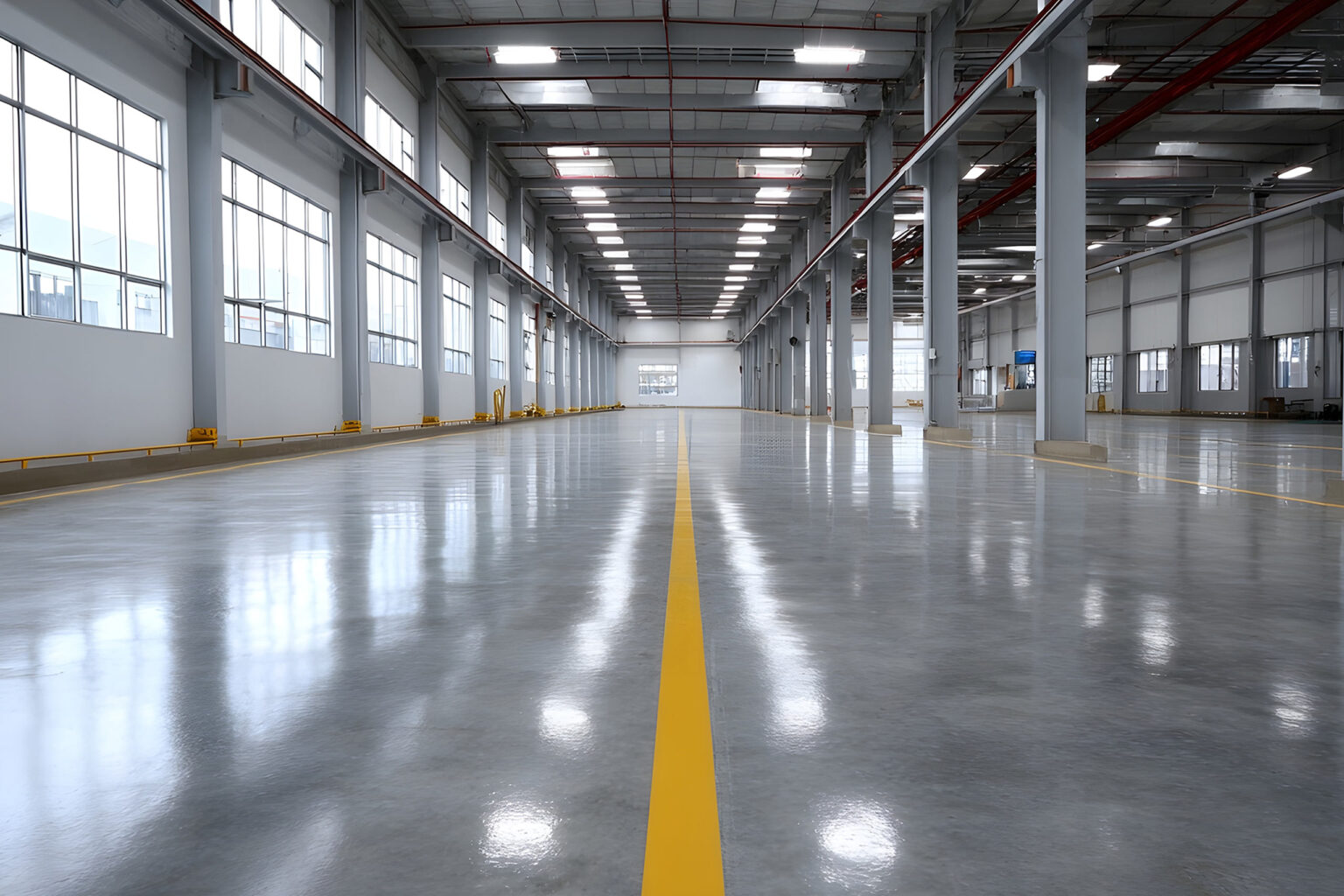
Warehouse and industrial floor cleaning is the process of removing dust, debris, stains, spills, and buildup from warehouse floors, industrial floors, distribution centers, and other high-use commercial spaces.
A clean warehouse floor supports workplace safety, equipment maintenance, daily operations, and productivity. In industrial environments, floor cleaning is not only about appearance. It helps reduce slip hazards, control dust, protect flooring materials, and create a safer space for employees, visitors, machines, and inventory.
Scher Flooring Services works with commercial and industrial facilities that need practical cleaning services, floor maintenance, and reliable cleaning methods for large areas. The right cleaning process depends on the floor type, traffic level, dust buildup, liquid spills, oil spills, and the kind of work happening inside the facility.
What Is Warehouse and Industrial Floor Cleaning in Industrial Cleaning Services?
Warehouse and industrial floor cleaning refers to the planned cleaning, sweeping, scrubbing, and maintenance of floors in industrial spaces such as warehouses, factories, manufacturing plants, storage facilities, and distribution centers.
In industrial cleaning services, floor care usually includes warehouse sweeping, warehouse floor scrubbing, industrial floor scrubbing, spot cleaning, spill response, dust control, and routine floor maintenance. These services are designed to keep clean floors in places where dirt, debris, forklifts, pallet jacks, heavy machines, and foot traffic are part of daily operations.
Unlike basic janitorial cleaning, industrial floor cleaning often requires stronger cleaning equipment, trained crews, floor scrubbers, floor sweepers, scrubbing machines, and the right cleaning solution for each surface.
Common areas that need warehouse and industrial floor cleaning include:
- Loading docks
- Storage aisles
- Production floors
- Packaging areas
- Distribution centers
- Walkways and high traffic areas
- Concrete floors
- Machine zones
- Shipping and receiving areas
The main goal is to remove dirt, reduce dust, prevent tough grime from building up, and keep the facility safer and more efficient.
Once the purpose of warehouse cleaning is clear, the next step is understanding why clean floors matter so much in industrial facilities.
Why Clean Floors Matter in Warehouses and Distribution Centers
Clean floors matter because they directly affect safety, productivity, equipment movement, inventory protection, and the overall condition of the facility.
In large warehouses and distribution centers, dust, debris, and liquid spills can quickly create problems. A dirty warehouse floor can increase slip hazards, slow down forklift traffic, damage equipment, and make the space look poorly managed. Dust buildup can also spread to inventory, machinery, shelves, and HVAC systems.
Clean warehouse floors help support:
- Safer walking and driving paths
- Better visibility of hazards
- Lower risk of slips and falls
- Cleaner inventory storage
- Easier equipment maintenance
- Better air quality
- More efficient daily operations
- A more professional facility appearance
For industrial sectors where production speed and safety matter, floor cleaning becomes part of operational control. Regular scrubbing and sweeping can reduce slip hazards, remove dirt before it spreads, and keep dust free zones easier to maintain.
Here is how clean floors support core facility needs:
| Facility Need | How Floor Cleaning Helps |
| Workplace safety | Reduces slip hazards, debris, and liquid spills |
| Productivity | Keeps aisles, docks, and work zones easier to move through |
| Equipment maintenance | Reduces dust and dirt that can affect machines and wheels |
| Inventory protection | Helps control dust around stored products |
| Facility image | Creates a cleaner, more professional space |
| Long-term maintenance | Prevents tough stains and grime from becoming permanent |
Clean floors are the result of the right methods, not random cleaning. The next section explains the most effective warehouse and industrial floor cleaning methods.
What Are the Most Effective Warehouse and Industrial Floor Cleaning Methods?
The most effective warehouse and industrial floor cleaning methods are dry sweeping, dust control, floor scrubbing, auto-scrubbing, spot cleaning, vacuum cleaning, and deep cleaning.
Each method has a different role. Some methods remove loose dirt and debris. Others remove tough stains, oil spills, dirty water, and grime from the floor surface. In many industrial facilities, the best practice is to combine sweeping and scrubbing instead of relying on one cleaning method.
How Does Floor Sweeping Help Control Dust in Industrial Cleaning?
Floor sweeping removes loose dirt, dust, debris, packaging waste, and dry particles from the warehouse floor.
In industrial cleaning, sweeping is often the first step before scrubbing. If dry debris is not removed first, floor scrubbers may push dirt around or clog during the cleaning process. Floor sweepers are useful in large warehouses because they cover large areas faster than manual brooms.
Common sweeping options include:
- Manual sweeping for small spaces
- Walk behind models for medium spaces
- Ride-on floor sweepers for large warehouses
- Vacuum sweepers for dust control
A dry sweep is helpful for daily operations, especially in areas with dust buildup, cardboard debris, pallet chips, and tracked-in dirt. When done consistently, warehouse sweeping helps control dust and keeps the floor ready for deeper cleaning.
How Do Floor Scrubbers Improve Deep Floor Cleaning Results?
Floor scrubbers improve floor cleaning by applying a cleaning solution, scrubbing the surface, and recovering dirty water in one process.
Industrial floor scrubbers are commonly used on concrete, sealed floors, epoxy floors, and other durable flooring materials. They are more effective than mopping in large industrial spaces because they use mechanical scrubbing pressure to remove dirt, tough grime, and stains.
Floor scrubbers help with:
- Industrial floor scrubbing
- Warehouse floor scrubbing
- Removing tough stains
- Cleaning high traffic areas
- Reducing dirty water left behind
- Maximizing cleaning efficiency
Walk behind models work well for smaller or tighter areas. Ride-on scrubbers are better for large areas and long aisles. Some machines also have a scrubbing mode that can be adjusted based on the level of dirt.
What Is the Role of Wet Mopping in Industrial Floor Cleaning?
Wet mopping is used for smaller areas, edges, corners, offices near warehouses, restrooms, and spaces where machines cannot easily reach.
A mop and cleaning solution can help remove light dirt and small liquid spills, but wet mopping is not the best option for large industrial spaces. In a warehouse, mopping large areas can spread dirty water if the water is not changed often.
Wet mopping is best for:
- Spot cleaning
- Small spills
- Tight corners
- Areas around fixed equipment
- Light-duty floor cleaning
- Touch-up cleaning after machine scrubbing
For industrial floor cleaning, mopping should support the larger cleaning process instead of replacing professional scrubbing machines.
How Does Auto-Scrubbing Enhance Industrial Cleaning Services Efficiency?
Auto-scrubbing improves efficiency by combining water, cleaning solution, scrubbing, and water recovery in one pass.
This method is useful for warehouses, industrial plant cleaning, distribution centers, and industrial facilities where time matters. Auto-scrubbing machines allow cleaning crews to cover large areas faster while leaving less dirty water behind.
Auto-scrubbing supports:
- Faster cleaning
- Better consistency
- Cleaner floor surfaces
- Less downtime
- Reduced manual labor
- Better use of cleaning equipment
For facilities with high traffic areas, regular scrubbing with an auto-scrubber can help maintain clean warehouse floors throughout the week.
What Is High-Pressure Cleaning for Industrial Floors?
High-pressure cleaning uses pressurized water to remove heavy soil, grime, grease, and buildup from durable industrial floors.
This method is usually used when regular scrubbing is not enough. It can help with tough grime, oil spills, and heavy dirt in industrial environments. However, pressure cleaning must be used carefully because too much water or pressure may damage certain flooring materials or create safety problems if the area is not dried properly.
High-pressure cleaning may be useful for:
- Loading docks
- Exterior concrete pads
- Heavy soil zones
- Industrial plant cleaning areas
- Grease-prone sections
- Tough stains on durable surfaces
The floor type should always guide whether high-pressure cleaning is safe.
How Does Vacuum Cleaning Support Dust-Free Warehouse Floors?
Vacuum cleaning helps control dust by removing fine particles instead of pushing them into the air.
In warehouses, dust free conditions are important for air quality, inventory protection, and equipment maintenance. Industrial vacuums are especially useful in areas where fine dust collects around shelving, machines, edges, and production zones.
Vacuum cleaning supports:
- Dust control
- Cleaner air
- Reduced dust buildup
- Better equipment care
- More detailed cleaning near edges and corners
Sweeping, scrubbing, mopping, pressure cleaning, and vacuuming all work better when matched with the right cleaning equipment. That makes equipment selection the next major part of an effective floor care plan.
What Cleaning Equipment Is Used in Industrial Cleaning Services for Warehouses?
Industrial cleaning services use floor sweepers, floor scrubbers, vacuums, mops, pads, brushes, squeegees, and cleaning solution systems to clean warehouse and industrial floors.
The right equipment depends on floor type, facility size, soil level, traffic, and the type of debris. For example, a large distribution center may need ride-on floor scrubbers and sweepers, while a smaller industrial facility may need walk behind models and detailed spot cleaning tools.
What Types of Floor Sweepers Are Used in Large Industrial Spaces?
Floor sweepers remove dry debris, dust, dirt, and loose particles before wet cleaning begins.
Common types include:
- Manual sweepers for small areas
- Walk behind floor sweepers for medium spaces
- Ride-on floor sweepers for large warehouses
- Vacuum-assisted sweepers for dust control
- Industrial sweepers for heavy debris zones
For large warehouses, ride-on sweepers can maximize efficiency because they cover wide areas quickly. For smaller areas or aisles with tighter turns, walk behind models may be more practical.
What Types of Floor Scrubbers Are Best for Warehouse Floor Cleaning?
The best floor scrubbers for warehouse floor cleaning depend on space size, floor condition, and traffic level.
Common types include:
| Floor Scrubber Type | Best Use |
| Walk behind scrubbers | Medium spaces, aisles, tighter areas |
| Ride-on scrubbers | Large warehouses and distribution centers |
| Compact scrubbers | Corners, small rooms, narrow spaces |
| Heavy-duty scrubbers | Industrial floor scrubbing with tough grime |
| Cylindrical scrubbers | Floors with debris and textured surfaces |
Industrial floor scrubbers help remove dirt, cleaning solution residue, tough stains, and dirty water more efficiently than manual cleaning.
What Cleaning Solutions Are Used for Industrial Floor Cleaning?
The cleaning solution should match the floor type, soil type, and safety needs of the facility.
Common cleaning solutions include:
- Neutral floor cleaners for routine maintenance
- Degreasers for oil spills and greasy buildup
- Concrete cleaners for warehouse floor cleaning
- Heavy-duty cleaners for tough grime
- Low-foam cleaners for floor scrubbers
- Spot cleaning products for small spills and stains
Using the wrong cleaning solution can leave residue, make floors slippery, damage flooring materials, or reduce the performance of scrubbing machines. Scher Flooring Services evaluates the floor surface and cleaning need before selecting a solution.
How Do Advanced Cleaning Equipment Improve Cleaning Efficiency?
Advanced cleaning equipment improves efficiency by cleaning faster, using water more effectively, removing dirty water, and giving consistent results across large areas.
In industrial facilities, the goal is not only to clean the floor but to reduce disruption. The right equipment can help crews clean around daily operations, improve safety, and reduce downtime.
Advanced cleaning machines can help:
- Cover more square footage per hour
- Reduce manual labor
- Improve scrubbing consistency
- Recover dirty water faster
- Reduce slip hazards after cleaning
- Support scheduled floor maintenance
Good equipment matters, but even the best machines need a clear schedule. The next section explains how often warehouse and industrial floors should be cleaned.
How Often Should Warehouse and Industrial Floor Cleaning Be Performed?
Warehouse and industrial floor cleaning should be performed daily, weekly, monthly, and periodically based on traffic, dust, spills, and the type of work done in the facility.
There is no one-size-fits-all cleaning frequency. A high-traffic distribution center may need daily sweeping and regular scrubbing, while a lower-traffic storage facility may need less frequent deep cleaning. The best schedule is based on real facility conditions.
What Is the Ideal Daily Cleaning Frequency for Industrial Floors?
Daily cleaning should focus on removing dirt, debris, dust, and liquid spills from active work areas.
Daily cleaning may include:
- Dry sweep high traffic areas
- Remove dirt from walkways
- Clean liquid spills immediately
- Empty floor debris from loading zones
- Spot clean visible stains
- Check for oil spills
- Control dust near storage and equipment areas
Daily cleaning is especially important in industrial environments where forklifts, pallets, and workers move constantly.
What Weekly and Monthly Floor Cleaning Schedule Works Best?
A weekly and monthly schedule should combine sweeping, scrubbing, inspection, and deeper floor maintenance.
Here is a practical schedule:
| Frequency | Recommended Floor Cleaning Task |
| Daily | Sweep debris, clean spills, spot clean stains |
| Weekly | Machine scrub high traffic areas and main aisles |
| Biweekly | Scrub lower-traffic sections and storage areas |
| Monthly | Deep cleaning process for tough grime and buildup |
| Quarterly | Review floor condition, equipment needs, and maintenance plan |
Regular scrubbing helps prevent dirt from becoming embedded in the floor. Monthly deep cleaning can target tough stains, oil residue, and areas missed during routine cleaning.
How Does Foot Traffic Affect Cleaning Frequency in Distribution Centers?
Foot traffic and equipment traffic directly affect how often floors need to be cleaned.
Distribution centers often have forklifts, pallet jacks, staff movement, inventory movement, and frequent loading activity. These conditions create dirt, dust, tire marks, debris, and possible slip hazards.
Higher traffic usually means:
- More frequent sweeping
- More regular scrubbing
- Faster dust buildup
- More liquid spill risk
- More visible dirt in aisles
- Greater need for safety protocols
A facility with 24/7 operations may need cleaning in shifts, while a facility with standard business hours may clean before opening, after closing, or during planned downtime.
What Factors Determine Industrial Cleaning Frequency?
Industrial cleaning frequency depends on several conditions inside the facility.
Important factors include:
- Floor type
- Square footage
- Traffic volume
- Dust level
- Type of debris
- Number of employees
- Machinery use
- Spills or chemical exposure
- Weather and tracked-in dirt
- Safety requirements
- Industry standards
- Customer or visitor presence
A cleaning schedule should be reviewed often because facility needs change. Seasonal dirt, business growth, new machines, and changing workflows can all affect floor maintenance needs.
After frequency comes execution. The next section covers the best practices that make warehouse and industrial floor cleaning safer and more consistent.
What Are the Best Practices for Warehouse and Industrial Floor Cleaning?
The best practices for warehouse and industrial floor cleaning include removing dry debris first, choosing the right cleaning solution, using proper cleaning equipment, following safety protocols, and creating a routine schedule.
A strong cleaning process should be simple enough to follow and flexible enough to match the facility. For commercial and industrial spaces, consistency matters more than occasional deep cleaning.
How Do You Create a Dust-Free Cleaning Strategy for Warehouses?
A dust-free cleaning strategy starts with controlling dust at the source and removing dust before it spreads.
To control dust in warehouses:
- Sweep high traffic areas daily
- Use vacuum-assisted floor sweepers when possible
- Clean around docks and entry points
- Maintain doors, mats, and transition areas
- Use industrial vacuums for fine dust
- Schedule regular scrubbing
- Keep stored products and shelves clean
- Avoid dry sweeping methods that push dust into the air
Dust free does not mean a facility will never have dust. It means the facility has a system to reduce dust buildup and keep it from affecting safety, inventory, and equipment.
What Are the Best Practices for Using Floor Sweepers and Scrubbers?
Floor sweepers and floor scrubbers work best when used in the right order and maintained properly.
Best practices include:
- Sweep before scrubbing
- Use the correct brush or pad
- Match scrubbing mode to the soil level
- Use clean water and the right cleaning solution
- Empty and clean recovery tanks
- Inspect squeegees and brushes
- Avoid over-wetting the floor
- Train staff on safety protocols
- Keep machines maintained
The cleaning process should remove dirt and dirty water, not spread them around.
How Do You Choose the Right Cleaning Solution for Different Floor Types?
The right cleaning solution depends on the floor type and the problem being cleaned.
For example:
| Floor Type | Cleaning Need | Recommended Approach |
| Sealed concrete | Routine dirt and tire marks | Neutral or concrete-safe cleaner |
| Unsealed concrete | Dust and deep soil | Dust control and careful scrubbing |
| Epoxy floors | Dirt and residue | Non-damaging neutral cleaner |
| VCT floors | Maintenance and shine | Proper floor maintenance products |
| Rubber floors | Soil and marks | Manufacturer-safe cleaner |
| Grease-prone areas | Oil spills and grime | Degreaser with proper rinse process |
The wrong solution can create residue, dull the surface, or increase slip hazards. Professional cleaning services help match the solution to the surface and soil.
How Can Cleaning Services Maintain Consistent Clean Floors?
Cleaning services maintain clean floors by creating a repeatable plan, using trained crews, and tracking facility needs.
A consistent plan should include:
- Daily touchpoints
- Weekly scrubbing
- Monthly deep cleaning
- Spill response steps
- Equipment checks
- Safety protocols
- Inspection notes
- Adjustments for high traffic areas
Scher Flooring Services helps commercial facilities create cleaning and floor maintenance plans that match real-world operations instead of forcing a generic schedule.
What Safety Practices Should Be Followed During Industrial Cleaning?
Safety practices are essential during industrial cleaning because wet floors, machines, chemicals, and moving equipment can create hazards.
Important safety protocols include:
- Use wet floor signs
- Block off active cleaning zones
- Clean liquid spills quickly
- Train staff on equipment use
- Use the correct cleaning solution
- Avoid leaving dirty water behind
- Follow machine instructions
- Clean during low-traffic times when possible
- Wear proper footwear and protective gear
Good safety practices reduce risk while helping the facility stay productive.
Even with the right practices, warehouses still face recurring floor cleaning challenges. The next section explains the most common problems and how to solve them.
What Challenges Are Common in Industrial Floor Cleaning and How to Solve Them?
Common industrial floor cleaning challenges include heavy dirt, dust buildup, liquid spills, oil spills, tough stains, large areas, and cleaning around active daily operations.
These problems are common because industrial floors handle constant movement. The solution is to identify the source of the issue and use the right cleaning method.
How Do You Handle Heavy Dirt and Debris in Warehouses?
Heavy dirt and debris should be removed with warehouse sweeping before scrubbing.
If debris is left on the floor, scrubbing machines may not clean effectively. In busy warehouses, dirt may come from pallets, tires, packaging, outdoor tracking, loading docks, and production waste.
Best ways to handle heavy debris:
- Sweep before scrubbing
- Use floor sweepers for large areas
- Clean loading docks frequently
- Place mats near entry points
- Remove pallet debris quickly
- Schedule daily debris checks
How Do You Prevent Dust Accumulation in Distribution Centers?
Dust accumulation is prevented by combining source control, regular sweeping, vacuuming, and scheduled scrubbing.
Distribution centers often collect dust from cardboard, packaging, traffic, and outdoor air. The longer dust sits, the more it spreads.
Dust control steps include:
- Use vacuum-assisted sweeping
- Clean storage aisles regularly
- Scrub floors on a schedule
- Maintain entrance areas
- Clean around shelves and equipment
- Use industrial vacuums in detail zones
This helps keep the facility closer to dust free and protects inventory from dust exposure.
How Do You Maintain Large Floor Areas Efficiently?
Large floor areas are maintained efficiently by dividing the facility into cleaning zones and matching each zone with the right equipment.
For example:
- Main aisles may need ride-on scrubbers
- Narrow aisles may need walk behind models
- Docks may need heavy-duty scrubbing
- Offices may need mopping
- Corners may need spot cleaning
Zoning helps cleaning crews work faster without missing important areas. It also allows the facility to prioritize high traffic areas first.
Solving these challenges is easier when a professional cleaning partner understands industrial facilities. The next section explains how professional industrial cleaning services support warehouse performance.
How Do Professional Industrial Cleaning Services Improve Warehouse Efficiency?
Professional industrial cleaning services improve warehouse efficiency by using trained crews, proper cleaning equipment, safe cleaning methods, and planned floor maintenance schedules.
A clean facility helps employees move safely, keeps machines operating more smoothly, and reduces the time spent reacting to spills, dirt, and dust problems. Professional cleaning also helps businesses avoid inconsistent results that often happen when floor care is handled only when floors look dirty.
Scher Flooring Services brings practical commercial floor care experience to warehouses, industrial spaces, and facilities that need dependable cleaning services. The team can assess flooring materials, traffic patterns, dust problems, and cleaning needs before recommending a process.
Professional industrial cleaning services can help:
- Create a custom floor cleaning plan
- Use the right equipment for each floor type
- Select the correct cleaning solution
- Maintain clean floors consistently
- Support safety protocols
- Reduce slip hazards
- Improve facility appearance
- Protect flooring materials
- Handle large areas more efficiently
Professional cleaning is especially valuable for facilities where cleaning must happen around daily operations. A good cleaning partner understands how to minimize disruption while still delivering thorough floor cleaning.
The value of professional cleaning becomes even clearer when looking at the long-term benefits of regular warehouse and industrial floor cleaning.
What Are the Benefits of Regular Warehouse and Industrial Floor Cleaning?
Regular warehouse and industrial floor cleaning helps protect safety, productivity, equipment, flooring, and the overall facility environment.
When floors are cleaned consistently, dirt and grime do not have time to build up. Dust is easier to control, spills are handled faster, and the warehouse floor stays safer for workers and equipment.
Key benefits include:
- Cleaner and safer work areas
- Reduced slip hazards
- Better dust control
- Longer floor life
- Better equipment movement
- Improved employee productivity
- Fewer cleaning emergencies
- Better impression for visitors and inspectors
- Cleaner inventory storage areas
- More efficient daily operations
Regular cleaning also helps facility managers plan instead of react. Instead of waiting until the floor looks dirty or unsafe, scheduled cleaning keeps problems smaller and easier to manage.
This is why warehouse cleaning, industrial floor cleaning, and floor maintenance should be part of the facility’s operating plan, not an afterthought.
The final part of this guide answers common questions in a direct format for users comparing cleaning methods, frequency, and equipment.
Frequently Asked Questions About Warehouse and Industrial Floor Cleaning
Warehouse and industrial floor cleaning questions usually focus on method, frequency, dust control, cleaning equipment, and whether professional cleaning services are worth the investment.
The answers below are written to provide quick, clear guidance for facility managers, business owners, and operations teams.
What Is the Best Method for Warehouse Floor Cleaning?
The best method for warehouse floor cleaning is a combined process of sweeping first, then scrubbing with the right cleaning solution and floor scrubber.
Sweeping removes dry dirt, dust, and debris. Scrubbing removes stuck-on soil, stains, grime, and residue. For high traffic areas, regular scrubbing is usually needed to maintain clean warehouse floors.
How Do You Keep Warehouse Floors Dust Free?
Warehouse floors are kept dust free by controlling dust at the source, sweeping daily, using vacuum-assisted floor sweepers, and scheduling regular scrubbing.
Dust free maintenance also requires cleaning docks, entrances, shelves, corners, and equipment areas where dust buildup often starts.
What Cleaning Equipment Is Used in Industrial Cleaning?
Industrial cleaning uses floor sweepers, floor scrubbers, industrial vacuums, mops, pads, brushes, squeegees, and cleaning solution systems.
Large warehouses often use ride-on floor scrubbers and floor sweepers. Smaller facilities may use walk behind models and spot cleaning tools.
How Often Should Industrial Floors Be Cleaned?
Industrial floors should usually be swept daily, scrubbed weekly or biweekly, and deep cleaned monthly or quarterly depending on traffic, dust, spills, and facility use.
High traffic distribution centers may need more frequent cleaning than smaller industrial facilities.
Are Professional Cleaning Services Worth It for Warehouses?
Yes, professional cleaning services are worth it for warehouses because they improve safety, consistency, efficiency, and long-term floor maintenance.
Professional teams bring the right equipment, cleaning solution, safety protocols, and cleaning process for industrial spaces. This helps maintain clean floors without placing the full burden on internal staff.
Choosing the Right Warehouse and Industrial Floor Cleaning Strategy
Warehouse and industrial floor cleaning works best when it is planned around the facility, not treated as a one-time task.
A strong strategy includes daily sweeping, regular scrubbing, spill response, dust control, correct cleaning solutions, trained crews, and the right cleaning equipment. For large warehouses, distribution centers, and industrial facilities, clean floors support workplace safety, equipment maintenance, productivity, and a more professional operating environment.
The best cleaning plan depends on the warehouse floor, industrial floor type, traffic level, dust buildup, liquid spills, and how the space is used every day. Floor sweepers, floor scrubbers, industrial vacuums, and professional cleaning services all play a role in keeping floors cleaner, safer, and easier to maintain.
Scher Flooring Services helps commercial and industrial clients build practical floor cleaning and maintenance plans that match real facility needs. With the right methods, frequency, and best practices, industrial spaces can stay cleaner, safer, and better prepared for daily operations.
Stay Updated!
Sign up for email updates and stay in the loop about about our services and promotions.
We’re here to answer any questions you have about our commercial floor cleaning, restoration, and maintenance services.
Get a Free Quote Today!
Scher Flooring Services is a locally and family owned and operated commercial floor cleaning, maintenance and restoration company in business for over 25 years.
"*" indicates required fields