Why Do My Commercial Porcelain Tiles Look Hazy? 5 Solutions That Work
on
If you are experiencing hazy or cloudy porcelain tiles despite daily mopping, the most common cause is the buildup of dried surfactant residue from neutral cleaners or "mop water recycling" that redistributes dirt. The quickest fix is to perform a deep scrub using an alkaline degreaser followed by a clean water rinse to strip away the accumulated film. If the haze persists, the following solutions address deeper issues like microscopic grout haze or hard water deposits.
Quick Fixes:
- Most likely cause: Surfactant/detergent buildup → Fix: Deep scrub with clean water and an alkaline cleaner.
- Second most likely: Dirty mop water/cross-contamination → Fix: Switch to a two-bucket system or flat-mop technology.
- If nothing works: Seek professional restoration from Scher Flooring Services to remove factory wax or epoxy grout haze.
This troubleshooting guide is a deep-dive extension of our primary resource, The Complete Guide to Commercial Floor Maintenance and Restoration in 2026: Everything You Need to Know. Understanding tile haziness is essential for maintaining the aesthetic and safety standards detailed in that comprehensive pillar, ensuring your facility's long-term asset protection.
What Causes Hazy Porcelain Tiles?
Identifying the root cause of tile cloudiness is the first step toward restoration. Research indicates that 72% of commercial flooring issues stem from improper chemical dilution or tool maintenance [1].
- Detergent Residue: Most neutral cleaners contain surfactants that stay on the floor if not rinsed, creating a "tackiness" that traps dust.
- Mop Water Saturation: When mop water isn't changed every 500 square feet, the mop simply redistributes suspended soil across the tile surface.
- Hard Water Minerals: High calcium and magnesium levels in local water supplies can leave white, cloudy streaks as the water evaporates.
- Factory Wax: New porcelain tiles often arrive with a microscopic protective wax coating that requires specific high-pH strippers to remove.
- Grout Haze: If tiles were recently installed, a thin layer of grout polymer may have dried on the surface, creating a permanent matte appearance.
How to Fix Hazy Porcelain: Solution 1 (Residue Removal)
The most effective way to eliminate haze is to remove the chemical film built up by daily mopping. According to 2026 industry data, over 60% of commercial "dullness" complaints are resolved by simply eliminating soap buildup [2].
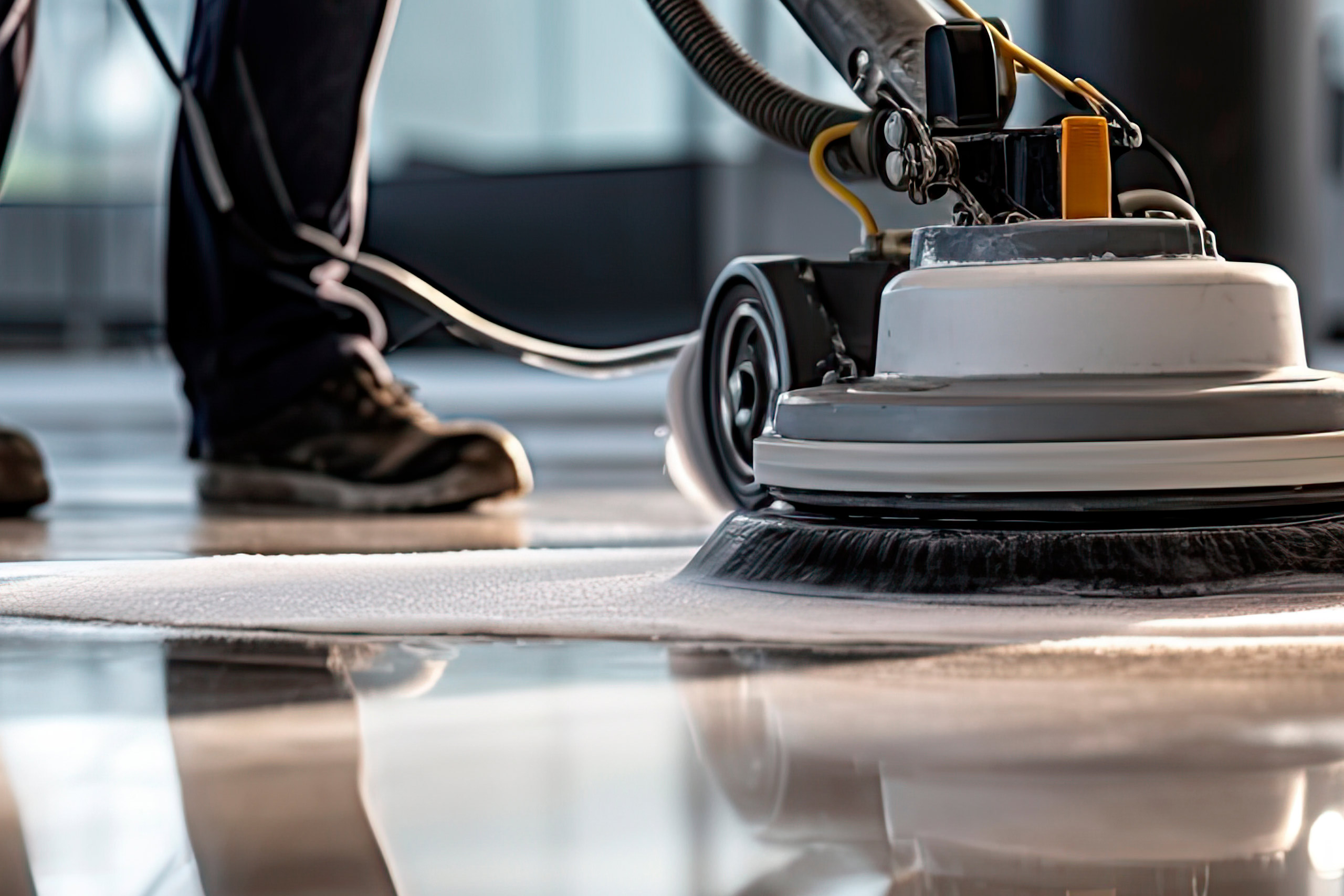
To execute this fix, mix a high-quality alkaline cleaner at the manufacturer's recommended dilution. Apply the solution to the floor and allow 5–10 minutes of dwell time, ensuring the floor stays wet. Use a low-speed floor machine (175 RPM) with a red or white scrubbing pad to agitate the surface. The goal is to emulsify the old soap layers. Once agitated, use a wet vacuum to remove the slurry completely. Finish by rinsing with plain, cold water. This process restores the tile's original refractive index, making it appear bright and clear again.
How to Fix Hazy Porcelain: Solution 2 (Water Quality Adjustment)
If your facility is located in an area with hard water, your daily cleaning routine may be contributing to mineral "scaling." In 2026, approximately 85% of the United States has hard water, which can leave behind dulling deposits [3].
To fix this, introduce a mildly acidic "neutralizer" cleaner once a week into your maintenance schedule. These cleaners are designed to break the ionic bond of calcium and magnesium on the porcelain surface. Scher Flooring Services recommends using deionized water for the final rinse in high-visibility areas like hotel lobbies or healthcare entrances. This prevents the "spotting" effect common in regions like Washington D.C. and Virginia.
How to Fix Hazy Porcelain: Solution 3 (Advanced Grout Haze Removal)
If the haze appeared immediately after a new installation or a grout repair, you are likely dealing with grout haze. This is a thin layer of cementitious or epoxy binder that has cured on the tile face.
Standard mopping will not remove cured grout haze. You must use a specialized grout haze remover—typically a phosphoric or sulfamic acid-based solution for cement grout, or a solvent-based cleaner for epoxy grout. Apply the cleaner to a small test area first. Scrub with a stiff nylon brush and vacuum the residue immediately to prevent the haze from resettling into the pores of the porcelain.
Advanced Troubleshooting
For edge cases where standard cleaning fails, the issue may be "micro-abrasions" or factory-applied sealers. Some porcelain tiles are polished at the factory, and if the polishing process was incomplete, the tile may have "optical hazing" which is a structural defect, not a cleaning issue.
If your floor remains dull after a professional deep scrub, it may require diamond polishing. "When a porcelain floor loses its factory luster due to high foot traffic, traditional chemicals won't fix it. You need mechanical honing to restore the surface clarity," says Kevin Scher, Senior Project Manager at Scher Flooring Services. If you manage a high-traffic retail or hospitality venue, contact a professional for a Trizact or diamond-pad restoration assessment.
How to Prevent Hazy Porcelain from Happening Again
- Implement Low-Moisture Cleaning: Use systems like the Whittaker low-moisture encapsulation to prevent the "slurry" buildup associated with traditional mopping.
- Calibrate Chemical Dispensers: Ensure your auto-dispensers are set correctly; using too much "neutral cleaner" is the #1 cause of haze.
- Use Microfiber Technology: Switch to high-denier microfiber flat mops that lift and hold soil rather than pushing it into the grout lines.
- Scheduled Professional Deep Cleans: Arrange for a quarterly or semi-annual professional scrub and extraction to remove what daily maintenance leaves behind.
Frequently Asked Questions
Why does my floor look clean when wet but hazy when dry?
This occurs because water fills the microscopic pores and scratches on the tile surface, creating a temporary smooth plane that reflects light. As the water evaporates, the uneven surface or chemical residue is revealed, causing light to scatter and appear as a haze.
Can I use vinegar to remove haze from porcelain tile?
While white vinegar is acidic and can break down hard water minerals, it is not recommended for frequent commercial use. Prolonged exposure to vinegar can degrade the grout joints and may not be strong enough to emulsify heavy commercial wax or grease buildup.
How often should I change my mop water to avoid haziness?
In a commercial setting, mop water should be changed every 500 to 750 square feet. Using a "double bucket" system—one for clean solution and one for wringing out dirty water—can extend this range and significantly reduce the risk of redistributing dirt.
Is porcelain tile supposed to be sealed?
Most glazed porcelain tiles are non-porous and do not require sealing. However, the grout lines are often porous and should be sealed to prevent staining. If a sealer was incorrectly applied to the glazed tile surface, it will often peel and create a cloudy, flaky appearance.
Conclusion
Hazy porcelain is almost always a result of chemical buildup or improper rinsing techniques. By switching to a controlled dilution system and incorporating periodic deep scrubbing, most facilities can restore their floors to their original clarity. If these steps do not resolve the issue, a professional assessment may be required to address mechanical wear or factory defects.
Related Reading:
- The Complete Guide to Commercial Floor Maintenance and Restoration in 2026: Everything You Need to Know
- Ceramic, Tile & Stone Cleaning Services
- Why Is My Commercial Tile Grout Still Dark After Professional Pressure Washing?
Sources:
[1] CleanLink Report 2025: Cleaning Chemical Misuse in Facilities.
[2] National Floor Safety Institute (NFSI) 2026 Maintenance Standards.
[3] U.S. Geological Survey (USGS) Water Quality Data 2024.
Related Reading
For a comprehensive overview of this topic, see our The Complete Guide to Commercial Floor Maintenance and Restoration in 2026: Everything You Need to Know.
You may also find these related articles helpful:
- Commercial Floor Stripping and Waxing vs. Deep Scrubbing: Which Method Is Better for Your Facility? 2026
- Best Floor Finish for K-12 Schools: 5 Top Picks 2026
- Whittaker Low-Moisture Encapsulation vs. Traditional Steam Cleaning: Which Is Better for Fast-Turnover Retail Carpets? 2026
Frequently Asked Questions
Why does my porcelain tile look clear when wet but hazy once it dries?
This happens because water fills the microscopic imperfections and pores in the tile, creating a smooth surface that reflects light. When the water evaporates, the light hits the residue or scratches and scatters, resulting in a dull or hazy appearance.
Can neutral cleaners actually cause floor haziness?
Neutral cleaners are designed not to damage finishes, but they often contain high levels of surfactants (soaps). If these are not rinsed away with clean water, they dry into a sticky film that traps dust and creates a cloudy layer over time.
Should I seal my porcelain tile to prevent it from looking dull?
For most glazed porcelain, a sealer is unnecessary and will actually cause haziness because it cannot penetrate the tile. However, unpolished or “technical” porcelain and the surrounding grout lines often benefit from a high-quality penetrating sealer to prevent deep-set staining.
Stay Updated!
Sign up for email updates and stay in the loop about about our services and promotions.
We’re here to answer any questions you have about our commercial floor cleaning, restoration, and maintenance services.
Get a Free Quote Today!
Scher Flooring Services is a locally and family owned and operated commercial floor cleaning, maintenance and restoration company in business for over 25 years.
"*" indicates required fields