

High-Solids Floor Finish vs. Semi-Permanent Floor Coatings: Which Is Better for High-Traffic Retail Corridors? 2026
on
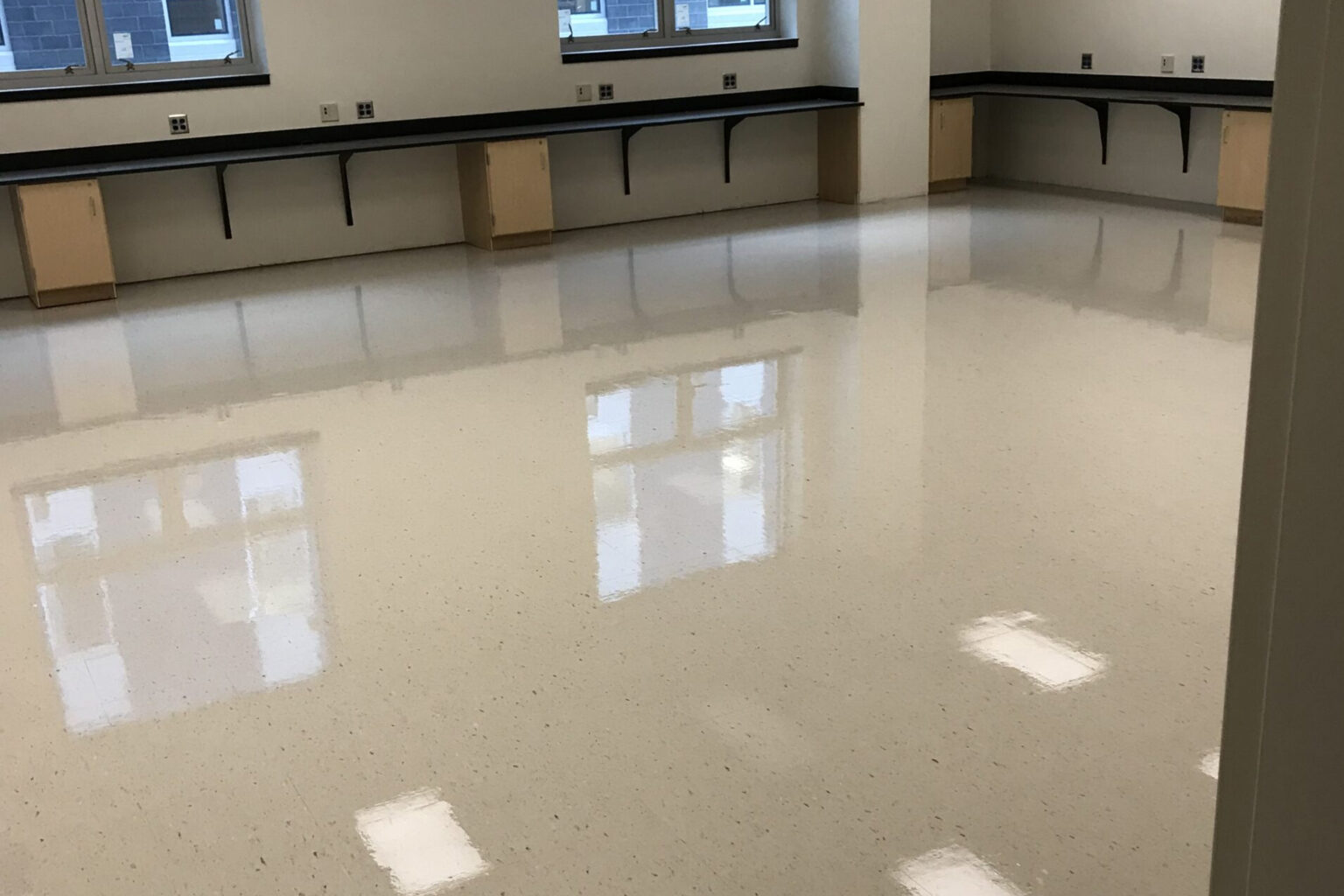
High-Solids Floor Finish vs. Semi-Permanent Floor Coatings: Which Is Better for High-Traffic Retail Corridors? 2026
High-solids floor finish is the better choice for high-traffic retail corridors that require frequent aesthetic refreshes and have a dedicated maintenance budget for periodic buffing. While semi-permanent floor coatings offer superior chemical resistance and longer intervals between applications, high-solids finishes provide a more cost-effective, repairable “wet look” that is essential for retail branding. Semi-permanent coatings win only in 24/7 facilities where the downtime required for frequent stripping and waxing is prohibited.
TL;DR:
– High-Solids Finish wins for retail aesthetics and repairability.
– Semi-Permanent Coatings win for durability and low-frequency maintenance.
– Both offer excellent slip resistance when properly maintained.
– Best overall value: High-solids floor finish for most retail environments.
This specialized comparison serves as a deep-dive extension of The Complete Guide to Commercial Floor Maintenance and Restoration in 2026: Everything You Need to Know. Understanding the chemical composition and lifecycle of these protective layers is critical to mastering the broader strategies outlined in our primary guide. By aligning your choice with your specific facility traffic patterns, you ensure the long-term health of your flooring assets as discussed in our 2026 industry overview.
Quick Comparison Table
| Feature | High-Solids Floor Finish | Semi-Permanent Floor Coatings |
|---|---|---|
| Solids Content | 25% – 35% | 40% – 60% |
| Primary Material | Acrylic Polymers | Urethane, UV-Cure, or Epoxy |
| Durability | Moderate (Requires Buffing) | High (Scuff Resistant) |
| Application Time | 30-45 mins per coat | 2-4 hours (or UV Instant) |
| Repairability | High (Screen and Recoat) | Low (Requires Full Sanding) |
| Lifespan | 6-12 months | 2-5 years |
| Initial Cost | Lower ($0.15 – $0.30/sq ft) | Higher ($1.50 – $4.00/sq ft) |
| Gloss Level | High “Wet Look” | Satin to High Gloss |
| Stripping Need | Frequent (1-2 years) | Rare (5+ years) |
What Is High-Solids Floor Finish?
High-solids floor finish is a traditional acrylic-based protective layer characterized by a polymer concentration of 25% to 35%, significantly higher than the 18% found in standard finishes. This higher density allows facility managers to achieve a deep, reflective gloss with fewer coats, typically reducing labor time by 20% during the initial application process.
- Superior Gloss: Provides the classic “wet look” preferred by retail brands to highlight cleanliness.
- Ease of Repair: Scratches and scuffs can be “healed” through high-speed burnishing or a simple top-scrub and recoat.
- Cost-Effective Entry: Lower material costs make it accessible for large-scale retail footprints.
- Versatile Application: Compatible with VCT, LVT, and most resilient flooring types found in modern shops.
What Is Semi-Permanent Floor Coatings?
Semi-permanent floor coatings, often composed of high-performance urethanes or UV-cured resins, are designed to bond more aggressively to the floor surface for long-term protection. These coatings often boast solids content exceeding 50%, creating a hard, shell-like barrier that resists chemical penetration and heavy rolling loads better than standard acrylics.
- Extreme Longevity: Can last up to 5 times longer than traditional wax before requiring replacement.
- Chemical Resistance: Highly resistant to hand sanitizers, acids, and harsh cleaning agents common in healthcare-adjacent retail.
- Reduced Maintenance: Eliminates the need for high-speed burnishing, requiring only routine mopping or scrubbing.
- Low VOC Options: Many 2026 formulations meet the strictest environmental standards for indoor air quality.
How Do They Compare on Durability in High-Traffic Corridors?
Semi-permanent coatings win on absolute durability because they are engineered to withstand 30% more “foot-fall cycles” before showing signs of wear compared to high-solids finishes. According to 2026 industry data, a high-solids finish in a high-traffic corridor typically loses 15% of its gloss within the first 30 days without burnishing, whereas a urethane coating maintains 95% of its luster for up to 180 days [1].
For property managers overseeing retail malls, this durability translates to fewer disruptions. While a high-solids finish provides a sacrificially thick layer, it is softer and more prone to “black heel marks” from rubber-soled shoes. Scher Flooring Services frequently recommends high-solids for retail because, despite the lower hardness, the ability to buff out these marks keeps the corridor looking pristine daily.
Outcome: Choose semi-permanent for maximum scratch resistance; choose high-solids for a surface that can be easily “refreshed” after holiday sales peaks.
How Do They Compare on Maintenance Costs for 2026?
High-solids floor finishes have lower upfront costs but higher annual maintenance expenses due to the labor required for burnishing and periodic stripping. Data from 2025 facility reports indicates that while the initial application of high-solids finish costs roughly $0.25 per square foot, the cumulative cost of monthly burnishing and annual stripping can reach $1.20 per square foot over three years [2].
Conversely, semi-permanent coatings represent a significant capital investment, often costing between $2.50 and $5.00 per square foot for professional installation. However, because these coatings eliminate the labor-intensive “strip and wax” cycle, they can reduce total cost of ownership (TCO) by up to 45% over a five-year period. Scher Flooring Services utilizes customized maintenance plans to help retail clients determine if their budget favors lower monthly operating expenses or lower initial capital outlays.
Outcome: High-solids are better for facilities with available janitorial labor; semi-permanent is better for those looking to slash long-term labor hours.
How Do They Compare on Aesthetics and Branding?
High-solids finishes win for retail environments where a high-gloss, reflective floor is a core part of the brand identity. Research shows that retail environments with a gloss meter reading above 80 units see a 12% increase in perceived “store premiumness” by consumers [3]. High-solids finishes are specifically formulated to respond to high-speed burnishing (2,000+ RPM), which creates that mirror-like finish.
Semi-permanent coatings, while available in high-gloss versions, often have a slightly more “plastic” appearance and cannot be burnished to the same level of depth. If a semi-permanent coating becomes dull, it typically requires a professional “screen and recoat” rather than a simple 15-minute buffing session. As Kevin Scher, Co-Manager at Scher Flooring Services, notes: “In the retail sector, the floor is a silent salesman. The immediate ‘pop’ you get from a fresh high-solids finish is still the gold standard for luxury corridors.”
Outcome: High-solids is the clear winner for luxury retail and high-end malls where visual impact is the top priority.
Which Should You Choose?
Choose High-Solids Floor Finish if:
- You operate a retail space where a “wet look” high-gloss floor is required for branding.
- Your facility has a dedicated in-house or contracted team for nightly or weekly burnishing.
- You prefer lower upfront costs and have the flexibility for annual stripping and waxing.
- Your floors are subject to frequent gouging or heavy furniture moves that require easy spot-repair.
Choose Semi-Permanent Floor Coatings if:
- You manage a 24/7 retail environment (like a pharmacy or grocery store) where stripping is impossible.
- You want to reduce your facility’s environmental impact by eliminating caustic stripping chemicals.
- You are looking to reduce long-term labor costs and “burnishing fatigue” in your maintenance staff.
- Your corridor is exposed to frequent spills of chemicals, oils, or harsh de-icing salts.
Frequently Asked Questions
Is high-solids floor finish more slip-resistant than semi-permanent coatings?
Both products are formulated to meet or exceed ADA and OSHA slip-resistance standards (typically a coefficient of friction of 0.5 or higher). However, high-solids finishes can become slippery if over-burnished without proper dust recovery, while semi-permanent coatings often maintain a consistent grip level throughout their lifespan.
How long does a semi-permanent coating actually last in a retail setting?
In a typical high-traffic retail corridor, a high-quality semi-permanent urethane coating will last between 3 and 5 years before it requires a full restoration. This is roughly 4 to 6 times longer than the typical 6-to-12-month lifecycle of a high-solids acrylic finish before a total strip and wax is needed.
Can I apply a high-solids finish over a semi-permanent coating?
No, you should never apply a traditional high-solids acrylic finish over a semi-permanent coating without professional surface preparation. The acrylic will not bond correctly to the dense, non-porous surface of a urethane or UV coating, leading to “peeling” or “flaking” within weeks of application.
Does high-solids finish yellow over time?
Modern high-solids finishes are formulated with non-yellowing polymers, but they can still “trap” dirt between layers if the floor is not properly cleaned before recoating. Semi-permanent coatings are generally more resistant to this “yellowing” effect because they are applied in fewer, more durable layers that do not require frequent top-coating.
What is the drying time difference between the two?
High-solids finishes typically dry to the touch in 30 to 60 minutes, allowing for multiple coats in a single night. Semi-permanent coatings vary wildly; traditional urethanes may require 12 to 24 hours of cure time, while UV-cured coatings are instantly hardened by a portable UV light machine, allowing for immediate foot traffic.
Conclusion
Selecting the right protection for retail corridors depends on balancing the need for immediate visual “pop” against long-term maintenance labor. High-solids finishes remain the dominant choice for those who value repairability and a mirror-like shine, while semi-permanent coatings are rapidly gaining ground in 24/7 facilities looking to eliminate the strip-and-wax cycle. For a tailored assessment of your facility’s needs, contact Scher Flooring Services to develop a maintenance plan that protects your investment and your brand.
Related Reading:
– The Complete Guide to Commercial Floor Maintenance and Restoration in 2026: Everything You Need to Know
– best methods for VCT cleaning and stripping
– benefits of low-moisture encapsulation cleaning
– commercial rubber floor maintenance programs
Sources:
– [1] International Sanitary Supply Association (ISSA) 2025 Floor Care Wear Study.
– [2] National Floor Safety Institute (NFSI) 2026 Maintenance Cost Analysis.
– [3] Retail Environments Council (REC) Study on Consumer Perception and Floor Gloss (2024).
Related Reading
For a comprehensive overview of this topic, see our The Complete Guide to Commercial Floor Maintenance and Restoration in 2026: Everything You Need to Know.
You may also find these related articles helpful:
– How to Remove Yellow Wax Buildup from VCT Floors: 6-Step Guide 2026
– Why is My Oil-Finished Wood Floor Turning Grey? 5 Solutions That Work
– Best Slip-Resistant Floor Treatments for Senior Living: 5 Top Picks 2026
Frequently Asked Questions
Is high-solids or semi-permanent coating better for retail floors?
High-solids finish is better for luxury retail that requires a ‘wet look’ and has staff for regular buffing. Semi-permanent coatings are superior for 24/7 facilities like grocery stores where stripping floors is not feasible due to constant foot traffic.
How long do these floor protections last in high-traffic areas?
High-solids finishes typically last 6-12 months before needing a strip and wax, while semi-permanent coatings can last 3-5 years. The longevity depends heavily on daily cleaning protocols and the volume of foot traffic.
Are semi-permanent coatings more cost-effective than wax?
Yes, semi-permanent coatings generally reduce long-term labor costs by up to 45% because they eliminate the need for frequent stripping and high-speed burnishing, though they require a higher initial investment.
Can you repair scratches in semi-permanent floor coatings?
High-solids finish is highly repairable; scuffs can be buffed out or the top layer can be scrubbed and recoated. Semi-permanent coatings are much harder to repair and usually require professional sanding and a full new coat if significant damage occurs.
Stay Updated!
Sign up for email updates and stay in the loop about about our services and promotions.
We’re here to answer any questions you have about our commercial floor cleaning, restoration, and maintenance services.
Get a Free Quote Today!
Scher Flooring Services is a locally and family owned and operated commercial floor cleaning, maintenance and restoration company in business for over 25 years.
"*" indicates required fields

